
Lung infections are a constant risk for people living with cystic fibrosis (CF), a life-threatening genetic disorder which impairs lung function, predisposes people to persistent airway infections and exposes them to acquiring multidrug resistant infections.
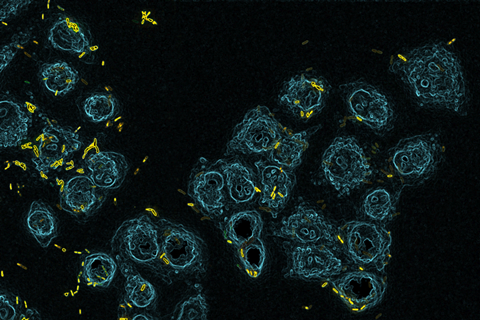
Flinders University microbial experts are using DNA sequencing readings to provide more accurate identification of microbial infections, which helps to address risks from long-term use of antibiotics that could deplete microbiome composition and bacterial infection in CF patients. Their findings are published in Clinical Microbiology Reviews.
Modulator therapies
The new research follows from the introduction of CF transmembrane conductance regulator (CFTR) modulator therapies, which are designed to correct the malfunctioning protein that causes CF.
“While these life-changing therapies have improved the quality of life for many people with cystic fibrosis, researchers are still uncovering how they reshape the airway microbiome over time,” says Flinders Accelerator for Microbiome Exploration (FAME) research associate Dr Jessica Carlson-Jones.
MICROBIOLOGY NEWS: Register with The Microbiologist for more free articles
“DNA sequencing is a powerful tool which can monitor these microbial changes, detect infections more rapidly than traditional laboratory methods and identify antimicrobial resistance.
“Beyond cystic fibrosis, the same technology is being applied to other infectious diseases, where rapid identification of pathogens can lead to earlier diagnosis, more targeted treatments and improved patient outcomes.”
Lung microbial communities
People with CF develop an abnormal amount of excessively thick and sticky mucus within the lungs, airways and the digestive system. This causes impairment of the digestive functions of the pancreas and traps bacteria in the lungs resulting in recurrent infections, leading to irreversible damage.
Flinders University’s Professor of Bioinformatics Rob Edwards, who leads the research group at the College of Science and Engineering, says DNA sequencing is “transforming how we diagnose and manage infections, revealing entire microbial communities instead of single pathogens and paving the way for faster, more precise, and personalised treatment”.
“It can also be very effective in understanding lung infections, particularly in cystic fibrosis,” he says.
“Rather than viewing cystic fibrosis infections as being caused by a single pathogen, sequencing has revealed that lungs contain complex microbial communities of bacteria, viruses and fungi, which influence disease progression and treatment response.”
Small and portable
Dr Carlson-Jones says South Australian researchers are also exploring the use of portable sequencing devices, some no larger than a mobile phone and capable of connecting directly to a laptop, to make rapid DNA sequencing accessible in hospitals – and even remote and rural settings.
“Respiratory metagenomic sequencing is already being introduced into intensive care units in the UK to provide faster diagnosis of severe respiratory infections and guide antimicrobial therapy,” she says.
MICROBIOLOGY ON TAP: Get full access to all The Microbiologist articles from just £2.17 a month
“It will take further testing for sequencing to become part of routine clinical practice in Australia, but it has great promise in transforming the diagnosis and management of infectious diseases as well as cystic fibrosis.”
These methods can be used to reveal both the composition and diversity of the airway microbiome as well as strain-level variation, antimicrobial resistance (AMR) genes, virulence determinants and microbial metabolic functions.
“As sequencing technologies evolve, they hold increasing potential for real-time pathogen surveillance, personalised antimicrobial therapy and further improvement in CF clinical care and other microbial driven conditions.”



No comments yet