
Salmonella, an infection that causes diarrhea, fever, and abdominal pain, is the most common form of bacterial food poisoning in the U.S., sickening more than a million people each year.
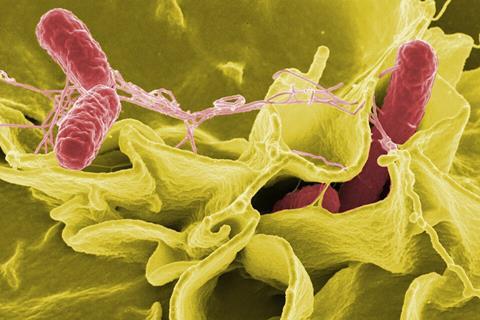
Although most healthy people recover without medical treatment, Salmonella infection can spread throughout the body in young children, the elderly and immuncompromised individuals and become a life-threatening infection.
A new discovery sheds light on how the human body controls Salmonella infections and open pathways for potential treatments for Salmonella and other food-borne infections.
Intestinal barrier
Research supported by a two-year R21 award from the National Institute of Allergy and Infectious Diseases (NIAID) at the Robert Larner, M.D. College of Medicine at the University of Vermont, published in The Proceedings of the National Academy of Sciences, has revealed details about the fight for essential nutrients between Salmonella bacteria and the host during an infection.
Epithelial cells lining the intestine form a physical barrier to protect against gut microbes from entering the bloodstream. But some harmful bacteria, such as Salmonella, can breach this barrier and live inside these intestinal cells.
New evidence discovered by principal investigator Leigh Knodler, Ph.D., Professor of Microbiology and Molecular Genetics, and colleagues demonstrates that specialized intestinal cells control the ability of Salmonella to grow by restricting their access to essential metals, such as iron and manganese.
Knodler and colleagues found that intestinal epithelial cells pump iron and manganese away from intracellular Salmonella to restrict their growth in the intestine. This means that if pathogenic bacteria breach the intestinal barrier, then the host has a back-up means of defense.
Metal ions
Using specialized fluorescent sensors of metal ion availability, Knodler and colleagues traced where metal restriction occurs in the gut during an infection and how the human cells use a specialized system (a metal transporter) to withhold these trace metals.
The findings highlight a new dimension of host–pathogen interactions and suggest that manipulating metal transport pathways could strengthen the body’s natural defenses. This new knowledge may lead to more novel treatment or diagnostic options for Salmonella and other diarrheal and food-borne illnesses.
MICROBIOLOGY ON TAP: Get full access to all The Microbiologist articles from just £2.17 a month
“All forms of life, from bacteria to mammals, need essential trace metals. During an infection, there is a fierce biological tug‑of‑war between the human body and microbes for these nutrients, and the outcome can determine the severity of disease,” said Knodler. “Our research shows that intestinal epithelial cells use a metal transporter to starve Salmonella of iron and manganese, and limit bacterial growth. These transporters are potential drug targets for infectious and other human diseases, and our study lays the groundwork for understanding where and how they act in the body.”
Next steps for the research include examining additional metal transporters in the gut—of which there are dozens—to determine whether they also contribute to pathogen control and how they collectively shape the landscape of nutritional immunity.


No comments yet