
Where astronauts used to worry mainly about bringing extraterrestrial dangers back to Earth, attention is now increasingly shifting to the opposite question: what is humanity actually bringing into space?
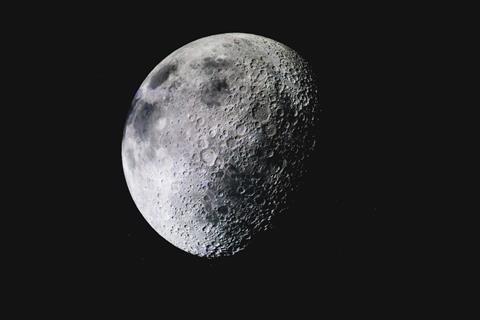
The first lunar visitors left waste such as feces on the Moon, and at the time of the unmanned Viking mission to Mars in the 1970s, sterilization protocols for spacecraft were less advanced than they are today.
Radboudumc PhD candidate Tommaso Zaccaria therefore investigated whether terrestrial micro organisms can survive in other locations in the solar system. He focused on our Moon, Mars, and the icy moons of Jupiter and Saturn, because water is present there.
“There is evidence that hot springs once existed on Mars, and that amino acids and carbon-based compounds are present. In some places, temperatures can reach a pleasant 20°C. All of this is favorable for life.”
Recreating extraterrestrial locations
Zaccaria recreated the conditions of these extraterrestrial locations at the German Aerospace Center (DLR), exposing organisms to high doses of radiation, dehydration, and freezing. Various micro organisms that live in extreme environments on Earth—such as near volcanoes and Antarctica—proved highly adaptable. Yeasts performed best. Zaccaria investigated why: “They increase their capacity to repair DNA damage and activate protective chemical reactions within their cells.”
Next, Zaccaria studied several well known human pathogens, such as the bacterium Klebsiella pneumoniae, which can cause pneumonia. He observed that these pathogens shrank after a simulated trip to Mars, yet survived it. In laboratory experiments, immune cells from human blood responded less strongly to these shrunken pathogens.
This is important news for astronauts, who already face declining health in space and must therefore be extra cautious about infections. Space travel places heavy strain on the immune system due to the lack of a normal day night rhythm, poor diet, disrupted gut function, DNA damage from radiation, limited social interaction, and confinement in a small space.
Dangerous space dust
In addition, astronauts must be wary of dust (regolith) from the Moon and Mars. Zaccaria used samples of simulated material resembling the surface of these celestial bodies and compared their effects on the lungs with those of Earth sand. “We observed that material from Mars, and even more so from our Moon, damages the protective layer of the lungs and causes infections. Earth material did not.”
According to supervisors and professors Mihai Netea and Marien de Jonge, this research is not only relevant for protecting astronaut health but also teaches us about the immune system on Earth.
”We see suppressed immunity and accelerated aging in astronauts,” says De Jonge. ”That is also relevant on Earth. In addition to biological and chronological age, we are increasingly seeing evidence of an immunological age, with large differences between individuals. Space research provides insights that we can translate back to patients here on Earth.”
PhD defense on 19 June 2026 at 10:30 a.m. by Tommaso Zaccaria. Dissertation title: Life beyond Earth: microbial survival and immune health in space. Supervisors: Prof. Dr. M.G. Netea and Prof. Dr. M.I. de Jonge. Co supervisors: Dr. P. Rettberg and Dr. K. Beblo Vranesevic (both German Aerospace Center, Germany).

No comments yet