
A single subcutaneous injection of a live, unattenuated influenza virus can provide durable protection against lethal flu without causing lung damage, according to a new study published in Virologica Sinica. The findings challenge the long-standing trade-off between the safety of inactivated vaccines and the potent immunity of live vaccines.
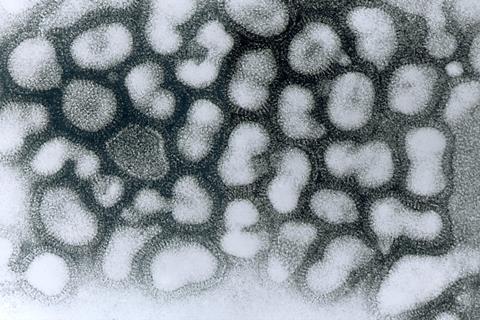
The study team immunized mice with a high dose of replication-competent A/Puerto Rico/8/34 (H1N1) virus under the skin.
“A single dose elicited strong neutralizing antibodies and fully protected mice against a lethal challenge, with 100% survival at 277 days post-immunization,” said Dr. Rong Zhou, corresponding author of the study. “This outperformed intramuscular delivery and inactivated or recombinant HA vaccines.”
Notably, the virus remained restricted to the injection site and draining lymph nodes, with no detectable infectious virus in the lungs or other organs. “By confining viral replication to the injection site, we decoupled immunogenicity from pathogenicity,” says Zhou. “This means we can harness the power of a live virus vaccine without the risk of respiratory disease.”
Effective route
The study also revealed why this route works so well. “Single-cell transcriptomics showed that subcutaneous delivery triggers a localized type I interferon “firewall” that later transitions into a robust germinal center reaction, driving extensive plasma cell differentiation and memory B cell formation,” Zhou explains.
In contrast, intramuscular immunization induced weaker and slower cellular responses.
MICROBIOLOGY NEWS: Register with The Microbiologist for more free articles
The team’s findings could reshape how vaccines are designed for pandemic preparedness. “Current influenza vaccines must balance safety and potency: inactivated vaccines are safe but often require adjuvants and multiple doses, while live attenuated vaccines are more immunogenic but can cause pathology in vulnerable populations,” Zhou says. “The new strategy offers a way to achieve live-virus-level immunity with an improved safety profile.”
Nonetheless, the researchers caution that since the study was conducted in mice, further toxicological assessments in larger animals, including high-pathogenicity strains such as H5N1, are needed before clinical translation.





No comments yet