Researchers at the Icahn School of Medicine at Mount Sinai and collaborators have discovered that many gut bacteria use a flexible survival strategy to withstand disruptions such as antibiotics and diet changes.

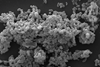
Scanning_electronic_micrograph_of_Akkermansia_muciniphila

Source: Zhang et al, 2019.

Scanning electron image of Akkermansia muciniphila

Published in the May 19 online issue of Cell Host & Microbe, the study shows microbes can switch between functional states, rather than relying solely on genetic mutations, to try to survive shifting conditions. The findings shed light on a previously hidden layer of microbiome biology and may help explain why probiotics and fecal microbiota transplantation (FMT) produce inconsistent benefits across individuals.

The human gut microbiome is constantly being disturbed—by medications, illness, and shifts in diet. Yet it often rebounds, say the investigators. Until now, scientists largely attributed this resilience to genetic mutations that accumulate over time.

“Our study shows that there is another mechanism at work. Even within a single group of genetically identical bacteria, a small subset of cells exists in a different epigenetic state—where chemical tags on the DNA change how genes are turned on or off without altering the genetic code itself,” says senior and corresponding author Gang Fang, PhD, Professor of Genetics and Genomic Sciences and Director of the Center for Genomic AI and Microbiome Medicine at the Icahn School of Medicine at Mount Sinai. “That means some cells are essentially preprogrammed to respond differently to stress, giving the population a built-in survival advantage when conditions suddenly change.”

Primed to survive

When a stressor such as an antibiotic is introduced, this small subgroup can quickly become dominant because it is already primed to survive. When conditions change again, the population can shift back. This reversible strategy, known as “bet-hedging,” allows microbial communities to adapt rapidly to uncertainty.

While bet-hedging has been observed in disease-causing bacteria, this is the first study to show that it is widespread among the beneficial microbes that make up the healthy human gut.

The discovery has several important implications for human health:

  • Probiotics: Bacteria in a probiotic capsule may not be in the same functional state as those that successfully establish themselves in the gut—potentially explaining inconsistent results.
  • FMT treatments: Differences in these epigenetic states between donors and recipients may influence how well microbiota transplants work.
  • Antibiotic recovery: Some gut bacteria may survive antibiotic treatment not because they are genetically resistant, but because a subset of cells is already in a protective epigenetic state that allows rapid rebound after treatment ends.

In the longer term, understanding and potentially controlling these reversible switches could lead to more effective microbiome-based therapies, say the investigators.

Study structure

The research combined advanced DNA sequencing, large-scale data analysis, and laboratory experiments. Scientists used long-read sequencing technology to analyze stool samples from infants before and after antibiotic treatment, as well as from FMT donor-recipient pairs. This approach allowed them to detect both genetic structure and epigenetic modifications simultaneously.

They then analyzed more than 2,300 microbiome samples from previously published studies to determine how common this phenomenon is across individuals and bacterial species.

To understand the mechanism in detail, the team isolated a beneficial gut bacterium, Akkermansia muciniphila, and tracked how its epigenetic states shifted in response to different antibiotics—identifying a specific gene involved in the process.

“Our work is the first to systematically demonstrate epigenetic bet-hedging across the human gut microbiome. It also identifies a specific gene that controls this switch in a beneficial bacterium and shows that the process is reversible—shifting in different directions depending on the type of antibiotic exposure,” says Dr. Fang. “We were struck by how quickly small subpopulations could take over. In some cases, bacteria representing less than 1 percent of a population became dominant under changing conditions.”

Significant diversity

The research team also found significant diversity within what had been considered a single bacterial strain. Even closely related cells could behave differently, with distinct gene activity and stress responses—highlighting how much remains to be understood about the microbiome at a deeper level.

The findings help explain why the microbiome is resilient yet difficult to predict, and why microbiome-based treatments can produce variable results.

“At the same time, our study does not suggest that people should avoid antibiotics when they are medically necessary, nor does it recommend for or against any specific probiotic. Our research is aimed at understanding fundamental biology, not changing current medical care,” says Dr. Fang.

Next steps

The research team plans to study larger groups of patients over time, particularly during and after antibiotic treatment and FMT. They also aim to explore whether similar mechanisms exist in other gut bacteria and to investigate how these epigenetic switches might be harnessed.

“Ultimately, our goal is to design probiotics that are better equipped to establish themselves in the gut and to develop therapies that support beneficial microbes while limiting harmful ones,” says Dr. Fang.

The paper is titled “Epigenetic phase variation in the gut microbiome enhances bacterial adaptation.”

The study’s authors, as listed in the journal, are Mi Ni, Katerina Junker, Yujie Liu, Yu Fan, Yangmei Li, Wanjin Qiao, Xue-Song Zhang, Magdalena Ksiezarek, Edward A. Mead, Alan Tourancheau, Wenyan Jiang, Martin J. Blaser, Raphael H. Valdivia, Lauren E. Davey, and Gang Fang.

The work was supported by grant number R35 GM139655 from the National Institutes of Health.