
As superbugs become harder to treat and antibiotic resistance continues to rise worldwide, Flinders University scientists have uncovered an unlikely ally in the fight to prevent infections before they take hold.

They have found that carefully controlled microscopic cracks can enhance the performance of an antibacterial coating, which helps destroy dangerous bacteria when activated with a small electrical charge.
The discovery could lead to smart wound dressings and wearable devices that monitor health while protecting against infection.
The material was tested against dangerous bacteria including methicillin-resistant Staphylococcus aureus (MRSA), which is a major cause of hard-to-treat hospital infections, and Pseudomonas aeruginosa, which can cause serious infections in vulnerable patients.
After only one minute of electrical stimulation using a standard 9-volt battery, more than 80 per cent of bacterial cells were dead within three hours.
Deeply held assumption
Associate Professor Vi-Khanh Truong says the discovery challenges one of the most deeply held assumptions in engineering.
“Most engineers spend a great deal of time trying to prevent cracks from forming, but we’ve shown that when they are carefully controlled, these tiny cracks can actually create new opportunities,” says Associate Professor Truong, from Flinders University’s College of Medicine and Public Health and the Flinders Health and Medical Research Institute (FHMRI).
“Instead of seeing cracks as defects, we’ve demonstrated they can be designed into materials to create useful functions.”
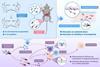
The breakthrough came as the international research team, led by scientists at the Flinders Biomedical Nanoengineering Laboratory, developed a flexible coating made from liquid gallium, a metal that melts near room temperature, combined with carbon nanotubes. As the coating dried, networks of microscopic cracks naturally formed across the surface.
Rather than weakening the material, the cracks created tiny electrical hotspots that appeared to amplify its power to kill bacteria.
Electrical stimulation
The researchers found that electrical stimulation increased stress inside bacterial cells, helping to damage and destroy them. The coating could also generate plasma, an energised gas that produces reactive molecules known to suppress bacterial growth.
Importantly, while the material was highly effective against bacteria, laboratory testing showed it remained compatible with human skin cells under the conditions tested.
This finding comes at a time when antibiotic resistance is recognised as one of the world’s most pressing health threats.
Major healthcare challenge
Associate Professor Truong says technologies are becoming increasingly important to prevent or control infections without relying solely on antibiotics.
“Antibiotic-resistant infections are one of the major healthcare challenges facing the world, so there is growing interest in finding new ways to prevent infections before they become established,” he says.
“Our approach combines smart material design with electrical stimulation to create an antimicrobial response that can be switched on when needed.”
Next steps
While this technology is still at an early stage, the researchers believe it could be used in flexible medical devices that help treat infections directly at the source, including wounds that are difficult to heal.
The material’s ability to bend, stretch and conduct electricity could also support future wearable health technologies, as researchers envision soft skin patches or smart textiles that could monitor health signals such as heart or muscle activity while also preventing infection.
“There’s still more work to do before this reaches patients, but these results show it’s possible to turn something traditionally considered a flaw into a flexible, conductive materials that actively fight infection,” concludes Associate Professor Truong.
MICROBIOLOGY NEWS: Register with The Microbiologist for more free articles
The paper, Stress-Programmed Microcrack Networks in Gallium–Carbon Nanotube Thin Films for Plasma-Active and Electroresponsive Antibacterial Interfaces, by Tarek Khater (Khalifa University, UAE), Shaohong Luo (Khalifa University, UAE), Thành Trần-Phú (Swinburne University of Technology), Tien Thanh Nguyen, Ngoc Huu Nguyen, Aamna Alshehhi (Khalifa University, UAE), Ahsan H. Khandoker (Khalifa University, UAE), Doua Kosaji (Khalifa University, UAE), M. Fatima Domingues (University of Lisbon, Portugal), Xiaoning Fu (Khalifa University, UAE), Baosong Li (Khalifa University, UAE), Kin Liao (Khalifa University, UAE), Huy Hoang Nguyen (RMIT University), Tran Quang Trung University of Massachusetts Amherst(USA), Krasimir Vasilev, Vincent Chan (United Arab Emirates University), Vi Khanh Truong was published in Small Structures journal. DOI: 10.1002/sstr.70633
Acknowledgements: This study was supported by Australian Research Council Future Fellowship (FT240100067), the National Health and Medical Research Council (GNT1194466), Portuguese national funds through FCT– Fundação para a Ciência e a Tecnologia, I.P.
Topics
- antibacterial coating
- Antimicrobial Resistance
- Antimicrobials
- Asia & Oceania
- Bacteria
- Flinders University
- gallium
- Infection Prevention & Control
- Infectious Disease
- Innovation News
- Khalifa University
- Methicillin-resistant Staphylococcus aureus
- microscopic cracks
- Middle East & Africa
- One Health
- Pseudomonas aeruginosa
- RMIT University
- United Arab Emirates University
- University of Lisbon
- University of Massachusetts Amherst
- USA & Canada
- Vi-Khanh Truong




No comments yet