
Invasive fungal infections account for approximately 6.5 million annual cases and 3.8 million deaths, ranking as the fifth most prevalent cause of death worldwide. Among them, Candida auris infection has emerged and spread rapidly across six continents. The difficulties encountered in treating C. auris infections are primarily due to its resistance to common antifungal agents. However, the exact clinical implications of this antifungal resistance and virulence for C. auris remain unresolved.
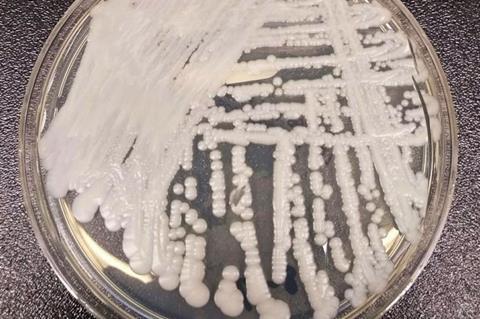
To address this gap, researchers from Shanghai Jiao Tong University School of Medicine (SHSMU) identified key nutritional and genetic factors that drive the virulence of fluconazole-resistant Candida auris. Under zinc-deficient conditions, these drug-resistant strains gain a fitness advantage, exhibiting increased pathogenicity and resistance to macrophage-mediated killing.
By mobilizing its intracellular zinc distribution, the fungus adapts to the restrictive environment. Suppression of gene encoding Zn(II)2Cys6 transcription factor 4 (ZCF4) promotes C. auris survival against macrophage killing. Mechanistically, the inhibition of ZCF4 enables C. auris to impede phagocytic clearance via the suppression of the PI3K-AKT-mTOR pathway and matrix metalloproteinase-9 (MMP-9) activity.
“Notably, we observed the higher fitness of fluconazole-resistant C. auris under zinc deficiency,” said the study’s corresponding author, Ning-Ning Liu, Ph.D., a senior investigator at Shanghai Jiao Tong University School of Medicine. “These data collectively posit zinc homeostasis as a regulator for the fitness trades-offs between fluconazole-resistant C. auris and the host innate immune defense.”
In vivo results
To validate these cellular findings, the research team employed in vivo models, including fly survival assays and murine systemic infection models. Animal models subjected to low-zinc conditions exhibited increased fungal burdens when challenged with the resistant strains.
“These in vivo results shift our perspective on managing resistant fungal threats,” the corresponding author noted. “Our finding that dietary zinc starvation promotes the virulence of fluconazole-resistant C. auris is highly relevant for clinical translation, indicating the potential protective effect of zinc. Given the therapeutic challenges of multi-drug-resistant C. auris, optimized zinc supplementation represents a practicable and safe intervention strategy against fluconazole-resistant C. auris infection.”
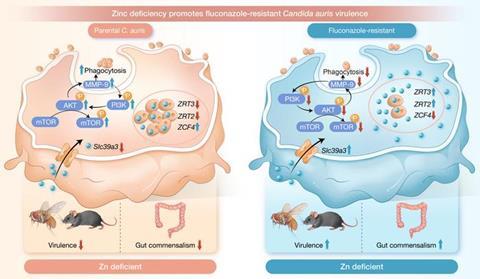
Collectively, these findings demonstrate the role of fungal-host interaction in the virulence of drug-resistant C. auris by zinc adaptive strategy, suppressing fungal ZCF4 on one side and inhibiting host immune response by suppression of MMP-9 to promote virulence on the other side.
Study background
This study was led by the State Key Laboratory of Systems Medicine for Cancer and the Center for Single-Cell Omics at Shanghai Jiao Tong University School of Medicine, in collaboration with researchers from the Joint Laboratory for Biomedical Research and Pharmaceutical Innovation at the Shanghai Institute of Materia Medica, Chinese Academy of Sciences; the Department of Laboratory Medicine at Shanghai East Hospital, Tongji University School of Medicine; and the State Key Laboratory of Genetic Engineering at Fudan University, Shanghai, China.
Dr. Ning-Ning Liu is a Principal Investigator and Doctoral Supervisor. He currently serves as the Deputy Director of the Center for Single-Cell Omics at the Shanghai Jiao Tong University School of Medicine. His research focuses on the mechanisms underlying fungal infections and cancer progression, specifically unraveling molecular pathogenesis from the perspective of host-fungal interactions. Dr. Liu has published over 40 papers as the first or corresponding author in prestigious journals, including Cancer Cell and Nature Microbiology. His work is supported by the National Natural Science Foundation of China (NSFC) and other grants.
Topics
- Antimicrobial Resistance
- Asia & Oceania
- Candida auris
- fluconazole
- Fudan University
- Fungi
- hanghai Institute of Materia Medica
- Infection Prevention & Control
- Infectious Disease
- Institute of Physics Chinese Academy of Sciences
- Ning-Ning Liu
- One Health
- Research News
- Shanghai Jiao Tong University Sc
- Tongji University School of Medicine






No comments yet