
All Pesticides articles
-
 News
NewsFungi neutralize spruce defense mechanisms with sugar
A newly discovered detoxification strategy employed by fungi disarms spruce defense compounds by binding a sugar to them, which makes spruce trees more susceptible to bark beetle attacks.
-
 News
NewsResearch on foul odors and open wounds targets flesh-eating screwworm
Scientists are studying foul-smelling substances to figure out what attracts the New World screwworm to its favorite meal – open wounds – to develop better lures for trapping this serious threat to the livestock industry.
-
 News
NewsBugBiome secures £500,000 grant to develop new bioinsecticide working with expert researchers
BugBiome has secured a £500,000 grant from Innovate UK to fund a collaborative project to develop a new biological insecticide to control cabbage stem flea beetles (CSFB) in oilseed rape.
-
 News
NewsThe broader a fungus’s diet, the better it kills insects and helps plants
Entomologists have discovered that a single underlying trait—metabolic breadth, or the range of nutrients a fungus can use—links its ability to kill insects, partner with plants and thrive in different ecological roles.
-
 News
NewsCould ‘Trojan horse’ microbes that exploit symbiotic systems be candidates for new biological pesticides?
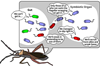
Researchers have discovered a new insect pathogen that invades the gut symbiotic organ of stink bugs by mimicking their symbiotic microorganism, and this pathogen ultimately kills the host bugs.
-
 Opinion
Fungi that inspired The Last of Us may hold the key to a pesticide-free agriculture
They may be the stuff of our nightmares, but Aditya Singh Ranout reveals how invisible allies underneath our feet in the form of entomopathogenic fungi are transforming agriculture - and why these fascinating microbes may hold the key to a pesticide-free agriculture.
-
 News
NewsAlluring yeast species could yield new mosquito traps to combat malaria
An orange-colored yeast species isolated from a Baltimore sidewalk several years ago could be the basis of eco-friendly mosquito traps that reduce malaria transmission, according to a new study.
-
 News
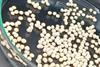
NewsMaterial extends shelf life and prolongs release of fungus used as bioinsecticide
Encapsulating Beauveria bassiana in a biopolymer made of cellulose and aluminum increased the viability of the fungus from 69% to 85% after five months of storage, providing a more sustainable alternative that releases the bioinsecticide.
-
 News
NewsMolecular net boosts the power of natural biopesticides
Scientists have uncovered a previously unknown mechanism that helps a widely used biological pesticide become more effective. The study reveals how bacteria produce ultra-strong protein fibers that form a molecular net, trapping infectious spores and toxins into a sticky film that enhances their ability to kill insect pests.
-
 News
NewsBiodegradable sensors attached to plants detect pesticides in three minutes
Researchershave created biodegradable, “wearable” sensors for plants to monitor their health, made from carbon ink and screen-printed onto transparent cellulose acetate bioplastics. They can monitor temperature, humidity, dehydration, biomarkers, diseases, nutrient levels, and the presence of pesticides.
-
 News
NewsSwansea spin-out Bionema Group receives second King’s Award for Enterprise
Bionema Group Ltd, a Swansea University spin-out specialising in biological crop protection and sustainable agriculture, has been awarded the King’s Award for Enterprise: Sustainable Development 2026. It highlights Bionema’s contribution to developing environmentally sustainable alternatives to synthetic pesticides.
-
 News
NewsHow soil bacteria help plants defend themselves against disease
A study reveals the mechanism by which surfactin, a molecule produced by beneficial soil bacteria, activates plants’ immune defences. This mechanism, distinct from the classical paradigm of immune recognition, relies on direct interaction with the plant cell membrane.
-
 News
NewsAncient, insect-targeting bacterial toxin may have implications for human health, agriculture, and drug discovery
Scientists have identified and characterized a new class of Streptomyces-produced toxins that are very distantly related to the deadly toxin that causes diphtheria, a serious and contagious infection, in humans.
-
 News
NewsPesticides significantly affect soil life and biodiversity
Seventy per cent of soils in Europe are contaminated with pesticides. A Europe-wide study shows that their effects on soil life are substantial, as pesticides suppress various beneficial soil organisms. To protect soil biodiversity, the findings should be taken into account in current pesticide regulations.
-
 News
NewsNature’s 10: Ten people who shaped science in 2025
Microbiologists and scientists tackling infectious diseases are among Nature’s annual list of ten people at the heart of some of the biggest science stories of 2025.
-
 News
NewsPesticides and other common chemical pollutants are toxic to our ‘good’ gut bacteria
A large-scale laboratory screening of human-made chemicals has identified 168 chemicals that are toxic to bacteria found in the healthy human gut. These chemicals stifle the growth of gut bacteria thought to be vital for health.
-
 News
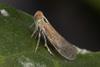
NewsNew super pest combines broad spectrum of microbes
Researchers investigating what role the reed leafhopper’s microbial flora might have played in its rapid spread as a pest found it hosts at least seven species of bacteria and appears to be completely dependent on three of these species, which inhabit specific organs.
-
 News
NewsScientists develop floral-scented fungus that lures mosquitoes to their doom
Taking advantage of the mosquito’s natural attraction to flowers, an international team of researchers engineered a new strain of Metarhizium fungus that imitates a flower’s sweet scent and lures the bloodsucking bugs to their deaths.
-
 News
NewsStructural diversity of pyripyropenes via biosynthetic gene cluster design and heterologous expression in Aspergillus nidulans
Researchers have designed a reconstituted biosynthetic gene cluster (BGC) for producing structurally diversified deacetylated pyripyropenes, using the native pyripyropene A BGC from the wild-type strain Aspergillus fumigatus Af 293 as a template.
-
 News
NewsSlime mold metabolites are a promising, eco-friendly repellent of root-knot nematodes
A team of researchers has discovered 14 compounds secreted by slime molds that repel root-knot nematodes (RKNs) - worm-like parasites of the genus Meloidogyne - and could be the source of new, non-toxic anti-RKN pesticides.