
All SARS-CoV-2 articles
-
 News
NewsViral infections can accelerate the progression of ALS, researchers find
A new study suggests that common viral infections — like influenza or COVID-19 — may accelerate the onset and progression of amyotrophic lateral sclerosis, or ALS. The findings suggest that it is the immune response triggered by these infections that accelerates the onset and progression of ALS.
-
 News
NewsHow a single viral protein hijacks immune cells to supercharge COVID-19 infection
A new discovery reveals how a SARS-CoV-2 protein reprograms immune cells to accelerate viral spread—and points to a new strategy for therapeutic intervention.
-
 News
NewsVaccination: why don’t we all experience the same side effects?
Researchers have found that, even before vaccination, some people’s innate immune systems are more reactive than others, showing a heightened response to interferons. The stronger this response, the more likely individuals are to experience these transient symptoms.
-
 News
NewsUS officials suppressed warnings over flawed covid vaccine safety algorithm
US health officials knowingly relied on a compromised algorithm to detect signals of harm from mRNA covid-19 vaccines and silenced efforts to fix it, finds an investigation.
-
 News
NewsTwo coronavirus master keys: new study unveils the mechanisms Covid-19 virus uses to enter our cells
To enter our cells, the Covid-19 virus fuses its surrounding membrane with the membrane of the target cell. The fusion peptides of the spike protein function as molecular keys that allow the virus to open the door to the target cell . A new study shows that SARS-CoV-2 does not have just one key, but two.
-
 News
NewsHow to build an evolutionary trap for viruses
When a virus mutates, the world usually finds out the hard way. Variants of influenza and SARS‑CoV‑2 can slip past vaccines and antibody drugs before scientists fully understand what has changed. A new study suggests the hard way may not be inevitable.
-
 News
NewsWidespread Covid death underreporting around the world raises broader questions about the reliability of official information
A new study finds that widespread underreporting of Covid-19 deaths cannot be explained simply by differences in countries’ ability to count and record deaths. Across 134 countries and territories, an estimated 45%–55% of governments misreported Covid mortality, with underreporting far more common than overreporting.
-
 News
NewsShould adults with autoimmune rheumatic conditions receive updated COVID-19 vaccines?
Adults with autoimmune rheumatic conditions who developed COVID-19 and received booster or updated (2023-2024) COVID-19 vaccines were less likely to be hospitalized for COVID-19 compared to those who received only the initial series vaccines or who were unvaccinated.
-
 News
NewsHaving COVID-19 is associated with lower subsequent development of type 1 diabetes among those aged under 30 years
New research shows that people who have had COVID-19 have a lower, rather than higher, risk of subsequent development of type 1 diabetes (T1D). Furthermore, the effect is evident only in people who did not receive the SARS-CoV-2 vaccine.
-
 News
NewsScientists uncover shared biology behind profound fatigue in five major illnesses
New research identifies a shared biological secret that helps explain chronic exhaustion in conditions including long Covid and PTSD.
-
 News
NewsSARS-CoV-2 uses a “scissor” protein to chop influenza virus’s guts up
A new in silico scan of human respiratory viruses demonstrates that a SARS-CoV-2 protein, 3CLpro, cleaves motifs within influenza NP and PA leading to rapid protein degradation and cytoplasmic mislocalization.
-
 News
NewsStudy finds that cognitive decline after omicron infection is largely reversible
Cognitive problems, often described as “brain fog,” are a recognized feature of long COVID, affecting attention, memory, and executive function. Earlier SARS-CoV-2 variants, including the original strain, Alpha and Delta, were associated with persistent cognitive deficits. However, the Omicron variant caused less severe disease, leaving uncertainty about whether cognitive decline ...
-
 News
NewsRECOVER-VITAL clinical trial finds no benefit of extended duration of PAXLOVID for Long COVID
Results from a clinical trial show that the antiviral drug, PAXLOVID, commonly prescribed to treat acute COVID-19, does not have an impact on Long COVID symptoms when compared to placebo.
-
 News
NewsAssociation between gene variants and COVID-19 susceptibility and severity in Jordanians
A new study identifies single-nucleotide polymorphisms in the TMPRSS2 gene as promising genetic biomarkers to stratify Jordanian individuals at high risk of COVID-19 infection.
-
 News
NewsWhy immune responses to vaccines vary from person to person
A new study finds that past immune encounters may predict future vaccine response.
-
 News
NewsInfluenza A infection under-reported during 2021 UK pandemic, researchers reveal
Influenza A infections were under-reported during the 2021 UK pandemic, according to research presented earlier this year at MLSFF 2026.
-
 News
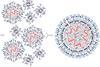
NewsNext-gen mRNA therapeutics get a new delivery vehicle
Researchers have developed a novel way of delivering circular RNA into cells, paving way for long-lasting mRNA-based therapeutics including cancer vaccines and obesity treatments.
-
 News
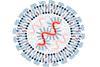
NewsPreventing the accumulation of mRNA-loaded lipid nanoparticles in the liver
New research has developed a novel coating agent that prevents lipid nanoparticles from accumulating in the liver—a major practical challenge when using lipid nanoparticles in vaccines and immunotherapies.
-
 News
NewsSevere COVID-19 reactivates dormant viruses, study finds
Better understanding of how these activated viruses contribute to COVID-related outcomes could help physicians better predict potential complications and improve treatment for patients with severe COVID infection.
-
 News
NewsA lesser-known SARS-CoV-2 protein may offer clues to long COVID symptoms
A new study describes a previously unrecognized way the SARS-CoV-2 nucleocapsid protein can push the immune system into dangerous overdrive.