
All USA & Canada articles – Page 29
-
 News
NewsPatent targets viruses with a breakthrough from linseed oil
A common vegetable oil may hold the key to fighting some of the world’s most dangerous viruses. Scientists have patented a linseed oil polyol-derived compound shown to inhibit viral infections including HIV and SARS-CoV-2 as well as bacterial infections causing strep and staph.
-
 News
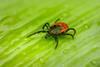
NewsTicks are ‘spreading like wildfire’ - and more of them are carrying Lyme
Not only are tick numbers growing in the US, but today’s ticks are more likely to carry Lyme disease bacteria and other dangerous pathogens. Researchers have noticed a greater diversity of ticks, suggesting a complex pattern of movement and perhaps the introduction or reintroduction of animals, including birds.
-
 News
NewsHealthcare utilization disruptions continue in post-COVID China
Although China’s stringent public health policy, Dynamic Zero-Covid, was lifted in late 2022, researchers have discovered substantial, long-term declines in outpatient clinic visits and hospitalizations compared to expected levels from 2020 to 2024 in China.
-
 News
NewsLargest-ever Canadian clinical trial tests ‘poop pills’ to improve immunotherapy for lung cancer
For nearly half of people diagnosed with lung cancer, immunotherapy can slow the disease but not stop it. A clinical trial will pair immunotherapy with fecal microbiota transplantation (FMT) with the goal of safely increasing treatment effectiveness. If successful, it could provide new treatment options for people with lung cancer.
-
 Careers
 The First Microbiome Symposium of Puerto Rico and the Caribbean – new success for the COBRE Center for Microbiome Sciences
The inaugural Microbiome Symposium of Puerto Rico and the Caribbean marked a major milestone for microbiome science in the region and reinforced Puerto Rico’s growing leadership in interdisciplinary biomedical research, says chair Filipa Godoy-Vitorino of the University of Puerto Rico.
-
 News
NewsResearchers discover the secret behind gray mold’s unstoppable spread
For years, scientists have unsuccessfully tried to breed crops that could resist Botrytis cinerea. New research suggests decades of crop breeding strategies may have overlooked a crucial piece of the puzzle: the pathogen itself. The problem may lie in a fundamental misunderstanding of how plants and the pathogen interact.
-
 News
NewsProtected areas that help wildlife often do little for the soil fungi that plants depend on
Scientists built the most comprehensive models ever of the ranges of 2,858 important fungal species and compared them with the world’s protected landscapes. More than half of these critical underground organisms are less protected than if conservation areas had been drawn at random.
-
 News
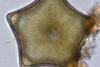
NewsRevealing the invisible: a new baseline for Salish sea diatoms answers a global call
Diatoms are powerful in driving roughly 20% of global photosynthesis and forming the very base of marine food webs. Scientists have published a new checklist of 924 diatom taxa alongside a curated dataset of 11,469 records, providing a long-needed foundation for environmental monitoring across the Salish Sea bioregion.
-
 News
NewsNew research offers practical biosecurity tools to limit poultry disease spread
New research could help producers better protect poultry flocks from disease outbreaks while reducing costs. By identifying where contamination occurs and how to interrupt those pathways, the research helps move biosecurity from theory to action, offering tools that can protect animal health and support a more stable food supply.
-
 News
NewsA common disinfectant could affect how well your liver works
Common household cleaners and pharmaceutical products contain benzalkonium chlorides (BACs), a type of disinfectant. A new study shows that exposure to these compounds caused changes in gut microbiome composition in mice, as well as the genes that encode for liver enzymes that metabolize drugs.
-
 News
NewsStudy reveals “bet-hedging” strategy that helps gut bacteria survive and recover
Researchers have discovered that many gut bacteria use a flexible survival strategy to withstand disruptions such as antibiotics and diet changes. Microbes can switch between functional states, rather than relying solely on genetic mutations, to try to survive shifting conditions.
-
 News
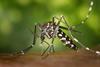
NewsClimate change and emerging diseases pose challenges for physicians
Climate change is affecting the local ecology in Canada, contributing to emerging tick- and mosquito-borne diseases and infections in humans, argue scientists.
-
 News
NewsAs day turns to night, blue-green algae undergo a molecular rewiring
Traditionally, biotechnology researchers have modified genes when engineering microbes. But researchers are using predictive phenomics to uncover additional layers of biological control, tracking how environmental changes reshape molecular activity inside a cell and how those shifts translate to function.
-
 News
NewsCorn diseases cost farmers $13.8 billion from 2020 to 2023
Corn diseases cost farmers an estimated $13.8 billion USD from 2020 to 2023, according to a new multiyear analysis led by plant disease specialists from across the United States and Ontario, Canada.
-
 News
NewsSweeping up dust to detect emerging viruses
Gathering dust from buildings may hold promise as a more efficient way to track viral outbreaks in indoor settings, according to a new study. After collecting nearly 30 vacuumed dust samples from different buildings, researchers simultaneously identified the presence of 54 distinct viruses.
-
 News
NewsTiny ocean life helps scientists estimate whale prevalence off the California coast
Using an innovative alternative method, researchers examined microbial “ecological habitats” as highly accurate predictors of how many filter-feeding whales were occupying the California coast between 2014 and 2020 from San Diego to Morro Bay.
-
 News
NewsNewly discovered microbial world helps protect developing lobsters
As ocean temperatures rise and marine ecosystems change, scientists are working to understand how valuable species like the American lobster will respond. Scientists suggest one source of resilience may come from the microscopic bacterial communities living on lobster embryos.
-
 News
NewsHidden small RNA determines if cholera bacterium can infect humans
Scientists have uncovered what gives Vibrio cholerae, the bacterium that causes cholera, the ability to colonize the human gut. They found that a small RNA embedded within another gene controls where cholera thrives, a discovery that could improve prediction and prevention strategies.
-
 News
NewsAntibiotic proves ineffective in treating wheezing in young children in the emergency room
A study has shown that giving the antibiotic azithromycin did not help preschool children seen in the hospital emergency room with bouts of severe wheezing. It provides more definitive answers to longstanding questions and inconclusive studies about the role of some types of bacteria in wheezing and asthma.
-
 News
NewsProtein engineering and testing condensed to a single day
Engineered proteins must be created in the real world and tested for performance - a labor-intensive process that involves constructing the DNA instructions for each protein in yeast or bacteria and growing individual clones for protein production and testing. Researchers say they have condensed the time-intensive protein building and testing process to just 24 hours.