
All Vaccinology articles – Page 8
-
 News
NewsHoly Grail: One vaccine may provide broad protection against many respiratory infections and allergens
In a new study in mice, researchers have developed a universal vaccine formula that protects against a wide range of respiratory viruses, bacteria and even allergens.
-
 News
NewsMissed opportunity: Study shows low vaccination rates among expectant mothers in Norway against COVID-19 and influenza
A study of over 50,000 pregnant women in Norway during the 2023/24 influenza season found that only 29.9% were vaccinated against influenza and 12.1% against COVID-19 during pregnancy, remaining far below recommended targets.
-
 News
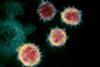
NewsNew review points to faster, safer vaccine development
A new review examines viral mimic systems that reproduce key features of dangerous pathogens such as SARS-CoV-2, the virus that causes Covid-19, without the ability to replicate or cause disease. These systems allow researchers to study infection safely, quickly, and in a wider range of laboratories.
-
 News
NewsNovel vaccine protects against C. diff disease and recurrence
A novel vaccination approach cleared the harmful gut bacterium Clostridioides difficile in an animal model of infection. An experimental vaccine administered to the mucosal lining of the colon protected against illness, death, tissue damage and infection recurrence.
-
 News
NewsBooster jabs reduce the risks of COVID-19 deaths, study finds
Booster vaccines reduced the risk of COVID‑19–related hospitalisation and death, according to a new study of over 3 million adults who had the autumn 2022 vaccine in England.
-
 News
NewsCOVID-19 vaccination during pregnancy may help prevent preeclampsia
A new multinational study has found that COVID-19 vaccination during pregnancy, particularly when combined with a booster dose, significantly reduces the risk of preeclampsia, a serious and potentially life-threatening pregnancy complication.
-
 News
NewsNo association between mRNA COVID-19 vaccination during pregnancy and autism in children, new research shows
The mRNA COVID-19 vaccine is not associated with autism or other neurodevelopmental problems in children whose mothers received the vaccine immediately before or during pregnancy, according to new research.
-
 News
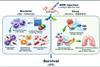
NewsOne strategy to block both drug-resistant bacteria and influenza: new broad-spectrum infection prevention approach validated
A new paper moves beyond traditional infection control strategies reliant on antibiotics and vaccines by introducing a new approach that primes the immune system before infection occurs.
-
 News
NewsHIV antibody opens up new approaches for vaccine development and combination therapies
An international research team has identified a novel HIV antibody that targets the virus at a particularly vulnerable site and overcomes previous limitations of known antibodies. The study opens up new perspectives for the development of vaccines and therapeutics against HIV-1.
-
 News
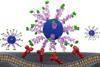
NewsHPV cancer vaccine slows tumor growth, extends survival in preclinical model
Scientists discovered that systematically changing the orientation and placement of a single cancer-targeting peptide can lead to formulations that supercharge the immune system’s ability to attack HPV-driven tumors.
-
 News
NewsResearchers solve mystery behind rare clotting after adenoviral vaccines or natural adenovirus infection
Scientists have uncovered why a small number of people developed dangerous blood clots after either receiving certain COVID‑19 vaccines or experiencing a natural adenovirus infection - the answer lies in an unexpected case of misdirected targeting by the immune system.
-
 News
NewsUS study finds declining perception of safety of COVID-19, flu, and MMR vaccines
A sizable majority of Americans think the three vaccines that combat potentially deadly illnesses flu, Covid-19 and measles are safe to take, although perceptions of the safety of all three vaccines showed a statistically significant drop over the past three years.
-
 News
NewsEthris and German Center for Infection Research (DZIF) announce strategic collaboration to develop mRNA-based vaccines
Ethris GmbH, a clinical-stage biotechnology company pioneering next-generation RNA therapeutics and vaccines, and the German Center for Infection Research (DZIF), have announced a strategic research collaboration to develop mRNA-based vaccines for the prevention and treatment of infectious diseases.
-
 News
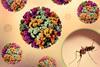
NewsResearchers on the cusp of a vaccine for a global health threat
Researchers are on the cusp of a new vaccine to prevent chikungunya, a global health threat which attacks human joint tissue. The team tested whether they could engineer E. coli to assemble biopolymer particles which displayed chikungunya antigens and performed as a vaccine.
-
 News
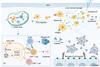
NewsConstruction of a localized immune niche via supramolecular hydrogel vaccine to elicit durable and enhanced immunity against infectious diseases
A new article discusses the construction of a localized immune niche via supramolecular hydrogel vaccine to elicit durable and enhanced immunity against infectious diseases.
-
News
New vaccine platform promotes rare protective B cells
Based on a virus-like particle built with a DNA scaffold, the approach could generate broadly neutralizing antibody responses against HIV or influenza.
-
 News
NewsGut microbe–derived butyrate activates immune cells to enhance vaccine efficacy
Researchers have uncovered a new mechanism showing how butyrate—a short-chain fatty acid produced by gut commensal bacteria—enhances T follicular helper (Tfh) cell activity to promote antibody production and strengthen mucosal vaccine efficacy.
-
 News
NewsScientists demonstrate first-ever single-shot HIV vaccine neutralization success
Scientists have developed an HIV vaccine candidate that achieves something never before observed in the field: inducing neutralizing antibodies against HIV after a single immunization in nonhuman primates.
-
 News
NewsWhy aren’t more older adults getting flu or COVID-19 shots?
This winter’s brutal flu season isn’t over, and COVID-19 cases have risen recently too. But a new poll taken in recent weeks shows that vaccination against both viruses lags among people 50 and over, and the US survey reveals key reasons why.
-
 News
NewsStudy suggests far fewer cervical cancer screenings are needed for HPV‑vaccinated women
In a modeling study of women vaccinated against human papillomavirus (HPV), researchers found that cervical cancer screening could be done far less often than current recommendations without compromising health benefits.