
All Antimicrobial Resistance articles – Page 14
-
 Opinion
The politics behind the global divide in bacteriophage therapy
The therapeutic potential of bacteriophages (or ‘phages’) has been widely dismissed for decades in the West, despite being regularly used to treat patients worldwide in the early and mid-20th century. In an age rife with disinformation, can the true potential of clinical phage technology be communicated to a public already uneasy about scientific intervention?
-
 News
NewsTime to act and not react: how can the European Union turn the tide of antimicrobial resistance?
Despite determined efforts by countries and healthcare professionals, Europe is not on track to meet four of the five AMR targets set by the EU Council for 2030*, according to data released on EAAD.
-
 News
NewsWastewater from most countries favours non-resistant bacteria
Municipal wastewater contains a large range of excreted antibiotics and has therefore long been suspected to be a spawning ground for antibiotic-resistant bacteria. By testing the potential of untreated municipal wastewater from 47 countries to select for resistant E. coli, researchers show that while some samples indeed do so, most instead suppress them.
-
 News
NewsA new gateway to global antimicrobial resistance data
To support global AMR research, EMBL’s European Bioinformatics Institute (EMBL-EBI) has launched the AMR portal, a central hub that connects bacterial genomes, resistance phenotypes, and functional annotations, all in one place. The AMR portal ensures long-term availability, standardisation, and reusability of AMR data.
-
 News
NewsAMI warns that the threat of antimicrobial resistance in viruses and other pathogens cannot be underestimated
Applied Microbiology International (AMI) has urged global policymakers to strengthen the revised Global Action Plan on Antimicrobial Resistance (GAP-AMR), calling for a more inclusive, clear and equitable approach to tackling one of the world’s most urgent health challenges.
-
 Careers
Summer studentship: Megan investigates the mobile gene element that gives MRSA its clout
Megan Stenton reports back on her AMI-sponsored summer studentship which investigated the frequency of the SCCmec gene - a mobile gene element that houses the methicillin resistance gene - across members of the same species of Staphylococcus aureus.
-
 News
NewsEveryday levels of antibiotics in the environment may accelerate the global spread of resistance, new study finds
A new study shows that even very small amounts of antibiotics that commonly appear in soil, rivers, wastewater, and agricultural runoff may significantly accelerate the spread of antibiotic resistance genes among bacteria.
-
 News
NewsBiomedical Sciences researcher receives nearly $7 million in federal grants to fight STIs
Cynthia Nau Cornelissen, a Distinguished University Professor and associate director of the Institute for Biomedical Sciences at Georgia State University, has received nearly $7 million in two, five-year federal grants to develop vaccines and therapeutics to combat sexually transmitted infections (STIs).
-
 News
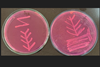
NewsStudy finds high rates of antibiotic-resistant bacteria in raw milk
Raw cow and sheep milk is frequently contaminated with antibiotic-resistant bacteria that could pose a threat to human and animal health, reports a new study.
-
 News
NewsSingle-dose malaria treatment combining four existing drugs as effective as more onerous multi-day, multi-dose regimen
Hundreds of malaria patients participating in a clinical trial in Gabon in West Africa were cured via a single dose of a treatment that utilizes four widely available malaria drugs, according to a new study.
-
 News
NewsEvolving antibiotic resistance under pressure may lead to personalized treatment
A new study demonstrates the use of an experimental evolution approach to map genetic mutations in Acinetobacter baumannii treated with one of two uncommon antibiotics.
-
 News
NewsBiochemists search for cellular vulnerabilities in killer ‘superbugs’
Helen Zgurskaya and Valentin Rybenkov are leading a five-year, $5.3 million project funded by the National Institute of Allergy and Infectious Diseases to find new ways to deliver lifesaving drugs directly into resistant pathogens.
-
 News
NewsResearchers discover novel phage DNA modifications that offer new hope against antibiotic-resistant superbugs
A groundbreaking discovery reveals a unique way phages modify their DNA with arabinose sugars to protect themselves from bacterial defence systems. Natural DNA phage modifications occur at a higher rate than previously predicted, the study revealed.
-
 News
NewsDemographic shifts could boost drug-resistant infections across Europe
The rates of bloodstream infections caused by drug-resistant bacteria will increase substantially across Europe in the next five years, driven largely by aging populations, according to a new paper.
-
 News
NewsApproach to combat antibiotic resistance turns bacterium’s genes against it
Scientists have found that a structurally modified version of the drug florfenicol exploits drug resistance mechanisms in Mycobacterium abscessus to amplify the effect of the antibiotic perpetually.
-
 News
NewsNew antibiotic for drug-resistant bacteria found hiding in plain sight
Chemists have discovered a promising new antibiotic that shows activity against drug-resistant bacterial pathogens, including MRSA and VRE. Pre-methylenomycin C lactone was ‘hiding in plain sight’ — as an intermediate chemical in the natural process that produces the well-known antibiotic methylenomycin A.
-
 News
NewsRhizosphere metabolites influence the spread of antibiotic resistance genes in soil-plant systems
A study sheds new light on the complex mechanisms by which plants and their associated microorganisms contribute to the migration of ARGs through the environment, offering important implications for food safety and public health.
-
 News
NewsResearch alert: Bacterial chatter slows wound healing
Researchers have discovered a previously unrecognized mechanism by which Staphylococcus aureus delays wound healing. The study finds that quorum sensing is a key driver of delayed healing in wounds infected by S. aureus.
-
 Opinion
Could livestock-originated probiotics replace synthetic antibiotics for livestock?
In many developing countries, the use of antibiotics in both humans and animals is often indiscriminate and poorly regulated. Could livestock-originated probiotics be a suitable replacement?
-
 News
NewsResearchers discover method to combat antibiotic treatment failure
Researchers explored ways to alter our own immune cells to help antibiotics work more effectively. They identified a small molecule that alters the body’s immune cells, forcing them to ’wake up’ dormant bacteria and make them more vulnerable to antibiotic treatment.