
All Antimicrobial Resistance articles – Page 15
-
 News
NewsGenetic culprits IDed in capture of 100 years of antibiotic resistance evolution
The genetic culprits responsible for the spread of multidrug resistance (MDR) in bacteria have been identified by new research mapping 100 years of bacterial evolution.
-
 News
NewsVast gut microbiome diversity and antibiotic resistome across 14 mammal species on the Tibetan Plateau
A new study provides the most comprehensive genomic catalogue to date of mammalian gut microbiomes from the Tibetan Plateau.
-
 News
NewsReview shows around one in three hospital infections involve antimicrobial resistance
With an estimated 1.14 million deaths worldwide annually caused by bacteria becoming resistant to antibiotics, a study shows that in hospital settings antimicrobial resistance is common and independently associated with a higher risk of death.
-
 News
NewsScientists develop a virus cocktail to combat superbugs
Researchers have developed a bespoke phage therapy, Entelli-02, a five-phage cocktail designed specifically to target Enterobacter cloacae complex (ECC), a group of bacteria responsible for severe, often difficult-to-treat infections.
-
 News
NewsTropical diseases: Global health meeting showcases resilience of field under fire
At a moment of monumental challenges for global health, thousands of researchers, clinicians and public health professionals from over 100 countries will gather in Toronto for the 2025 Annual Meeting of the American Society of Tropical Medicine and Hygiene (ASTMH).
-
 News
News'Know-do gap' drives inappropriate antibiotic overprescribing for child diarrhea in India
Researchers report that the persistent “know-do gap” — where clinicians know guidelines but practice differently — is the primary driver of antibiotic overprescribing for pediatric diarrhea in India’s private sector.
-
 News
NewsNanoparticles supercharge vinegar’s old-fashioned wound healing power
New research has resulted in the ability to boost the natural bacterial killing qualities of vinegar by adding antimicrobial nanoparticles made from carbon and cobalt.
-
 News
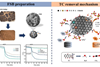
NewsSteel sludge transformed into powerful water cleaner for antibiotic pollution
Researchers have developed an innovative way to turn steel industry waste into a low-cost material that can clean antibiotics out of water, offering a promising solution to one of today’s growing environmental challenges.
-
 News
NewsIncidence of specific antibiotic-resistant bacteria increased 69% between 2019 and 2023
A brief research report found that incidence of a specific antibiotic-resistant bacteria increased 69% between 2019 and 2023. The report described trends in incidence of carbapenemase-producing carbapenem-resistant Enterobacterales clinical isolates reported to the CDC.
-
 News
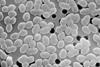
NewsScientists discover powerful new antibiotic class to tackle deadly superbugs
Scientists have discovered Novltex, a new class of antibiotics with potent activity against some of the world’s most dangerous multidrug-resistant (MDR) bacteria. It targets lipid II — an essential building block of bacterial cell walls that does not mutate.
-
 News
NewsAI accelerates design of next-generation antimicrobial peptides with precision targeting
A new opinion article highlights how artificial intelligence (AI), nanotechnology, and interdisciplinary research are revolutionizing AMP design and application, outlining recent breakthroughs in designing, optimizing, and delivering AMPs with enhanced efficacy and safety.
-
 News
NewsSpecial lactic acids reduce antibiotic resistance in infants
Researchers document that a special subgroup of naturally occurring bifidobacteria plays a crucial role in reducing antibiotic resistance in infants.
-
 News
NewsGut infections often overlooked in men who have sex with men
It’s time to develop more effective ways to control and prevent sexually transmitted gut infections, urge the authors of an article that discusses discuss several sexually transmitted enteric pathogens that have become extremely multi-drug resistant.
-
 News
NewsNew Center of Excellence to respond to the challenge of antibiotic-resistant bacteria
Boston Children’s Hospital and Tulane University have received $25 million in funding from NIAID/NIH to establish a Center of Excellence for Translational Research (CETR) called IMPACT (Immunization against Multidrug-resistant Pathogens: Activating T Cell Immunity).
-
 News
NewsMolecular Sustainable Solutions receives investment from BeAble Capital to boost disinfection and sterilization methods
Molecular Sustainable Solutions, a spin-off from the Universitat Jaume I of Castelló (UJI), secures €186,000 investment from BeAble Capital, a leading Science Equity fund specializing in disruptive scientific technologies.
-
 News
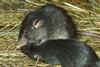
NewsFrom Miami to Berlin: stowaway rat delivers valuable pathogen lessons
in 2017, a Miami–Berlin flight took an unexpected turn when passengers spotted a rat on board. The incident underscored how easily pathogens can spread across continents—and why standardized testing of animal stowaways is so important.
-
 News
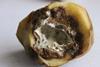
NewsSwitch on, switch off: the dynamic defense of a deadly plant disease
Even strains of Phytophthora infestans considered sensitive to mefenoxam can rapidly develop resistance after a single exposure to a low dose. Researchers have uncovered the dynamics of this defense mechanism, revealing a foe that is more adaptable than previously thought.
-
 News
NewsResearchers capture new antibiotic resistance mechanisms with trace amounts of DNA
Scientists have developed a method to isolate genes from amounts of microbial DNA so tiny that it would take 20,000 samples to weigh as much as a single grain of sugar.
-
 News
News‘Microbial piracy’ uncovers new way to fight drug-resistant infections
Researchers have discovered how ‘pirate phages’ hijack other viruses to break into bacteria, sharing new genetic material for dangerous traits.
-
 News
NewsMushroom chemical teams with phages to deliver a one-two punch to MRSA
A chemical found in mushrooms can be teamed with bacteriophages to deliver a one-two punch to antibiotic-resistant infections, reveals a study presented at MLS Future Forum 2025.