
Oliver Spiller-Boulter, from Cardiff, reports back on his AMI-sponsored summer studentship which examined antimicrobial resistance (AMR) in neonatal sepsis and the use of novel bacterial screening methods.
Oliver is studying Biological Sciences at the University of Warwick and did his placement with Dr Lucy Jones at Cardiff University.
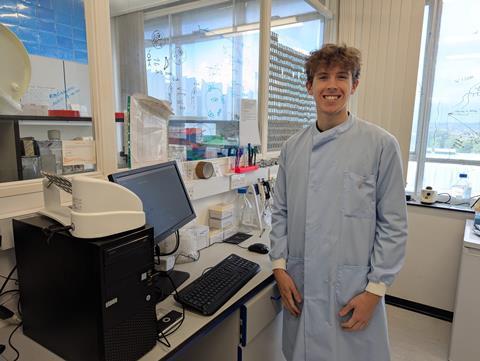
I worked on novel sequencing of Staphylococcus haemolyticus and Enterococcus faecalis & faecium for hybrid-assembly (the use of both short-read and long-read sequencing platforms to examine genomes) from antibiotic resistant neonatal sepsis cases in low-middle income countries.
READ MORE: ‘Alarming’ rise in newborn babies with antibiotic-resistant infections, researchers find
READ MORE: Understanding neonatal infectious diseases in low- and middle-income countries
I’ve also been working with FTIR (Fourier Transform Infrared) Spectroscopy methods which are integrated with an AI cloud platform for bacterial identification, training it on known bacterial species from sepsis cases so it can in-future accurately detect infections after their growth on agar.
More accurate genome
These isolates have already been Illumina (short-read) sequenced but require long-read sequencing to complete the hybrid-assembly, which yields a more accurate bacterial genome. This is important to determine AMR. From this, using the bioinformatics pipeline Bactopia, we can study AMR genes, virulence genes, plasmids, sequence types and compare genotype to the phenotype seen in cultured bacteria.
This allows us to see if bacteria display the same characteristics in AST (Antimicrobial susceptibility testing) and Galleria experiments. This then gives us information on how in the future we can prevent these bacteria from spreading and causing further sepsis cases, allowing more accurate treatment and to see if there’s patterns in the appearance of resistance genes and hospital outbreaks.
Species identification
The goal of the FTIR spectrometer is to enable hospitals to grow a patient’s bacterial infection on an agar-plate and then feed into this machine for accurate species idenitifcation, allowing targeted treatment which will aid in reducing AMR.
I found that AMR genes are so common in neonatal samples that they can be linked to specific sequence types of bacteria. I was surprised at the number of plasmids in certain isolates. These of course pose a risk of spreading potential virulence and AMR genes to other bacteria, contributing to worsening AMR.
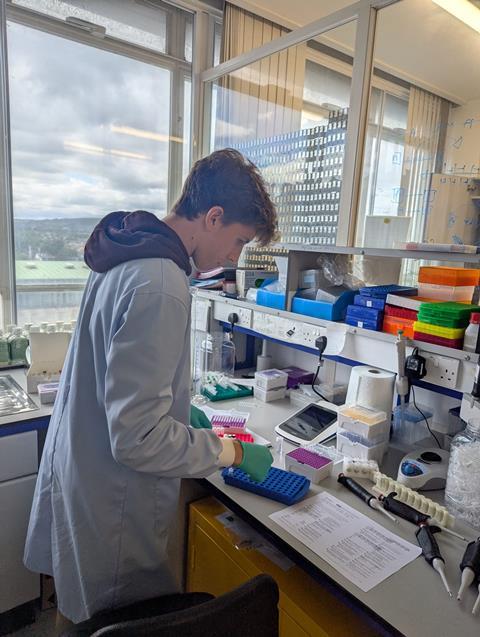
From a purely sequencing perspective, I’ve been surprised by the differences (good and bad) between the sequencing and bacterial genotype/phenotype platforms. This shows how important it is to develop and evaluate new diagnostics.
Tracking AMR
Some AMR genes may be associated with certain ‘types’ of bacterial species. Therefore, if these sequence types become more prevalent, the spread of AMR will likely increase too. This matters as this information can aid in tracking infections, how they spread, their origin and the effective ways of preventing and treating them. The presence of plasmids is also related to the spread of AMR genes and infection control.
I’ve also found that the newer long-read sequencing platform is more accurate than the older generation, averaging ~1:160 nucleotide errors vs ~1:40, however it sequences on average less DNA copies. This makes it more accurate for genomic analysis and species identification, even though it generates less data. In the future this could be used as an accurate medical diagnostic for bacterial infection identification and to detect drug-resistance, making treatment more targeted and reducing the risk of AMR.
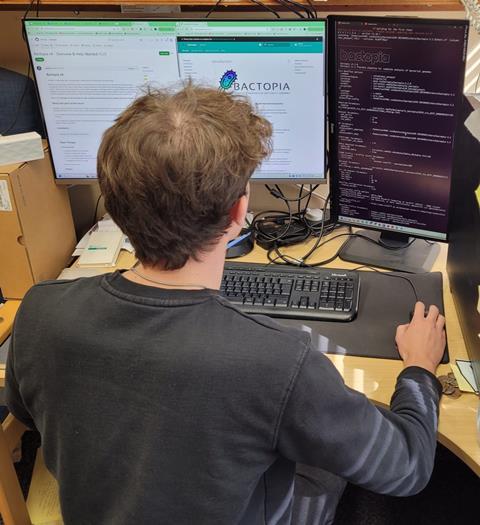
Next I will be examining further bacterial genomic data to find genes and genotypes of interest. I will continue to train the FTIR spectrometer using bacterial panels of known species in the hope of training it to be able to accurately identify species and assist in correctly treating bacterial infections.
Least favourite job in the lab?! – SPRI (Solid Phase Reversible Immobilization) bead DNA concentration in preparation for sequencing, when prepearing 24 isolates it’s quite tedious. And sitting and feeding the FTIR spectrometer bacterial samples for hours!
Find out more about AMI’s grants.
Topics
- Antimicrobial Resistance
- Applied Microbiology International
- Bacteria
- bacterial screening
- Be inspired
- Cardiff University
- Clinical & Diagnostics
- Community
- Early Career Research
- Early Life Microbiome
- Enterococcus faecalis
- Enterococcus faecium
- FTIR Spectroscopy
- Illumina
- Immunology
- Lucy Jones
- neonatal
- Oliver Spiller-Boulter
- One Health
- People News
- sepsis
- Staphylococcus haemolyticus
- UK & Rest of Europe
- University of Warwick





No comments yet