
All Asia & Oceania articles – Page 20
-
 News
NewsCrab shell by-products could help regulate the marine lifetime of biodegradable plastics
Researchers show that crab shell by-products can reduce the breakdown rate of biodegradable plastics in seawater by altering the microbial communities that colonize their surfaces, known as the plastisphere.
-
 News
NewsFrom precision intervention to a “virtual gut”: how close are we to predicting and steering the human microbiome?
A new review maps how multi-omics and machine learning could turn host-microbiome research from correlation hunting into actionable prediction and personalized therapy.
-
 News
NewsAutomation platform enables high-resolution spatial mapping of microbial communities
Researchers have developed a sequential error-robust FISH spatial mapping platform (SEER-Map) which enables fully automated, high-multiplexity spatial profiling of complex microbial communities at single-cell resolution.
-
 News
NewsResearchers deploy phage therapy in new frontier against antimicrobial resistant infectious diseases
A revelatory treatment for patients with life-threatening infectious diseases is being pioneered in Melbourne. VICPhage, a clinical partnership between The Alfred and Monash, is one of the first in Australia to offer end-to-end capacity in phage therapy to treat some of the most challenging infections.
-
 News
NewsDrip-irrigated halotolerant PGPB boost jujube yield and quality in saline soils by reshaping soil bacterial communities
A new study demonstrates that applying halotolerant plant growth-promoting bacteria (PGPB) via drip irrigation during the crop growth period can effectively alleviate soil salinity stress, enhance jujube productivity and fruit quality, and restructure rhizosphere bacterial communities in saline agricultural soils.
-
 News
NewsRare orchid Paphiopedilum purpuratum mediates adaptation via a dual-fungal strategy
Paphiopedilum purpuratum, an endangered orchid species with critical conservation value, faces severe challenges in ex situ adaptation despite successful reproductive output. A novel study reveals the integrated physiological and symbiotic adaptation mechanism underlying its ex situ conservation.
-
 News
NewsCinnamic acid blocks plasmid conjugation to slow antibiotic resistance spread
A new study reveals that cinnamic acid, a widely used food additive found in cinnamon, can effectively inhibit plasmid‑mediated conjugation, a major route for the global spread of antibiotic resistance genes (ARGs).
-
 News
NewsIntestinal Candida albicans is associated with subclinical coronary atherosclerosis in metabolic dysfunction-associated steatotic liver disease with cirrhosis
Researchers have published the first report of gut fungal dysbiosis associated with the severity of metabolic dysfunction-associated steatotic liver disease and subclinical coronary atherosclerosis. An increased abundance of fecal C. albicans was observed in patients with cirrhosis and high SCA burden.
-
 News
NewsEight-year results from two randomized phase 3 trials of tenofovir alafenamide for chronic hepatitis B virus infection in China
Tenofovir alafenamide (TAF) has demonstrated comparable efficacy to tenofovir disoproxil fumarate (TDF), with improved renal and bone safety, in Chinese participants with chronic hepatitis B enrolled in two Phase 3 trials.
-
 News
NewsStudy shows links between Alzheimer’s and gut health can lead to prevention
Researchers analysed more than 120 everyday factors, including diet, medical history, gut bacteria, and lifestyle, to identify which of them are most strongly associated with Alzheimer’s risk. People who had their appendix removed showed substantially elevated Alzheimer’s risk.
-
 News
NewsPlastic texturing kills viruses when they land
Researchers have developed a thin plastic film that tears apart viruses on contact, offering a promising new way to keep high touch surfaces such as smartphones and hospital equipment from spreading disease.
-
 News
NewsOral-gut axis points to salivary biomarkers for early gastric cancer detection
A recent study has identified distinct microbial “signatures” within the oral cavity and gut that serve as robust biomarkers for the early detection of gastric cancer (GC). Research shows how specific lactic acid-producing bacteria (LAB) migrate from the mouth to colonize the gastrointestinal tract.
-
 News
NewsViruses enhance sulfamethoxazole removal in wetlands by modulating bacteria-phage interactions
A new study examines the role of viruses in sulfamethoxazole (SMX) removal in constructed wetlands. The research demonstrates that the addition of phage-concentrated solutions (PCS) enhances the degradation of SMX by enriching SMX-degrading bacteria.
-
 News
NewsImproving oral care more than halves hospital-acquired pneumonia risk, major trial finds
A landmark trial presented at ESCMID Global 2026 shows that improving oral hygiene for hospital patients can reduce the risk of non-ventilator-associated hospital-acquired pneumonia (NV-HAP) by 60%.
-
 News
NewsTurning microalgae into high-value fuels: biochar-based catalyst unlocks cleaner aromatic production
Scientists have designed a composite catalyst that significantly improves the quality of bio-oil derived from microalgae. By combining biochar with a well-known zeolite catalyst called HZSM-5, the team created a hybrid material that enhances the production of valuable aromatic hydrocarbons while minimizing unwanted byproducts.
-
 News
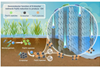
NewsGraphitized biochar rewires soil microbes to accelerate pollutant breakdown in rice paddies
A new study reveals that a specially engineered form of biochar can dramatically enhance the natural ability of soil microbes to break down pollutants in rice paddies, offering a promising strategy for cleaner and more sustainable agriculture.
-
 News
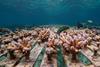
NewsHelping corals survive future heatwaves requires strong and strategic trait selection
A new study exploring host assisted evolution in corals have created a unique, pedigree-tracked coral population over the last eight years, allowing them to map family relationships and measure how multiple key traits—such as growth, reproduction and survival—are inherited.
-
 News
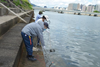
NewsHong Kong’s waters at risk from over-the-counter drug pollution
A recent study of Hong Kong’s river and estuary systems has uncovered an overlooked major source of water pollution: common over-the-counter (OTC) drugs. Accessible, everyday OTC drugs accounted for up to 85% of pharmaceutical pollution in these waters during the wet season.
-
 News
NewsDon’t build the engine, grow it: biohybrid miniature robots using living organisms
By fusing living organisms like bacteria, algae, and insects with synthetic payloads, researchers are creating living biohybrid miniature robots that self-fuel, self-repair, and navigate environments that would paralyze a rigid silicon chip.
-
 News
NewsColor test ‘sniffs out’ dangerous staph strains fast
Researchers have developed a rapid colour-changing test that can distinguish between different strains of golden staph, including those likely to be virulent and antibiotic resistant.