
We caught up with Dr. Rabiath Féichokpè Raïssa Adigoun, a postdoctoral researcher at the University of Abomey-Calavi in Benin who is one of the newest Junior Reviewers with Letters in Applied Microbiology.
Dr. Rabiath Féichokpè Raïssa Adigoun is a postdoctoral researcher at the Laboratory of Genetics, Biotechnology and Seed Sciences (GBioS), Faculty of Agricultural Sciences, University of Abomey-Calavi in Benin (West Africa).

What drew you to become a Junior Reviewer for LAM and what excites you about the role?
My passion for scientific research, and for applied microbiology in particular, is what drew me to the Junior Reviewer role at LAM. I see this position as a great opportunity to contribute to the scientific community, not only through rigorous and high-quality peer review of manuscripts, but also through active participation in initiatives that advance research in applied microbiology. What excites me most is the prospect of playing a part, however small, in producing science that addresses real-world challenges and drives significant progress in the field.
What first sparked your interest in microbiology and how did your career develop?
My journey into microbiology was not one I had planned initially. That journey grew later out of my passion for plant sciences. During my undergraduate studies, I discovered that plant health and growth could be enhanced using naturally available resources, including plant-associated microbes. That discovery was a turning point. From that moment, my fascination with these tiny, invisible, yet remarkable organisms has only deepened over time.
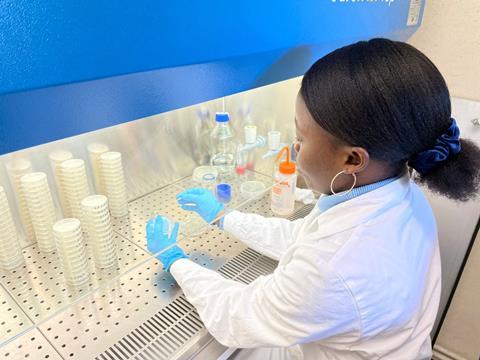
Throughout my academic journey, I have had the privilege of being mentored by outstanding scientists in crop sciences from my Bachelor’s degree studies right through to my current position as a postdoctoral researcher at the Laboratory of Genetics, Biotechnology and Seed Sciences (GBioS), Faculty of Agricultural Sciences, University of Abomey-Calavi in Benin (West Africa).
MICROBIOLOGY NEWS: Register with The Microbiologist for more free articles
Through my involvement in diverse projects, conferences, seminars, and training programmes with partners across Benin, Ghana, Senegal, Tanzania, France, the UK, etc. I was able to connect with the broader scientific community and build meaningful relationships with researchers in crop sciences and microbiology. My career development owes a great deal to that combination of mentorship and active engagement with the scientific world.
I see my career as a work in progress, and I believe that my role as a Junior Reviewer at LAM will be another important step in that ongoing journey.
What’s the microbe that most fascinates you and why?
As a plant microbiologist, the group of microbes that fascinates me most is undoubtedly the plant growth-promoting bacteria (PGPB). What captivates me about these remarkable organisms is the extraordinary range of beneficial mechanisms they deploy in their interaction with plants.
Through processes such as phosphate solubilization, biological nitrogen fixation, phytohormone production, and the synthesis of siderophores, PGPB directly enhance plant nutrition, growth, and overall physiological status. Beyond direct growth promotion, they also act as powerful bioprotective allies, helping plants withstand a wide range of abiotic stresses, including salinity, drought, and heavy metal toxicity, as well as biotic stresses from pathogens and pests, largely by inducing systemic resistance.
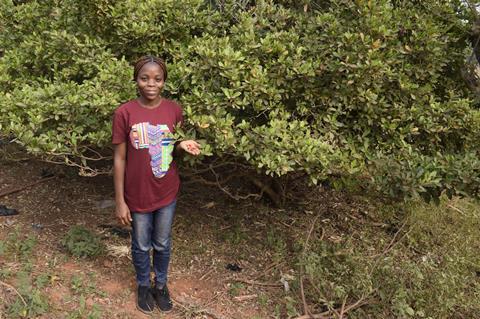
What makes them even more fascinating is their broader impact: through improving soil microbial diversity and enhancing soil health, PGPB contribute to more sustainable and resilient agricultural systems. In a world facing the dual challenge of a growing population and a changing climate, these tiny organisms hold enormous promise as natural, eco-friendly alternatives to chemical fertilizers and pesticides, ultimately helping produce healthier food on a healthier planet.
What real-world problem would you eventually love to solve with microbiology?
The real-world problem I would love to address through microbiology is the growing threat to global food security posed by climate change and environmental degradation. As I highlighted in my fascination with plant growth-promoting bacteria, we are already witnessing the enormous potential of plant-associated microbes and soil microbiomes to transform the way we grow food. Yet, translating that scientific knowledge into large-scale, accessible, and farmer-friendly solutions remains a major challenge. This is particularly relevant in sub-Saharan Africa, where smallholder farmers face increasingly severe droughts, soil degradation, and limited access to chemical inputs.
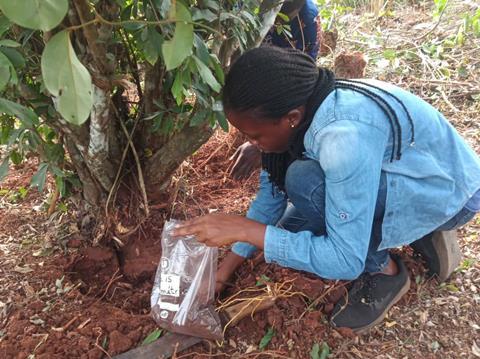
My long-term ambition is to contribute to the development of effective, reliable, and locally adapted microbial bioinoculants (biofertilizers, biostimulants, and bioprotectants) that can significantly reduce or sustainably replace the dependence on synthetic fertilizers and pesticides. Such solutions would not only improve crop yields and resilience under stress conditions but would also preserve biodiversity, restore soil health, and reduce the environmental footprint of agriculture.
MICROBIOLOGY ON TAP: Get full access to all The Microbiologist articles from just £2.17 a month
Ultimately, I believe that the microbial world holds some of the most powerful answers to the challenges facing humanity. My goal is to help unlock those answers through rigorous research, meaningful collaboration, and the kind of high-quality scientific engagement that the role of Junior Reviewer at LAM and membership in the Applied Microbiology International (AMI) network make possible.
How important do you think the role of applied microbiology could be in solving some of the world’s problems?
In my view, applied microbiology is one of the most powerful scientific disciplines for addressing the world’s greatest challenges. Microorganisms are already seen as promising solutions in agriculture, where plant-associated microbes are helping build more sustainable and resilient food systems. In medicine, research in microbiology is opening new frontiers in the fight against antimicrobial resistance and disease.
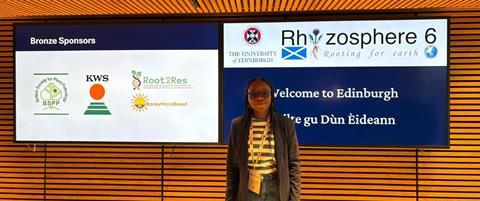
In environmental science, microbes are being harnessed for bioremediation of polluted ecosystems, while in the energy sector, microbial biotechnology is contributing to the development of renewable energy sources. What makes applied microbiology particularly impactful is its cross-cutting, interdisciplinary nature and its capacity to directly influence the lives of people around the world.
What opportunities will this role bring for you?
This role offers me a unique set of opportunities that align perfectly with where I am in my scientific journey as a young postdoctoral researcher. Serving as a Junior Reviewer at LAM will keep me regularly informed about the latest research discoveries in applied microbiology, particularly in plant microbiology. Most importantly, it will sharpen my critical thinking and deepen my ability to evaluate scientific work rigorously and constructively, a skill that is invaluable not only as a reviewer but also as a researcher and scientific author.
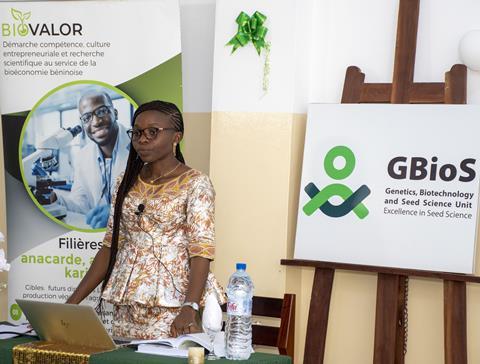
Furthermore, this role grants me access to the AMI community membership and its associated funding opportunities to attend conferences, seminars, and training programmes, which are invaluable resources for a researcher based in Benin, West Africa, seeking to connect with and contribute to the global scientific community. It will also expand my professional network by connecting me with editors, fellow reviewers, and researchers from around the world.
Ultimately, I see this role as a great step toward becoming the accomplished researcher I aspire to be.
Is there anything else you would like to add?
I would like to take this opportunity to express my sincere gratitude to the LAM and AMI community for welcoming me as a Junior Reviewer. Being part of such a diverse and inclusive community of scientists from around the world is truly an honor, and I am particularly appreciative of your commitment to inclusion, which ensures that researchers like me, from underrepresented regions such as West Africa, have a genuine voice in the global scientific conversation.
I reaffirm my full commitment to carrying out my responsibilities with rigor, dedication, and enthusiasm, and look forward to contributing to the advancement of applied microbiology alongside this remarkable community.
Letters in Applied Microbiology is an inclusive and accessible journal that supports and develops the next generation of applied microbiologists. Find out about submitting your research HERE.



No comments yet