
All Gut Microbiome articles – Page 12
-
 News
NewsStudying yeast in the gut could lead to new, better drugs
A new study sheds light on the behavior of yeast cells in the gut, paving the way for new lines of yeast that more efficiently produce therapeutic drugs tailored to address specific diseases.
-
 News
NewsBiocodex Microbiota Foundation announces open call for projects for $50,000 2026 USA Microbiome Research Grant
The Biocodex Microbiota Foundation, an independent organization founded by Biocodex, has opened applications for its 2026 USA research grant. The $50,000 grant will be awarded to a U.S.-based investigator studying the gut microbiota and its relationship to human health and disease.
-
 News
NewsVirgin olive oil protects cognitive health through the gut microbiota
A new study reveals that people who consumed virgin olive oil rather than refined olive oil showed improved cognitive function and greater diversity in their gut microbiota, which is an important marker of intestinal and metabolic health.
-
 News
NewsPersonalized predictions of probiotic and prebiotic therapy success by computer models
A new study demonstrated that computer models of gut metabolism can predict which probiotics will successfully establish themselves in a person’s gut and how different prebiotics affect production of health-promoting short-chain fatty acids.
-
 News
NewsResearchers discover novel bacteria in Florida’s stranded pygmy sperm whales
Researchers have identified three previously unknown genotypes of Helicobacter bacteria living inside stranded pygmy sperm whales. The study represents the first documented occurrence of these unique Helicobacter genotypes – now designated Kogia Helicobacter 1, 2 and 3 – in pygmy sperm whales.
-
 News
NewsScientists discover ‘bacterial constipation’, a new disease caused by gut-drying bacteria
Scientists have found two gut bacteria working together that contribute to chronic constipation. The duo, Akkermansia muciniphila and Bacteroides thetaiotaomicron, destroy the intestinal mucus coating essential for keeping the colon lubricated and feces hydrated.
-
 News
NewsMissing microbes in UK infant gut and probiotics highlighted by global microbiome atlas
A global atlas mapping two key gut bacteria in infants around the world has uncovered a treasure trove of bacterial strains adapted to the infant gut and not found in commercial probiotic products. It lays the foundation for more effective, tailored infant probiotics.
-
 News
NewsGlobal scientific paper establishes first consensus definition of gut health
A global group of 13 scientists and clinicians is helping establish clarity by publishing a consensus definition of gut health. They define gut health as “a state of normal gastrointestinal function without active gastrointestinal disease and gut-related symptoms that affect quality of life.”
-
 News
NewsGut microbiome may be the link to gluten sensitivity without celiac disease
Researchers found that after antibiotic treatment, mice exposed to gluten had changes in the bacteria living in the gut. These shifts in bacteria types altered how they processed carbohydrates, fats and sugars which may influence how these nutrients are recognized by the immune system.
-
 News
NewsLactobacillus rhamnosus L34: Native probiotic that reduces inflammation in patients with chronic kidney disease
Researchers in Thailand have discovered a native probiotic strain, Lactobacillus rhamnosus L34, that helps reduce uremic toxins and inflammation-related cytokines in patients with chronic kidney disease (CKD) before dialysis.
-
 News
NewsEleven genetic variants affect the gut microbiome
In two new studies on 28,000 individuals, researchers are able to show that genetic variants in 11 regions of the human genome have a clear influence on which bacteria are in the gut and what they do there. Only two genetic regions were previously known.
-
 News
NewsChildren with Crohn’s have distinct gut bacteria from kids with other digestive disorders
Researchers have found a “microbial signature” of pediatric Crohn’s disease that differs from the makeup of gut bacteria in children with other gastrointestinal conditions, with Crohn’s patients harboring more pro-inflammatory bacteria and less protective bacteria.
-
 News
NewsScientists create ‘smart underwear’ to measure human flatulence
Scientists have created Smart Underwear, the first wearable device designed to measure human flatulence. The device helps scientists revisit long-standing assumptions about how often people actually fart. It also opens a new window into measuring gut microbial metabolism in everyday life.
-
 News
NewsAntibiotic-resistant bacteria found in many healthy birthing mothers and their newborns
A recent study found gut bacteria resistant to common antibiotics in a sizable percentage of healthy birthing mothers and their newborns. In this study, 38% of bacterial strains resistant to ceftriaxone transmitted from mother to infant were E. coli.
-
 News
NewsNew gut-brain discovery offers hope for treating ALS and dementia
Scientists have identified a link between gut bacteria and the deterioration of the brain in Amyotrophic Lateral Sclerosis (ALS) and Frontotemporal Dementia (FTD). The researchers discovered that certain bacterial sugars cause immune responses that kill cells—and how to prevent it.
-
 News
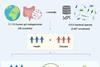
News‘Hidden’ bugs in our gut appear key to good health, finds global study
A single group of bacteria has repeatedly shown up in high numbers in the gut microbiomes of healthy people. Scientists found the level of CAG-170 bacteria present was consistently higher in healthy people than those with diseases including inflammatory bowel disease, obesity and chronic fatigue syndrome.
-
 News
NewsTaxiing through the gut: Formic acid in the microbiome
Scientists have found that the gut bacterium Blautia luti produces formic acid (formate) instead of carbon dioxide (CO₂) and hydrogen, with hydrogen bound to CO₂. In this case, formic acid is the electron taxi, allowing the energetically costly production of hydrogen to be bypassed.
-
 News
NewsGut microbe–derived butyrate activates immune cells to enhance vaccine efficacy
Researchers have uncovered a new mechanism showing how butyrate—a short-chain fatty acid produced by gut commensal bacteria—enhances T follicular helper (Tfh) cell activity to promote antibody production and strengthen mucosal vaccine efficacy.
-
 News
NewsResearchers urge focus on child obesity and gut health to reduce risk of diabetes
Researchers are calling for more study of obesity, gut bacteria and metabolic conditions that arise in childhood and adolescence, with an eye to curbing the global rise of type 2 diabetes.
-
 News
NewsHigh consumption of ultraprocessed foods may be linked to cancer survivors’ risk of death
Cancer survivors who consumed higher amounts of ultraprocessed foods as part of their diet had a significantly increased risk of both all-cause and cancer-specific death, a new study shows.