
All Gut Microbiome articles – Page 7
-
 News
NewsLargest-ever Canadian clinical trial tests ‘poop pills’ to improve immunotherapy for lung cancer
For nearly half of people diagnosed with lung cancer, immunotherapy can slow the disease but not stop it. A clinical trial will pair immunotherapy with fecal microbiota transplantation (FMT) with the goal of safely increasing treatment effectiveness. If successful, it could provide new treatment options for people with lung cancer.
-
 News
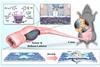
NewsHost-based antifouling gold nanotube sensor for the selective detection of mechanically sensitive serotonin release in intestinal mucosa
A new study report a stretchable electrochemical sensing platform with high deformation insensitivity and strong antibiofouling capability. The platform enables in situ capture of dynamic small-molecule chemical signals in the gut, and revealed a new mechanism underlying enhanced intestinal mechanosensation under microbe-related stimulation.
-
 News
NewsA common disinfectant could affect how well your liver works
Common household cleaners and pharmaceutical products contain benzalkonium chlorides (BACs), a type of disinfectant. A new study shows that exposure to these compounds caused changes in gut microbiome composition in mice, as well as the genes that encode for liver enzymes that metabolize drugs.
-
 News
NewsStudy reveals “bet-hedging” strategy that helps gut bacteria survive and recover
Researchers have discovered that many gut bacteria use a flexible survival strategy to withstand disruptions such as antibiotics and diet changes. Microbes can switch between functional states, rather than relying solely on genetic mutations, to try to survive shifting conditions.
-
 News
NewsParaprobiotic counteracts damage to male fertility from BPA in plastic
BPA has been shown to impair sperm function, in part through increased generation of reactive oxygen species. Researchers investigated whether a paraprobiotic material derived from the lactic acid bacterium Enterococcus faecalis (known as FK‑23) protects against the sperm toxicity caused by BPA.
-
 News
NewsResearchers link human molecular, microbial diversity with geography, ethnicity
Researchers at the Stanford School of Medicine have found that ethnicity and geography may influence human molecular makeup — from metabolism and immunity to gut microbiota and biological aging. The findings, which published in Cell on May 14, illuminate the complex interplay between genetics and the environment, ...
-
 News
NewsProbiotic Lactobacillus rhamnosus CMU-pb-7 shows promise in alleviating diabetic nephropathy via antioxidative pathway
Rats with diabetic nephropathy treated with the probiotic strain Lactobacillus rhamnosus CMU-pb-7 showed marked improvements in general condition and serum biochemical profiles, including significant reductions in cholesterol, triglycerides, blood urea nitrogen, and serum creatinine.
-
 News
NewsBody weight affects your gut microbiota
A new study demonstrates that there is a correlation between gut microbiota and body weight. Researchers also observed that having a high BMI is detrimental to gut microbiota.
-
 News
NewsFrom Helicobacter pylori to the AMR crisis: our interview with JAM Microbiology in Health and Disease Lead Editor Liang Wang
We get to know Professor Liang Wang, who has just been appointed as new Lead Editor in Microbiology in Health and Disease at the Journal of Applied Microbiology.
-
 News
NewsFrom ocean to gut: The bacteria that shape both human health and marine carbon cycling
A group of researchers has discovered that Akkermansia bacteria are not unique to our guts, but can also be found in the ocean. In both habitats they use similar skills to ensure their survival and success. They seem to carry an old and widespread survival toolkit.
-
 News
NewsIntestinal stem cells can fight back against salmonella scientists discover
Researchers have shown that intestinal stem cells can directly sense intracellular Salmonella enterica bacteria and activate an inflammasome-dependent response. Following infection, the stem cells differentiate into antimicrobial Paneth cells, which secrete molecules that help limit bacterial persistence in the intestinal crypt.
-
 News
NewsGut microbiota plays a role in metabolic health after bariatric surgery
Changes in gut microbiota after bariatric surgery are strongly linked to altered metabolic health and sustained improvement in type 2 diabetes. A study shows changes in gut bacterial composition and function are associated with metabolic improvements, including insulin release and blood sugar control.
-
 News
NewsMouse study suggests high-fat diets during pregnancy worsen severe GI illness in preterm babies
A new mouse study suggests a link between a high-fat prenatal diet and induction of potentially deadly symptoms of necrotizing enterocolitis (NEC) in premature babies.
-
 News
NewsScientists discover how gut bacteria toxin invades colon cells to trigger cancer
A common gut bacterium, Bacteroides fragilis, drives colon tumor formation, potentially leading to colorectal cancer, by secreting a toxin that damages the lining of the colon. Researchers have now shown that the B. fragilis toxin BFT must first bind host receptor claudin-4 before it can cause damage.
-
 News
NewsThe Nexus of Food Systems, Ecosystems and Human Health: Sign up for our fascinating free webinar!
What if health is not produced by humans alone, but co-created with the ecosystems, organisms, and food systems we depend on? A fascinating free webinar will explore how microbes connect people to food systems and the ecosystems that undergird food production.
-
 News
NewsHead impacts associated with altered gut microbiome in football players
Non-concussive head impacts—hits to the head that don’t cause clinically detectable symptoms—are correlated with subsequent changes to the gut microbiome in a small sample of US collegiate football players, according to a new study.
-
 News
NewsEvolutionary processes shape bacterial populations in the human gut
Researchers used the ‘reverse ecology’ analytical approach to demonstrate that many known gut bacterial species consist of several evolutionarily distinct groups that have adapted to different conditions in the gut.
-
 News
NewsGenetic ‘bonus material’ makes the gut bacterium Segatella copri oxygen-tolerant
Researchers have found that some strains of the gut bacterium Segatella copri possess bonus material that makes them more oxygen tolerant. The presence of the molecular regulator OxyR is crucial for this. The team discovered that strains carrying OxyR are particularly prevalent in industrialized regions of the world.
-
 News
NewsCaesarean birth: sex-specific effects on the microbiota
A research team investigating microbial colonisation in early life set out to understand how delivery mode and sex interact over the course of development, and whether this interaction could affect susceptibility to intestinal diseases such as colitis in adulthood.
-
 News
NewsGut microbes actively support immunity in people living with HIV
A new study shows that gut microbes help bolster immunity in people living with HIV – and that, one day, these microbes may be harnessed to protect this population from infections driven by immune deficiency.