
All Microbial Biotechnology articles – Page 10
-
 News
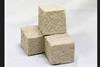
NewsSilk fibroin and genipin boost strength of sand moulds created with help of microbes
Scientists in China have found a way to strengthen sand moulds engineered with the help of microbes, delivering a way to make low-carbon cement-based composites and reducing the environmental impact of traditional construction materials.
-
 News
NewsResearchers reveal how formaldehyde affects H2-forming biocatalysts
Scientists show experimentally how formaldehyde inhibits a certain class of biocatalysts, namely the particularly efficient hydrogen-generating hydrogenases of the two-iron type – so-called [FeFe]-hydrogenases.
-
 News
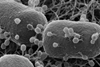
NewsRNA trickery disarms the antiviral CRISPR defenses of bacteria
Bacteria-attacking viruses, known as bacteriophages, use small RNAs to disarm the CRISPR-Cas immune systems of bacteria.
-
 News
NewsDormant bacterial spores offer key insights into evolutionary survival strategies
A new study illuminates the mechanism through which dormant bacterial spores uphold and activate an enduring transcriptional program upon revival, showcasing an extraordinary genetic memory system.
-
 News
NewsResearchers make sense of bacterial Babel
An improved understanding of bacterial languages brings us closer to controlling and coordinating the behaviour of bacteria.
-
 News
NewsScientists to eliminate bottlenecks to breakthroughs with a new synthetic biology robotics system
Researchers in UC Santa Barbara’s newly designated Biological Engineering (BioE) Department have received a significant boost from the U.S. Army, which awarded a $9.85 million grant to design and purchase state-of-the-art equipment.
-
 News
NewsBook scopes out marine natural compounds in search for anti-infective medicines
The latest volume of the Bentham Science book series, Frontiers in Antimicrobial Agents, scopes out the potential of marine natural compounds in the search for anti-infective medicines.
-
 News
NewsFermented food bacterium could rival E coli as model bacterium of choice
Scientists in Germany have identified the bacterium Lactiplantibacillus plantarum as having potential to become a model bacterium that could eventually rival E coli.
-
 News
NewsAntonio Ventosa named as new FEMS President
Antonio Ventosa has been named as the new President of FEMS, starting in January 2024 after being elected unanimously by the FEMS Council at their most recent meeting in Vienna.
-
 News
NewsTeselaGen Biotechnology renews partnership with Joint BioEnergy Institute
TeselaGen Biotechnology has announced that it is extending its relationship with Joint BioEnergy Institute (JBEI) through 2027 via a new multi-year contract.
-
 News
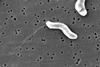
NewsUnderstanding bacterial motors may lead to more efficient nanomachine motors
Scientists have identified the FliG molecule in the flagellar layer, the ‘motor’ of bacteria, and revealed its role in the organism, potentially suggesting ways in which future engineers could build nanomachines with full control over their movements.
-
 Careers
Early career scientists team up with biotech firm NCIMB to tackle pesticide toxicity
Biotech company NCIMB, one of the industrial beneficiaries, recently hosted three early career scientists as part of the ARISTO programme which aims to develop tools to assess the toxicity of pesticides on soil microorganisms.
-
 News
NewsNICER than CRISPR: new gene editor reduces unintended mutations
Researchers led by Osaka University develop a new gene modification technique known as NICER that significantly reduces off-target mutations in DNA.
-
 News
NewsGenetic tools probe minuscule bacteria that live on surface of larger bacteria
Scientists have elucidated genes needed for the unusual lifestyle of miniscule bacteria that live on the surface of larger bacteria.
-
 News
NewsFamily teams with family when it comes to solute binding proteins and their ligands
Particular families of Solute BInding Proteins recognise certain families of ligands, a finding that could help narrow down the search for the ligand that matches an uncharacterised SBP.
-
 Careers
Bacteria deliver living colour to the built environment
PhD student Ella Hetherington reports on her Biochrome installation at the London Festival of Architecture, which demonstrated the application of microbial pigments in architecture and design.
-
 News
NewsLignocellulose bio-refinery can co-utilize xylose and glucose in yeast
Scientists have developed a lignocellulose bio-refinery platform for value-added chemical overproduction in yeast.
-
 News
NewsNew insight into how bacteria surf cargo through the cell before division
Researchers have found some bacteria ship cellular cargo by ‘surfing’ along proteins called ParA/MinD ATPases.
-
 News
NewsNovel molecules fight viruses by bursting their bubble-like membranes
Researchers show how a group of novel molecules inspired by our own immune system inactivates several viruses, including Zika and chikungunya, by targeting the viral membranes, rather than the proteins.
-
 News
NewsOlanike Maria Buraimoh appointed as latest AMI Global Ambassador
Applied Microbiology International (AMI) has announced that Dr Olanike Maria Buraimoh has been appointed as its latest Global Ambassador.