
More News – Page 28
-
 News
NewsResearchers develop microalgae that photosynthetically produce and secrete biofuel precursors
A research group has developed cyanobacterial strains that produce free fatty acids (FFAs) and secrete them into the culture medium. FFAs are important precursor materials for sustainable aviation fuel and diesel fuel alternatives.
-
 News
NewsNo refrigeration needed for killer disease vaccine
Malaria kills more than half a million people every year, but a new vaccine is showing promise as it not only offers long-lasting strong protection but also inhibits transmission of malaria by mosquitos. The vaccine is predicted to be low cost and its cold-chain independence strongly enhances its deployability.
-
 News
NewsDoes agriculture and climate affect feeding activities of soil animals?
An international research team has shown that soil animal communities have greater trophic diversity in agricultural ecosystems and in tropical regions. Animals that feed on microorganisms – such as nematodes, springtails and mites – had higher trophic diversity than those that feed on dead organic matter or live as predators.
-
 News
NewsNew reactor design produces renewable methane from carbon dioxide
A new reactor design efficiently converts carbon dioxide and renewable electricity into methane while scaling the system up by roughly an order of magnitude. It demonstrated that microbial electrosynthesis systems can be expanded beyond laboratory-scale devices while maintaining high energy efficiency and methane production rates.
-
 News
NewsProtists and bacteria form secret alliance to stop fusarium wilt
Scientists have uncovered how phagotrophic protists team up with beneficial bacteria to suppress watermelon Fusarium wilt. Through microbial sequencing and ecological network analysis, they found that nutrient imbalance disrupts these partnerships, allowing the fungal pathogen to spread.
-
 News
NewsFrom Helicobacter pylori to the AMR crisis: our interview with JAM Microbiology in Health and Disease Lead Editor Liang Wang
We get to know Professor Liang Wang, who has just been appointed as new Lead Editor in Microbiology in Health and Disease at the Journal of Applied Microbiology.
-
 News
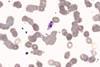
NewsResearchers develop promising drug candidate for control and elimination of malaria
Researchers have developed a novel chemical compound that shows promise for the treatment and prevention of malaria, one of the world’s deadliest diseases. T111 has the potential to become a single-encounter malaria drug that would simplify treatment and prevent relapses that drive ongoing transmission.
-
 News
NewsInvasion, restoration, and the surprising season for soil life
Microbes beneath our feet quietly orchestrate the health of ecosystems, but their seasonal rhythms remain a mystery—especially in coastal wetlands. A new study uncovers a surprising twist: microbial diversity and interaction networks are richer and more intricate in winter than in summer.
-
 News
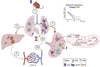
NewsAging immune systems show reduced ability to clear tuberculosis during treatment
Immunosenescence increases susceptibility to infectious diseases like tuberculosis (TB) in older adults and hinder effective containment of Mycobacterium tuberculosis during therapeutic intervention.
-
 News
NewsAndelyn Biosciences launches LVV Curator® Platform
Andelyn Biosciences has announced the launch of its LVV Curator® Platform, a standardized lentiviral vector (LVV) manufacturing solution built on the same proven modular approach that supports clinical and commercial adeno-associated virus (AAV) programs.
-
 News
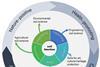
NewsSoil science reimagined: From farmland to the final frontier
A new perspective offers a compelling call to reimagine the future of soil science. The article outlines a conceptual framework for “nontraditional soil science,” encompassing diverse fields from urban engineering to forensic soil analysis and planetary exploration.
-
 News
NewsCommentary: Dengue viral infection and associated liver disease
A new commentary highlights the time course of serological and liver enzyme elevations in mild versus severe dengue, emphasizes early recognition of progression to acute liver failure, and reviews current vaccination and prevention strategies.
-
 News
NewsFDA approves early warning system for sepsis
An early warning system for sepsis, one of the deadliest infections for hospital patients, has been approved for use by the FDA, one of the first AI-based medical tools to get clearance. The tool detects sepsis hours faster than doctors and has reduced deaths by nearly 20%.
-
 News
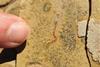
NewsMicrofossils interpreted as animal traces were actually algae and bactéria
A reexamination of microfossils found in Brazil shows that the marks previously interpreted as traces of worms or other small oceanic animals are actually communities of fossilized microscopic bacteria and algae.
-
 News
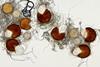
NewsStudy reveals how strawberries and raspberries were ambushed by fungal parasites
Plant diseases often arise when the pathogens that cause disease are introduced into new territories where native plants don’t recognize the pathogen and therefore may have minimal defenses against it. But how often does the reverse happen?
-
 News
NewsFrom ocean to gut: The bacteria that shape both human health and marine carbon cycling
A group of researchers has discovered that Akkermansia bacteria are not unique to our guts, but can also be found in the ocean. In both habitats they use similar skills to ensure their survival and success. They seem to carry an old and widespread survival toolkit.
-
 News
NewsScientists discover ‘hidden switch’ in immune cells that helps the body kill deadly fungus
Scientists have discovered a “control switch” inside our immune cells that helps the body destroy dangerous fungal infections. A protein called RAB5c helps white blood cells kill Aspergillus fumigatus – an airborne fungus that can cause life‑threatening lung infections in people with weakened immune systems.
-
 News
NewsSelf-renewing bacteria offer new hope for heavy metal cleanup
Scientists have revealed a powerful bacterial defense strategy against Cd toxicity. The team found that Stenotrophomonas sp. H225 sheds Cd-laden cell wall fragments and rebuilds new protective layers through a process involving the mtgA gene.
-
 News
NewsWhat the Andes hantavirus outbreak reveals about pandemic risk
The outbreak of Andes hantavirus aboard the international MV Hondius cruise ship underscores how little scientists still know about the viruses circulating silently in wild rodent populations before they spill into humans.
-
 News
NewsIntestinal stem cells can fight back against salmonella scientists discover
Researchers have shown that intestinal stem cells can directly sense intracellular Salmonella enterica bacteria and activate an inflammasome-dependent response. Following infection, the stem cells differentiate into antimicrobial Paneth cells, which secrete molecules that help limit bacterial persistence in the intestinal crypt.