
More News – Page 92
-
 News
NewsHow did Bronze Age plague spread? Ancient sheep might solve the mystery
Researchers have found the first evidence of a Bronze Age plague infection in a non-human host. The scientists discovered Y. pestis DNA in a 4,000-year-old domesticated sheep from Arkaim, a fortified settlement located in the Southern Ural Mountains of present-day Russia.
-
 News
NewsInside the gut: What our poo could tell us about our diet, gut microbes and health
Researchers have found that molecules in stool samples can accurately reflect what people eat and how their gut microbiome responds, offering a potential new tool to study nutrition and its impact on health.
-
 News
NewsStudy reveals how bacteria resist hostile attacks from rival bacteria
When attacked by bacteria from a different species, Pseudomonas rapidly assembles the type VI secretion system (T6SS) – to inject its aggressor with a toxic cocktail. A new study probes how Pseudomonas can strike back when it has already been hit by a deadly cocktail itself.
-
 News
NewsStudy unlocks the key microbes contributing to postnatal growth retardation
Postnatal growth retardation (PGR) has a high incidence during early postnatal development of piglets and humans. Researchers have found that hindgut-enriched Methanobrevibacter smithii compromises the weight gain in the pig PGR model.
-
 News
NewsTuberculosis: Scientists develop novel drug candidate for combating resistant pathogens
Researchers have developed a promising new substance for targeting bacteria that cause tuberculosis. The team have produced a compound that inhibits the pathogens’ ability to produce energy and causes them to die.
-
 News
NewsYeast cell factory developed to convert methanol into L-lactate
Researchers developed a yeast cell factory to produce L-lactate from methanol as the sole carbon source, and evaluated the commercial potential and environmental impacts of this bioprocess.
-
 News
NewsOld molecules show promise for fighting resistant strains of COVID-19 virus
SARS‑CoV‑2 continues to mutate, with some newer strains becoming less responsive to current antiviral treatments like Paxlovid. Now, researchers have identified several promising molecules that could lead to new medications capable of combating these resistant variants.
-
 News
NewsNew study reveals how natural humic substances reshape soil carbon cycling and boost antibiotic resistance
Researchers have uncovered surprising links between natural humification processes in soil, carbon metabolism, and the spread of antibiotic resistance. Subtle shifts in the composition of humic substances can reshape microbial metabolism and alter the abundance of antibiotic resistance genes.
-
 News
NewsHow can nursing homes protect more patients from infections?
New US national guidance calls for full-time infection prevention staff; more training, support and vaccination for all staff; and partnerships with hospitals and public health agencies.
-
 News
NewsWhat are the new guidelines for infant hepatitis B vaccination?
Public health expert and infectious disease physician Janet A. Jokela comments after the Advisory Committee on Immunization Practices of the CDC voted to discontinue its decades-long recommendation for universal vaccination against hepatitis B beginning at birth.
-
 News
NewsAFYREN and ESSE Skincare begin partnership to offer 100% natural cosmetic solutions with enhanced skincare performance
AFYREN, a greentech company offering manufacturers biobased, low-carbon ingredients through a unique fermentation technology, and South Africa-based Esse Skincare, a leader in microbiome skincare science, are partnering to introduce the world’s first bio-based propionic acid for the skincare industry.
-
 News
NewsNature’s 10: Ten people who shaped science in 2025
Microbiologists and scientists tackling infectious diseases are among Nature’s annual list of ten people at the heart of some of the biggest science stories of 2025.
-
 News
NewsNew study reveals that parasite-produced dopamine can alter host behaviour
A new study has shed light on how Toxoplasma gondii, the causative agent of toxoplasmosis, can alter host behaviour. The research findings show that such behavioural changes are achieved, at least in part, through dopamine manipulation caused by dopamine produced by the parasite itself.
-
 News
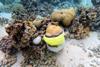
NewsClimate extremes triggered rare coral disease and mass mortality on the Great Barrier Reef
Marine biologists have identified a devastating combination of coral bleaching and a rare necrotic wasting disease that wiped out large, long-lived corals on the Great Barrier Reef during the record 2024 marine heatwave.
-
 News
NewsMajor breakthrough against diabetes thanks to a microbial molecule that disarms inflammation
Researchers have uncovered a surprising ally in the fight against insulin resistance and type 2 diabetes: a microbial metabolite called trimethylamine. TMA, produced by gut bacteria from dietary choline can block a key immune pathway and improve blood sugar control.
-
 News
NewsDose of psilocybin, dash of rabies point to treatment for depression
Researchers used a combination of psilocybin and the rabies virus to map how – and where – the psychedelic compound rewires the connections in the brain. Specifically, they showed psilocybin weakens the cortico-cortical feedback loops that can lock people into negative thinking.
-
 News
NewsEngineered virus boosts immune response against glioblastoma in preclinical models
Researchers have modified a herpes simplex virus (HSV-1) that stimulates the immune system to attack glioblastoma cells. A single dose of the modified virus increased T-cell, natural killer cell, and myeloid cell responses in the tumor microenvironment and increased the overall survival in preclinical models.
-
 News
NewsDeep sea microbes yield up their engineering secrets
A biomatrix of tiny tubes of protein, known as cannulae, link cells of the thermal vent-dwelling archaeon Pyrodictium abyssi together into a highly stable microbial community. A study reveals new details about the elegant design of the cannulae and their method of construction.
-
 News
NewsSocial lives of viruses affect antiviral resistance
Interactions among viruses can help them succeed inside their hosts or impart vulnerabilities that make them easier to treat. Scientists are learning the ways viruses mingle inside the cells they infect, as well as the consequences of their socializing.
-
 News
NewsPlant phenolic acids supercharge old antibiotics against multidrug resistant E. coli
Plant derived phenolic acids can dramatically enhance the activity of existing antibiotics against multidrug resistant E. coli, offering a promising new tool in the global fight against antimicrobial resistance.