
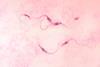
Researchers at Martin Luther University Halle-Wittenberg (MLU) have developed a promising new substance for targeting bacteria that cause tuberculosis. The team have produced a compound that inhibits the pathogens’ ability to produce energy and causes them to die.

Established drugs work in a similar fashion, but the pathogen is becoming increasingly resistant to these medications. The study was conducted jointly with other researchers from Germany, the USA and Canada and its findings were published in the Journal of Medicinal Chemistry.
Tuberculosis is one of the world’s most serious infectious diseases. The World Health Organisation (WHO) estimates that there were around eight million new cases and over one million deaths in 2024 alone.
“Lung disease caused by Mycobacterium tuberculosis is often fatal unless treated with anti-mycobacterial drugs,” says Dr Adrian Richter from the Institute of Pharmacy at MLU. Richter has been researching substances that combat mycobacteria for a number of years.
Targeting ATP synthase
One effective drug for treating tuberculosis is bedaquiline, which is administered in conbination with other antiinfectives according to a strict regimen over several months. “Bedaquiline inhibits the activity of the pathogen’s ATP synthase, which is a complex enzyme responsible for energy production in the bacteria. Deactivating the enzyme causes the bacterium to die,” explains Richter. Even though bedaquiline has only been in widespread use for ten years, bacterial resistance against it is already starting to emerge.
READ MORE: Scientists uncover tuberculosis bacterium’s ’heartbeat’, opening door to new treatments
READ MORE: Add some spice: Curcumin helps treat Mycobacterium abscessus
The team led by Adrian Richter has now synthesised an active substance that could be used against resistant tuberculosis pathogens. Although it targets the bacteria’s ATP synthase, too, it attacks a different site on the enzyme than bedaquiline.
“It is chemically based on so-called squaric acid amides. These compounds get their name from their molecular structure, which is indeed a square. Their chemical structure enables us to integrate various molecular groups, and their properties can thus be modified using a kind of chemical fine-tuning,” says Richter. Research into squaric acid amides has been ongoing for several years, but because they are metabolically unstable and toxic to human cells, the synthesised compounds are not yet suitable for use as pharmaceutical products.
Promising candidate
The new active substance with the code PRP020 does not have those disadvantages. It is the most promising candidate from among many variants produced as part of the study at MLU. Subsequent tests on both the tuberculosis bacteria and isolated ATP synthase enzymes have confirmed the high efficacy of PRP020. Further investigations have also shown that the active substance is not toxic to mammalian cells and is only slowly broken down by liver enzymes.
The team from Halle was supported by researchers from the Research Center Borstel - Leibniz Lung Center, the Helmholtz Institute for Pharmaceutical Research Saarland and other scientific institutions in Germany, the USA and Canada.
Following their successful preliminary work in the laboratory, the pharmacists hope that the next phase of research might follow quicky: Tests in animal models will have show how the candidate drug behaves in a living organism. Only then could the substance be tested on patients as part of clinical trials.
Optimistic but realistic
“We are optimistic, but we must also be realistic: As of now, we cannot say for sure if and when our substance could be developed into a marketable drug. This will probably take another couple of years,” explains Richter. After all, the testing and development of new drugs is a complex, lengthy and costly process, which is ultimately carried out by the pharmaceutical industry.
The new squaric acid amide-based active substances attack more than just tuberculosis pathogens. Therefore, Adrian Richter also has other mycobacteria in his sights, such as Mycobacterium avium. This germ, which is naturally resistant to many antibacterial substances, often settles in the lungs of cystic fibrosis patients, where it causes severe tissue damage. “Our tests show that, even though the effects are not as strong as they are for tuberculosis bacteria, attacking the ATP synthase of mycobacteria is a generally promising approach that we will continue to pursue,” says Adrian Richter.
The study was funded by the German Research Foundation (DFG), the Gates Foundation, the Canadian Institutes of Health Research, the Canada Research Chairs Program, a Hospital for Sick Children postdoctoral fellowship and the German Centre for Infection Research.
Topics
- Adrian Richter
- ATP synthase
- Bacteria
- bedaquiline
- Germany
- Helmholtz Institute for Pharmaceutical Research Saarland
- Infection Prevention & Control
- Infectious Disease
- Innovation News
- Martin Luther University Halle-Wittenberg
- Mycobacterium tuberculosis
- One Health
- Pharmaceutical Microbiology
- PRP020
- Research Center Borstel - Leibniz Lung Center
- squaric acid amides
- tuberculosis
- UK & Rest of Europe
- USA & Canada
- World Health Organisation




.jpg)
No comments yet