
Chronic hepatitis B (CHB) remains a global health challenge and a leading cause of cirrhosis, portal hypertension, and liver cancer. Although vaccination and antiviral medicines have improved prevention and management, a lasting cure remains difficult. Current treatments suppress hepatitis B virus (HBV) replication, but many patients need long-term therapy. Developing treatments that maintain viral control after medication stops remains a research priority.
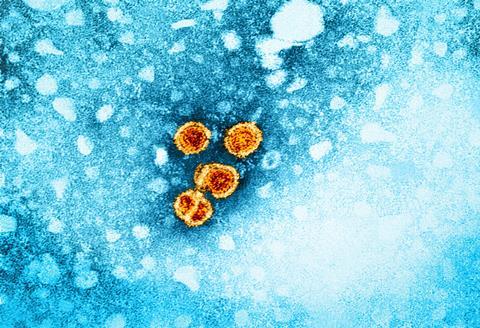
China has made progress in preventing HBV infections through infant vaccination and measures to prevent mother-to-child transmission. However, approximately 75 million people in the country still live with chronic HBV infection.
Against this backdrop, Dr. Zhujun Cao, Professor Qing Xie, and Dr. Dandan Weng from the Department of Infectious Diseases at Ruijin Hospital, Shanghai Jiao Tong University School of Medicine, China, examined China’s contribution to developing treatments for CHB. Their perspective has been published online in Portal Hypertension & Cirrhosis journal on October 26, 2026.
The authors examined published clinical trials, meta-analyses, national epidemiological surveys, and cohort studies. Their perspective considered established medicines, emerging treatments, safety, patient selection, and long-term outcomes in the pursuit of a functional cure.
Antiviral medicines
Existing antiviral medicines, including entecavir and tenofovir, can suppress HBV replication. However, hepatitis B surface antigen (HBsAg), a protein produced during infection, becomes undetectable in only around 2–5% of patients receiving long-term treatment. Pegylated interferon-α (PegIFNα), which stimulates the immune response against HBV, may help selected patients, particularly those with lower HBsAg levels before treatment. China-led studies, including the Everest Project and ANCHOR trial, reported encouraging results, although side effects and monitoring can limit wider use.
One important development is bepirovirsen, which targets HBV RNA and reduces viral protein production. In the Phase III B-Well 1 and B-Well 2 trials, functional cure at week 72 was achieved by 20% and 19% of treated participants, respectively, compared with none in the placebo groups. Responses were more common among participants with lower HBsAg levels before treatment. However, approximately four in five treated participants did not achieve functional cure, and durability beyond reported follow-up remains uncertain. The trials excluded patients with cirrhosis, limiting how broadly the findings can be applied.
“Although some emerging treatments can reduce viral markers, these changes do not necessarily lead to a lasting functional cure. Further research is needed to determine which approaches can maintain viral control after treatment stops,” shares Prof. Xie.
Treatment routes
Other treatments developed in China or evaluated with Chinese research participation target viral RNA, interfere with formation of the virus’s protective protein shell, or stimulate immune responses. Some candidates have shown promising biological effects, while others have produced limited benefits or failed to meet their clinical objectives. Changes in viral markers do not always translate into lasting patient benefits.
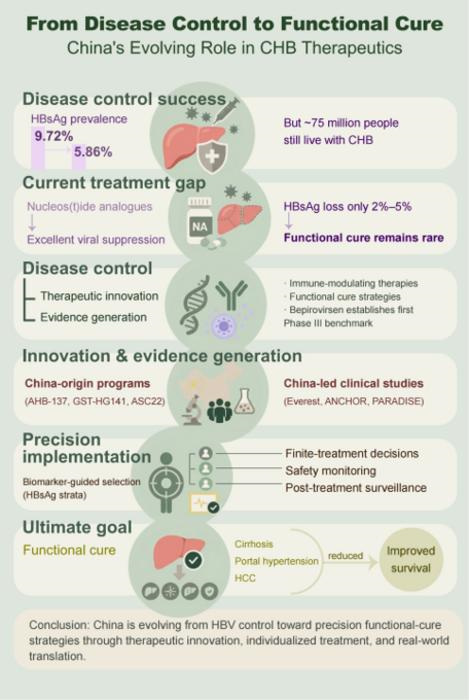
The authors highlight the need to tailor treatment to individual patients. HBsAg levels, viral activity, immune status, and liver damage may help identify who is most likely to benefit. Clinical registries and long-term follow-up could assess effectiveness, determine whether responses persist after treatment stops, and identify patients needing further care. Research involving underrepresented groups and populations with different HBV genotypes is also important.
MICROBIOLOGY NEWS: Register with The Microbiologist for more free articles
“The goal is not simply to provide more treatment, but to identify the right treatment intensity for each patient. Understanding who is most likely to benefit, while ensuring appropriate safety monitoring and follow-up, will be essential to developing more personalized approaches to CHB,” notes Dr. Cao.
Overall, the perspective highlights progress in developing treatments for CHB while emphasizing that a safe, lasting functional cure remains out of reach for many patients. Further research is needed to determine which patients benefit most from emerging therapies, how long treatment responses persist, and whether these approaches can reduce serious complications such as cirrhosis, portal hypertension, and liver cancer.







No comments yet