
An international research team led by a Korean scientist has succeeded in designing large-scale protein structures that faithfully replicate the self-assembly principles found in naturally occurring viruses, using artificial intelligence (AI). The study has been published in Nature.
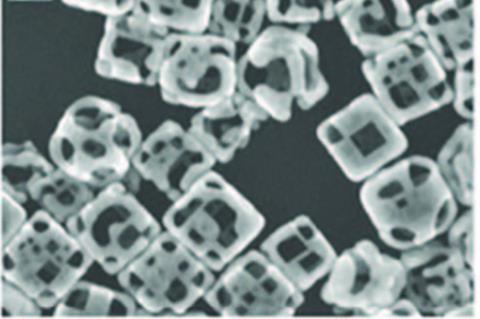
The Ministry of Science and ICT (MSIT) announced that Prof. Sangmin Lee of the Department of Chemical Engineering at Pohang University of Science and Technology (POSTECH), in collaboration with Prof. David Baker of the University of Washington, has developed a design principle enabling a single protein component to simultaneously form pentagonal and hexagonal arrangements and self-assemble into virus-like structures.
Protein Nanocages
Protein nanocages have emerged as the most promising material in the bio-medical field for next-generation drug delivery. These are hollow, nanometer (nm)-scale structures formed through the spontaneous binding of multiple proteins. They can stably carry drugs, genetic materials, and enzymes within their interior space, while antigens can be attached to their outer shell.
However, existing design technologies have largely depended on computationally derived “perfect symmetric structures,” which severely limits the size and complexity of structures achievable from a single protein building block.
Quasisymmetry
In contrast, viruses found in nature use a single type of protein repeated hundreds to thousands of times, while subtly adjusting the position and local environment of each protein to construct massive shells. This principle is known as quasisymmetry, and this study has successfully implemented this sophisticated natural principle in the design of artificial proteins.
The research team recognized that the key to expanding viral shell size lies in the angles and curvature between protein building blocks. When proteins are arranged too flatly, the shell fails to close; when the curvature is too great, the structure becomes too small. By precisely engineering this balance, the team induced a single protein to simultaneously occupy both pentagonal and hexagonal environments depending on its position within the assembly.
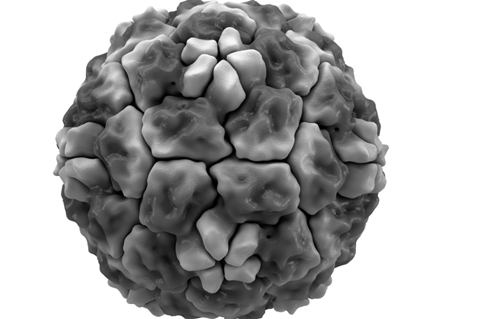
To achieve this, a trimeric unit — a cluster of three proteins — was used as the basic building block, and RFdiffusion, an AI-based protein structure generation tool, was used to design novel connecting structures. Much like stacking interlocking building blocks at different angles, the approach enabled the proteins to fit together at varying orientations, producing a massive dome-shaped shell rather than a flat sheet.
The team produced the designed artificial proteins using E. coli and observed their morphology using state-of-the-art cryo-electron microscopy. The results confirmed that the proteins spontaneously assembled into spherical shells ranging in size from a minimum of 70 nm to a maximum of 220 nm. The smallest structure adopted the form of an elaborate “nano-soccer ball,” while the largest was more than three times that size.
Future Outlook
This study has attracted significant attention from the scientific community because it did not repurpose existing viral proteins, but instead used a single, entirely AI-designed artificial protein to freely construct large virus-like structures. If commercialized, this technology is expected to enable transformative applications across the biomedical field, including targeted drug and genetic material delivery systems and vaccine antigen presentation platforms. Follow-up research is also planned to achieve more uniform size control using internal scaffold proteins or nucleic acids as templates.
In addition, a related study on artificial protein structures, led by Prof. Baker with Prof. Sangmin Lee as a co-author, was published in Nature on the same date.





No comments yet