
Plant cell walls contain hemicellulose, which releases sugars such as xylose when biomass is broken down. Researchers have engineered several microorganisms to use xylose, including strains of Pseudomonas putida.The bacterium Acinetobacter baylyi is also of interest because it is relatively easy to modify genetically and can naturally store lipids. Its wild-type ADP1 strain, however, cannot use xylose to sustain growth.

Earlier studies showed that an engineered version could grow on the sugar, leaving a further question for biomanufacturing. Once the bacterium can grow on xylose, how much of that sugar can it channel into a useful product?
A study published in Engineering in Life Sciences on 27 October 2026 by Yang Zhang’s & Jifeng Yuan’s team, Xiamen University, reports that redesigning how the bacterium takes up and processes D-xylose enabled it to grow on the sugar and accumulate measurable amounts of lipids.
Teaching Acinetobacter to use xylose
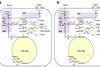
The team first introduced genes from Escherichia coli that allow cells to take up D-xylose and convert it into an intermediate that can enter central metabolism. The selected strain grew with D-xylose as its sole carbon source across the tested range of 1 to 20 grams per liter. The researchers then used liquid chromatography to track the sugar and its byproducts. They detected D-xylonate, a compound produced when a native enzyme oxidizes D-xylose. Deleting the gene for that enzyme eliminated the detectable D-xylonate peak, but the cells grew more slowly and reached a lower maximum culture density.
To address that trade-off, the researchers added a two-enzyme route designed to connect xylose metabolism more directly to acetyl-CoA, a building block for fatty acids. The strain with this shortcut grew faster and doubled in less time than the strain with the deletion alone, while retaining its ability to consume xylose. The team then deleted a gene involved in wax ester production in strains with and without the shortcut.
After 72 hours under the same nitrogen-limited conditions, the strain with the shortcut produced about 23% more total lipids per liter than the comparison strain.
Finding the best nitrogen balance
In a separate 96-hour experiment, the researchers varied nitrogen availability while holding the starting D-xylose concentration at 10 grams per liter. They measured cell growth by optical density and quantified extracted lipids with a color-based assay.
Among the five carbon-to-nitrogen ratios tested, a ratio of 50 gave the highest lipid concentration, about 0.34 grams per liter. Higher ratios reduced cell growth, and lipid concentrations fell to about 0.30 and 0.24 grams per liter at ratios of 80 and 100, respectively. The results show that moderate nitrogen limitation produced the most lipid per liter under the conditions tested.
MICROBIOLOGY NEWS: Register with The Microbiologist for more free articles
The study demonstrates that an engineered strain of A. baylyi can make lipids from D-xylose in a defined laboratory medium. It also highlights a trade-off in redesigning microbial metabolism: closing a route that diverts sugar can come at the cost of slower growth, and adding another route can help the cells recover.
The lipid concentration remains below levels reported for established oil-producing microorganisms. Testing the strain on sugar mixtures obtained directly from plant biomass would help establish whether the approach can make use of practical feedstocks.


No comments yet