
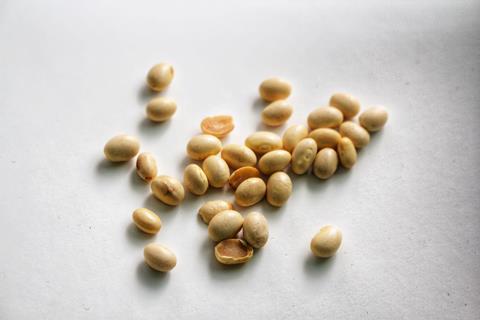
Soybean (Glycine max) forms symbiotic root nodules with nitrogen-fixing rhizobia, converting atmospheric nitrogen into ammonia and reducing reliance on synthetic fertilizers. Nodule number and weight are key indicators of symbiotic efficiency and yield potential, yet current quantification relies on excavating roots, excising nodules, and weighing them manually.
These methods are destructive, labor-intensive, and poorly suited to longitudinal monitoring or high-throughput phenotyping. Drought, salinity, and rhizobium strain identity can strongly alter nodulation, creating complex trait variation that is difficult to track over time. Based on these challenges, in-depth research is needed to develop non-destructive, scalable tools linking aboveground leaf signals to belowground nodule traits.
Reading roots through leaves
In a study published in Plant Phenomics and Biochemistry in 2026, researchers at The Chinese University of Hong Kong (CUHK), with collaborators at the University of Hong Kong, Nanjing Agricultural University, and the Guangdong Academy of Sciences, tested whether leaf hyperspectral reflectance could predict soybean nodule traits. The team combined leaf spectra with nodule measurements from 528 plants grown under controlled conditions. They developed Partial Least Squares Regression (PLSR) models that estimated nodule number and weight non-destructively and then tested them across rhizobium strains, drought, and salt stress. The work also tracked nodule development in living plants over time.
Testing across stress conditions
The study used 528 soybean plants from 18 genotypes, inoculated with two rhizobium strains: Bradyrhizobium diazoefficiens USDA 110 and Sinorhizobium fredii CCBAU45436. Plants were exposed to low salt (50 mM sodium chloride, NaCl), high salt (150 mM NaCl), drought (15% polyethylene glycol 6000, PEG-6000), or control conditions and harvested at 21 days post-inoculation (dpi). Leaf spectra were preprocessed with Savitzky-Golay smoothing, Z-Score standardization, and first-derivative transformation (SG-ZS-FD).
The resulting PLSR models predicted nodule number with R² = 0.75 and nRMSE = 6.02%, and nodule weight with R² = 0.53 and nRMSE = 12.38%. Variable Importance in Projection (VIP) analysis identified shared sensitive wavelengths near 422, 535, 696, 720, 1000, 1140, 1325, 1380, and 1895 nm; nodule weight had unique peaks at 470 and 1720 nm. Drought suppressed nodulation more strongly than salt, and salt stress produced distinct near-infrared and shortwave-infrared fingerprints.
Correlations with equivalent water thickness (EWT) were positive, whereas chlorophyll fluorescence indices (CF690 and CF740) and the Photochemical Reflectance Index (PRI) were negative, linking nodule traits to carbon-nitrogen exchange, xanthophyll activity, and leaf water status. In five Wm82 plants, the models tracked nodule number with R² = 0.90 and nodule weight with R² = 0.52.
From destructive to repeated measurements
The authors said the study shifts nodule phenotyping from destructive harvesting to repeated, non-destructive measurement. They said leaf spectra appear to capture systemic carbon-nitrogen exchange and water-status signals, allowing individual plants to be followed over time. They added that the approach could help match soybean genotypes with elite rhizobia and accelerate breeding for stress-resilient symbioses.
They said the models performed best for nodule number, a stable structural trait, while nodule weight remains more dynamic and sensitive to water status, soil conditions, and strain identity. Field validation and strain-specific calibration remain important next steps.
Towards field-scale monitoring
The method could enable non-destructive screening of soybean-rhizobium pairs, reducing breeding cycles and helping farmers optimize biological nitrogen fixation. By identifying plants with strong nodulation under drought or salinity, breeders could select resilient genotypes without digging up roots. The authors note that field deployment will require scaling from leaf to canopy, accounting for soil heterogeneity, and managing climatic variability.
MICROBIOLOGY NEWS: Register with The Microbiologist for more free articles
Combining unmanned aerial vehicle (UAV) hyperspectral imaging with radiative transfer models such as PROSAIL, soil sensors, and time-series monitoring could help preserve the physiological links observed in controlled chambers. If validated in the field, this approach could support more sustainable soybean production with lower synthetic nitrogen fertilizer use.
Topics
- Agriculture
- Asia & Oceania
- Bradyrhizobium diazoefficiens
- drought stress
- Food Microbiology
- Food Science & Technology
- Food Security & Safety
- genotypes
- Glycine max
- Healthy Land
- Microbes of the Earth
- nitrogen-fixing rhizobia
- One Health
- Research News
- rhizobium strains
- Sinorhizobium fredii
- Soil & Plant Science
- soybean
- sustainable breeding
- symbiotic root nodules
- The Chinese University of Hong Kong




No comments yet