
Researchers from the Brazilian Agricultural Research Corporation (EMBRAPA) and the University of São Paulo (USP) described the role of three bacteria in suppressing a soil-borne wheat pathogen that causes root rot.
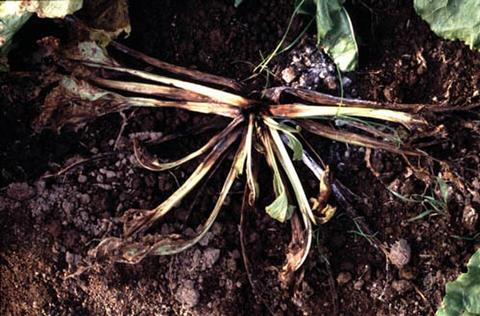
Their study, published in NPJ Biofilms and Microbiomes, paves the way for the development of inoculants that can be used in agriculture.
Bacteria don’t directly kill the pathogenic fungus
“We selected three bacteria from a group we had isolated in a previous study that showed the greatest potential to improve plant growth and exert an antagonistic effect against the pathogen. When we grew wheat in soil containing the bacteria and the pathogen, the fungus Bipolaris sorokiniana, we observed a 60% reduction in disease symptoms compared to treatments with only the pathogen in the soil,” says Caroline Sayuri Nishisaka, who conducted the research as part of her doctoral studies with a FAPESP scholarship at the EMBRAPA Environment unit in Jaguariúna.
“Perhaps the most interesting aspect of this study is that we didn’t observe the elimination of the pathogen, but rather how the presence of these bacteria protects the plant from it. The fungus remained present in similar quantities in the soil of both diseased and healthy plants. What changed was the outcome of the interaction. The plants inoculated with the bacteria built a kind of microbiological shield that prevented the fungus from causing the disease,” summarizes Rodrigo Mendes, a researcher at EMBRAPA Environment and project coordinator.
Mendes compares the action of the microbiome, a collection of microorganisms and their byproducts, to that of the human immune system. The immune system eliminates pathogens when the body is healthy, but it becomes vulnerable in situations such as autoimmune diseases and treatments that suppress immune function. “The presence of these beneficial bacteria reorganized the microbiome in such a way that the opportunistic fungus was kept under control,” he explains.
Changes in system ecology
The researchers selected three of the most promising bacterial species: Streptomyces virginiae, Paenibacillus ottowii, and Pseudomonas inefficax. Despite its name, the latter species was the most effective in controlling the pathogen.
P. inefficax performed best in the soil microbiome, significantly increasing root biomass. Along with S. virginiae, it exhibited the highest abundance of growth-promoting genes in terms of richness and diversity.
MICROBIOLOGY NEWS: Register with The Microbiologist for more free articles
Additionally, treatments with either of these two bacteria increased biosynthetic gene clusters, which produce potentially beneficial plant compounds. P. inefficax restored microbiome functions linked to plant protection as well.
“We observed that the bacterium didn’t act directly on the pathogen but rather as an ecological engineer, altering the system’s ecology to strengthen the plant’s defenses. This represents an advance over established knowledge to date,” says Nishisaka, who is currently conducting postdoctoral research with a FAPESP fellowship at CENA-USP.
Previous research and new outlooks
The bacteria analyzed in the study were selected from a previous study by the group, in which the soil microbiome was surveyed from crops of ancestral wheat varieties and commercial cultivars. The species used in this study come from two landrace wheat varieties obtained from countries near the center of origin of wheat: one from Turkey and the other from Iran.
In another study, published in late 2025, the group showed that low soil microbiome diversity increases the severity of B. sorokiniana infection and that P. inefficax can suppress the pathogen. The evaluated bacteria are part of EMBRAPA’s portfolio of assets and can be licensed by companies looking to develop products based on this research.
The researchers are now seeking to understand which plant-produced metabolites support beneficial bacteria and are attempting to predict the metabolic pathways activated in this interaction. The results could facilitate the development of new technologies to control and prevent diseases in agricultural crops.
Root rot is one of the most common diseases affecting wheat, a cereal whose production totaled 7.87 million metric tons in Brazil in 2025, according to the National Supply Company (CONAB). Wheat is one of the most widely produced grains in the world, with more than 800 million metric tons harvested last year.
Topics
- Bacteria
- Bipolaris sorokiniana
- Caroline Sayuri Nishisaka
- Ecology
- Environmental Microbiology
- Food Microbiology
- Food Safety & Security
- Food Security & Safety
- Fungi
- microbiome
- Mycology
- Paenibacillus ottowii
- plant immune response
- Pseudomonas inefficax
- Research News
- Rodrigo Mendes
- root rot
- Soil & Plant Science
- soil microbes
- soil microbial communities
- Streptomyces virginiae
- The Americas






No comments yet