
Scientists have identified potential ‘windows of opportunity’ that can provide routes for some pathogenic strains of E coli to cause mutations that ultimately lead to colorectal cancers.

A new commentary by a team from DKFZ Heidelberg, the German Cancer Research Centre, focuses on the question of when specific, genotoxic bacteria cause mutations in our human genome.
“Lots of groups have made seminal contributions here recently, and we put our current understanding and hypotheses for the next steps together,” said Luigi Nardella, a PhD student who is joint lead author with Dr Jarryd Boath.
“We know now that bacteria can cause mutations that are linked to colorectal cancer. But to interfere with this, we need to understand when and in whom this happens. In our article, we summarized our understanding of this and hypothesized the context where prevention may be possible.”
MICROBIOLOGY NEWS: Register with The Microbiologist for more free articles
The paper, ‘Windows of opportunity for genotoxic E. coli in colorectal cancer initiation’ is published in the Journal of Applied Microbiology, an Applied Microbiology International publication.
Mutational signatures
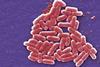
Mr Nardella explained: “In our commentary, we synthesize two decades of evidence on pathogenic strains of Escherichia coli that produce colibactin, a DNA-damaging agent that leaves characteristic mutational signatures in exposed cells. We focus on two key questions: when, and in whom, do these bacteria cause mutations?
“Bringing together evidence from genomics, gastrointestinal inflammation and cancer biology, developmental biology, microbiology, and clinical studies, we identify potential “windows of opportunity” during which bacterial genotoxins may have the greatest impact.”
The team then proposed a stepwise model of the events required for colibactin-induced mutagenesis, beginning with pks+ E. coli expansion and progressing through conditions that promote colibactin production, tissue access, and genotoxic activity.
“We highlight that carriage of a genotoxic bacterium alone may not be sufficient to cause DNA damage or drive CRC. Instead, intestinal barrier integrity, gut microbiome composition, colonization resistance, and the developmental or disease state of the intestine may determine when these bacteria have the greatest opportunity to damage the genome. This framework may help identify individuals who are most vulnerable and reveal opportunities for intervention,” said Mr Nardella.
When does exposure become harmful?
One key insight is that the same genotoxic bacterium may not have the same consequences in every person. The timing and duration of exposure, the state of the intestinal barrier and microbiome, and individual susceptibility may be as important as bacterial carriage itself. This shifts the focus from simply asking who carries a genotoxic bacterium to understanding when exposure becomes harmful and who is most susceptible.
MICROBIOLOGY ON TAP: Get full access to all The Microbiologist articles from just £2.17 a month
“Future research should define the precise circumstances under which genotoxic bacteria cause DNA damage in humans and determine whether preventing or reducing exposure can limit mutation accumulation and ultimately reduce CRC risk,” said Mr Nardella.
“Addressing these questions will require longitudinal studies and carefully designed experimental models to define how bacterial and host factors interact and to identify individuals who may benefit most from targeted prevention strategies.
‘Windows of opportunity for genotoxic E. coli in colorectal cancer initiation’ is published in the Journal of Applied Microbiology.



No comments yet