
Researchers at LMU, in collaboration with the European Molecular Biology Laboratory (EMBL) in Heidelberg, have discovered how the parasite Toxoplasma gondii builds a specialised structure that allows it to move and invade host cells. The study, published in Nature Communications, provides new insight into how this widespread parasite prepares itself for infection.
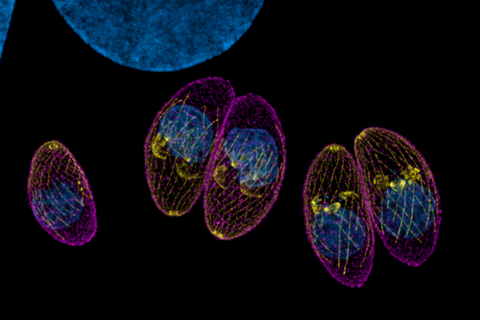
About one-third of the world’s population is infected with Toxoplasma gondii. To spread inside the body, it relies on a microscopic structure called the conoid complex, which acts like an engine for movement and cell-invasion.
“We identified two key proteins that control how this structure is assembled,” explains Dr. Elena Jimenez-Ruiz from the Department for Experimental Parasitology at LMU and author of the study. One protein, CGP, stabilises the structure in mature parasites, while another, ASAF1, positions and builds it at an early stage. When either protein is missing, the parasite cannot properly build this invasion machinery.
READ MORE: Scientists uncover protein that evolved with infection machinery in toxoplasmosis
Future therapeutic agents could target precisely this mechanism by inhibiting the function of one of the two molecules. Professor Markus Meißner, head of the study, says: “This represents a significant step forward in the fight against toxoplasmosis. If we have a better understanding of how the parasite infects its host cell, we can take more targeted measures to prevent it from doing so.”





_in_a_fibroblast_host_cell.png)
No comments yet