
All Synthetic Biology articles – Page 3
-
 News
NewsEngineering oncolytic bacteria as precision cancer therapeutics
A new review summarizes recent advances in the design and application of synthetic biological strategies that enhance bacterial precision, safety, and efficacy in tumor therapy.
-
 News
NewsBacteria double as Trojan horse for artificial amino acids
Researchers have hijacked a natural transport system of the bacterium E. coli to develop a solution that allows artificial amino acids to be introduced into bacteria efficiently. This means the “amino acid toolbox” can be expanded for widespread use in medicine and the biotech industry.
-
 Careers
Summer studentship: Lucy creates a synthetic microbiome to study mosquito-borne diseases at different life stages
Lucy Ella Malvern reports back on her AMI-sponsored summer studentship which investigated microbiome assembly in mosquitoes across developmental stages.
-
 News
NewsChemists synthesize a fungal compound that holds promise for treating brain cancer
For the first time, chemists have synthesized a fungal compound known as verticillin A, which was discovered more than 50 years ago and has shown potential as an anticancer agent.
-
 Careers
The Future is Fungi 2025: award-winner Michroma’s mission to harness fungi for clean food dyes and flavors
Winner of The Future is Fungi Award 2025, US and Argentina-based foodtech startup Michroma is replacing petrochemical coloring with fungibased natural ingredients, launching one of the world’s leading sustainable platforms for food flavors and colors. Here’s its story.
-
 News
NewsDiphtheria toxin fragment harnessed to fuse lipid vesicles at neutral pH
Researchers have discovered a novel way to fuse lipid vesicles at neutral pH. By harnessing a fragment of the diphtheria toxin, the team achieved vesicle membrane fusion without the need for pre-treatment or harsh conditions, opening the door to new applications.
-
 News
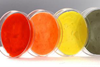
NewsScientists develop world’s first modular co-culture platform for the one-pot production of rainbow-colored bacterial cellulose
The team engineered Komagataeibacter xylinus for bacterial cellulose synthesis and Escherichia coli for natural colorant overproduction. A co-culture of these engineered strains enabled the in situ coloration of bacterial cellulose.
-
 News
NewsMicrobial teamwork slashes uranium pollution in just 48 hours
A research team has developed a synthetic microbial consortium that completely reduces soluble uranium [U(VI)] to insoluble U(IV) within 48 hours, showing nearly twice the efficiency of a single-strain system. The study reveals how Shewanella oneidensis MR-1 and Pseudomonas aeruginosa LXZ1 cooperate to accelerate extracellular electron transfer (EET).
-
 News
NewsNext-generation microbiome medicine may revolutionize the treatment of Parkinson’s and similar disorders
Scientists have engineered the probiotic bacterium Escherichia coli Nissle 1917 as a drug-delivery system that continuously produces and delivers the gold-standard Parkinson’s drug Levodopa, which is converted to dopamine in the brain. E. coli Nissle strain was chosen for its century-long record of safely treating gastrointestinal disorders in humans.
-
 News
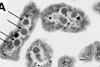
NewsNew blueprint for nature’s carbon-capturing nanomachines revealed
Researchers have uncovered how bacterial organelles assemble, opening new routes for bioengineering and climate innovation. The team has unveiled the most detailed picture yet of how bacteria construct microscopic compartments known as carboxysomes – natural nanomachines that play a vital role in capturing and converting carbon dioxide (CO₂).
-
 News
NewsPhages with fully-synthetic DNA can be edited gene by gene
Scientists have developed a method to construct bacteriophages with entirely synthetic genetic material, allowing researchers to add and subtract genes at will.
-
 News
NewsResearchers reveal novel mechanisms for decoding bacterial frequency modulation in signal processing
A study reveals the fundamental physical principles underlying bacterial FM signal processing, and demonstrated that FM decoding mechanisms enable bacteria to increase information entropy by approximately 2 bits compared to traditional AM in three-gene regulatory systems.
-
 News
NewsRODIN project will invest 10 M€ to explore cells as the architects of future biomaterials
RODIN - Cell-mediated Sculptable Living Platforms - is set to revolutionize the field of biomaterials and tissue engineering by shifting the focus from designing materials for cells to empowering cells to design their own environments.
-
 News
NewsEngineered membraneless organelles boost bioproduction in Corynebacterium glutamicum
Scientists have successfully engineered liquid-liquid phase separation (LLPS)-driven membraneless organelles (MLOs) within the food-grade industrial strain Corynebacterium glutamicum.
-
 News
NewsNew platform for the production of versatile active ingredients
With the help of a newly developed chemo-enzymatic platform, researchers have succeeded in producing a large number of different furanolides in larger quantities and characterizing their biological activity.
-
 News
NewsScientist wins research grant to create mucin-on-a-chip for IBD research
Dr. Ilana Kolodkin-Gal of the Scojen Institute for Synthetic Biology has won a research grant from the BSF-NSF to investigate the role of invasive and pathogenic strains of intestinal bacteria in disrupting the integrity of the intestinal barrier.
-
 News
NewsIUCN members choose science and ethics in landmark vote on synthetic biology
The Wildlife Conservation Society (WCS) has hailed the adoption of Motion 87, supporting the responsible, evidence-based use of synthetic biology, at the IUCN World Conservation Congress in Abu Dhabi as a historic milestone for global conservation policy.
-
 News
NewsSynthetic biology reprograms plant–microbe partnerships for resilient agriculture
By integrating engineering principles with plant biology, a new review highlights how redesigned genetic pathways and plant-based biosensors can deepen understanding of plant responses to both harmful and beneficial microbes.
-
 News
NewsRevolutionizing bioplastics: a microbial platform for fully bio-based long-chain polyesters
Researchers have developed a scalable, end-to-end microbial process transforming plant oils into sustainable polyesters comparable to petroleum-based plastics.
-
 News
NewsExpanding the genetic toolkit: nitrogen-response promoters developed for Bacillus licheniformis
Promoters are crucial expression elements in synthetic biology, and Bacillus licheniformis serves as an excellent chassis cell for industrial production, but is restricted by a lack of nitrogen source-responsive promoters.