
All Agriculture articles – Page 7
-
 News
NewsBeyond outbreaks: zoonotic disease prevention at the human–animal interface in China
A study synthesizes evidence on 93 zoonotic diseases currently monitored by China’s public health, agricultural, and forestry sectors, and argues that meaningful risk reduction will require shifting from reactive outbreak response toward earlier prevention at the human–animal–environment interface.
-
 News
NewsDrip-irrigated halotolerant PGPB boost jujube yield and quality in saline soils by reshaping soil bacterial communities
A new study demonstrates that applying halotolerant plant growth-promoting bacteria (PGPB) via drip irrigation during the crop growth period can effectively alleviate soil salinity stress, enhance jujube productivity and fruit quality, and restructure rhizosphere bacterial communities in saline agricultural soils.
-
 News
NewsCinnamic acid blocks plasmid conjugation to slow antibiotic resistance spread
A new study reveals that cinnamic acid, a widely used food additive found in cinnamon, can effectively inhibit plasmid‑mediated conjugation, a major route for the global spread of antibiotic resistance genes (ARGs).
-
 News
NewsHow scientists are breeding spinach to better withstand Pythium
Breeding efforts to improve spinach tolerance to a pathogen called Pythium will help both indoor and outdoor growers of the popular leafy green.
-
 News
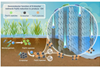
NewsGraphitized biochar rewires soil microbes to accelerate pollutant breakdown in rice paddies
A new study reveals that a specially engineered form of biochar can dramatically enhance the natural ability of soil microbes to break down pollutants in rice paddies, offering a promising strategy for cleaner and more sustainable agriculture.
-
 News
NewsAfrican swine fever is quietly spreading across Nepal’s pig sector
A new study provides the first comprehensive analysis of African swine fever outbreaks in Nepal, revealing a disease that has quietly dismantled livelihoods, disrupted food security, and exposed deep gaps in the country’s animal health system — with no vaccine in sight.
-
 News
News‘Safe’ fertilizer linked to extreme water quality loss in Canadian Prairies
Research has found that widespread application of the common farm fertilizer, urea, severely degrades water quality in the Canadian Prairies. Urea added to farm ponds increased growth of algae to levels 10 times higher than seen in other damaged ecosystems, such as Lake Winnipeg in Manitoba.
-
 News
NewsMolecular biologist Li-Jun Ma wins 2026 Mahoney Life Sciences Prize
Li-Jun Ma has been chosen as this year’s winner of the Mahoney Life Sciences Prize for her work toward mitigating the effects of a fungal pathogen that is causing the functional extinction of the bananas most commonly found in U.S. supermarkets.
-
 News
NewsGlobal strategy to combat drug‑resistant fungi is about to change
An increasing number of fungi are becoming resistant to medication, posing serious risks for patients with weakened immune systems. That is why fifty researchers from around the world are calling for action against drug‑resistant fungi.
-
 News
NewsIntegration of two genes: A valuable strategy for developing virus-resistant tomatoes
Researchers have demonstrated that integration of Ty-1/Ty-3 and Ty-6 resistance genes in tomato plants can confer highly robust resistance to begomoviruses.
-
 News
NewsAfrican swine fever: a novel model for assessing transmission between domestic pigs and wild boar
Researchers have developed an innovative multi-host epidemiological model for African swine fever incorporating both pig farms and wild boar habitats and calibrated using empirical outbreak data. The model uses detailed data from the first phase of the Romanian epidemic.
-
 News
NewsEnzyme produced by fungus may replace chemicals in the paper industry
Fungal xylanase can be obtained by cultivating the microorganism in sugarcane bagasse or wheat bran. The solution is a non-polluting alternative for bleaching cellulose pulp, which currently uses a toxic chemical.
-
 News
NewsRapid and visual on-site detection system for Epizootic Hemorrhagic Disease Virus
Epizootic Hemorrhagic Disease (EHD), a vector-borne disease affecting both wild and domestic ruminants, is transmitted by biting midges of the genus Culicoides. Researchers developed a rapid and visual test strip for EHDV RNA detection based on RT-ERA and CRISPR-Cas12a.
-
 News
NewsNew biochar composite tackles arsenic pollution and methane emissions in rice paddies
Rice paddies feed more than half of the world’s population, yet they are also hotspots for toxic arsenic contamination and greenhouse gas emissions. A promising solution that addresses both problems at once uses an engineered biochar material enhanced with titanium dioxide.
-
 News
NewsMicroscopic coils and coffee trees lead to an amazing new fungal discovery
A new study has revealed two novel species of Neohelicomyces fungi: Neohelicomyces coffeae and Neohelicomyces puerensis. While studying the fungi that live on Coffea arabica, researchers spotted these unique organisms growing on dead coffee branches.
-
 News
NewsA world within the leaves: Sign up for our fascinating free webinar
A single tree can harbour hundreds of species - yet few people will realise that some of those species live within the very leaves themselves. A fascinating free webinar will explore the fascinating world of fungal communities that live inside leaves.
-
 News
NewsNew strategy to break resistance-yield trade-off in rice by pathogen-inducible gene expression
A research team has developed a genetic strategy to enhance broad-spectrum disease resistance in rice without compromising plant growth and yield, a major challenge in crop breeding.
-
 News
NewsBiochar triggers long-term soil recovery by reshaping microbes and metabolism
A five-year field study reveals that biochar can do far more than improve soil chemistry. It can reorganize entire soil ecosystems, creating lasting benefits for agriculture and environmental sustainability.
-
 News
NewsOregano, rosemary and ‘time’: Long-term swine study shows natural-compound benefits
In a rare long-term public study that compared the effects of phytochemicals from rosemary and oregano with antibiotic growth promoters, animal scientists found that the natural agents given to weaned pigs supported favorable gut health and growth performance later in their lives.
-
 News
NewsBiochar offers climate-smart pathway to healthier soils and safer tea production
A new scientific review highlights how biochar, a carbon-rich material produced from biomass, could transform tea farming by restoring soil health, reducing pollution risks, and improving both yield and quality. Source: AxelBoldt Closeup of leaves of tea plant Camellia sinensis Tea, derived from Camellia sinensis, is one ...