
All Agriculture articles – Page 4
-
 News
NewsMaterial extends shelf life and prolongs release of fungus used as bioinsecticide
Encapsulating Beauveria bassiana in a biopolymer made of cellulose and aluminum increased the viability of the fungus from 69% to 85% after five months of storage, providing a more sustainable alternative that releases the bioinsecticide.
-
 News
NewsDegradable sensors reveal hidden soil secrets
New degradable sensors being developed by soil scientists track biological activity in soil by having a degradable substrate that is nibbled on by microbes.
-
 News
NewsSlow down, microbes: When wheat learns to protect the nitrogen
Wheat plants can do more than grow grain. Research shows that their roots release natural compounds that slow down soil microbes and keep nitrogen in the soil potentially cutting losses, greenhouse gas emissions and costs for farmers.
-
 News
NewsBiochar triggers a five-year soil recovery cascade in acidifying rice paddies
A long-term field study reveals how biochar reshapes soil chemistry, microbes, viruses, and metabolites to support healthier agricultural ecosystems.
-
 News
NewsTwo types of biochar help alfalfa survive salty soils
A new study shows that carefully designed biochar can guide plant metabolism and reshape beneficial microbial communities around the roots to help reduce stress from saline-alkali soil.
-
 News
NewsBiochar and beneficial microbes team up to restore polluted soils and boost crop growth
A new review examines how biochar-immobilized microbes can help clean contaminated soils, improve soil health, and support crop growth. By analyzing evidence from 92 published studies, the authors provide a data-driven overview of how this technology works and what is needed to bring it closer to practical use on farms.
-
 News
NewsResearchers test two treatments to protect against deadly cattle disease
As cases of a deadly cattle disease rise in Arkansas, researchers are testing two treatments they hope will help ranchers protect their herds. The disease is bovine theileriosis and is caused by the parasite Theileria orientalis Ikeda, carried primarily by the invasive Asian longhorned tick.
-
 News
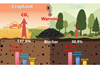
NewsWarming may weaken biochar’s climate benefits in cropland soils, global study finds
Researchers found that warming significantly increased carbon dioxide emissions from soils treated with biochar by an average of 77%. The effect was especially strong in croplands, where emissions increased by 117.5%, compared with 30.9% in forest soils.
-
 News
NewsReducing the use of synthetic nitrogen fertiliser via improving nitrogen uptake in corn plants
A new agricultural project will help reduce the use of synthetic nitrogen fertilizer through the design of corn plants that better use nitrogen already in the soil.
-
 News
NewsEurope’s crops under threat: €6 million project launches to tackle rising plant pest crisis
The University of Warwick leads a European consortium to build the first platform capable of coordinating Europe’s response to devastating agricultural and forest pest invasions. The project will give plant health authorities the ability to model and optimise pest control strategies across the entire agri-value chain.
-
 News
NewsBiochar can reshape how soils respond to warming, but the effect depends on the soil
A new study shows that biochar can change how strongly soil nitrous oxide emissions respond to rising temperatures. But the effect is not one-size-fits-all. The study found that nitrous oxide emissions increased with warming in both agricultural soil and forest soil, but forest soil was more temperature-sensitive than agricultural soil.
-
 News
NewsIron-modified biochar turns soil oxygen into a cleaner for antibiotic pollution
Antibiotic residues in agricultural soils are an emerging environmental concern, with potential impacts on soil health, crop safety, and the spread of antimicrobial resistance. A new study reports on an iron-modified biochar that helps soil use its own oxygen and iron chemistry to break down sulfamethoxazole.
-
 News
NewsLong-term biochar use can help cropland soils store more microbial carbon, but depth matters
A 12-year field study shows that biochar boosts stable microbial carbon in topsoil while reducing it in deeper soil layers, highlighting the need for depth-specific carbon management.
-
 News
NewsThe right heat makes biochar a better helper for food waste composting
A new study finds that hardwood biochar made at 400 °C best protects nitrogen during food waste digestate composting, offering a practical route to cleaner and higher-quality compost.
-
 News
NewsBiochar could help make tea farming cleaner, safer, and more climate resilient
A new review examines how biochar, a carbon-rich material produced by heating biomass under limited oxygen, could become a practical tool for more sustainable tea cultivation. It focuses on five connected areas: soil properties, microbial communities, nutrient cycling, tea productivity and quality, and heavy metal detoxification.
-
 News
NewsSaltier soils may help biochar last longer, new study finds
Researchers found that higher soil salinity can slow the aging of biochar, helping it retain more carbon-rich, aromatic structures while reducing microbial colonization, especially by fungi.
-
 News
NewsResearch shows plants such as canola, tomatoes and rice reduce iron uptake when stressed by drought
New research has found that plants, ranging from canola to rice to tomatoes, actively shut down their own ability to take up iron when they experience drought. The study questions whether plants send out a ‘cry for help’ when they are stressed by drought to recruit beneficial soil microbes in their roots.
-
 News
NewsProtective soybean seed fungicide treatment may not increase profitability
Researchers analyzed how seed treatments affect yield and profitability in soybean farms in the Midwest and found that yield gains were modest and often did not offset the added cost of the treatment. Additionally, financial benefit was likely only when seed treatment costs were low and soybean prices were high.
-
 News
NewsNot all biochar is equal: New perspective calls for clearer claims in carbon removal and soil health
A new perspective warns that biochar’s long-term carbon storage potential and its soil improvement benefits should not be treated as the same thing. Clearer communication is urgently needed as biochar becomes a major player in voluntary carbon markets and climate mitigation strategies.
-
 News
NewsResearchers transfer nitrogen-harvesting genes into new bacteria
New research has identified a key cluster of genes that can be moved from rhizobia bacteria that harvest nitrogen into bacteria that don’t — raising the possibility that microbes that dwell in cereal crops could eventually be engineered to atmospherically harvest nitrogen as well.