
All Agriculture articles – Page 3
-
 News
NewsRice-grown chaga reveals genes behind valuable triterpenoids
New study links triterpenoid accumulation in Inonotus obliquus with rising expression of key biosynthetic genes, providing a genetic foundation for future work to improve sustainable production of Chaga-derived compounds.
-
 News
NewsDrone index tracks wheat mildew
A new study addresses the need for rapid, field-scale monitoring of wheat powdery mildew in smallholder farms, where disease spread can be spatially uneven and difficult to capture through manual scouting alone.
-
 News
NewsMicrobe–fertilizer pair cuts greenhouse soil emissions
A new study shows that inoculating organic fertilizers with denitrifying bacterium, especially when paired with mushroom residue organic manure, reduces N₂O emissions by reshaping the soil microbiome.
-
 News
NewsBiochar helps paddy soils lock away carbon by reshaping microbial life underground
A new study reveals that straw and biochar both increase soil organic carbon, but biochar stores carbon more efficiently by guiding soil microbes toward stable carbon formation.
-
 News
NewsRice-crayfish farming strengthens soil nutrient cycling
Using metagenomic sequencing, a study has shown that integrated rice-crayfish systems increase the abundance of functional genes involved in methane oxidation, nitrogen degradation, denitrification, organic phosphorus mineralization, and phosphorus transport compared with rice monoculture. Source: Brian Tomlinson from Milton Keynes, UK Crayfish. The paddy planting area within ...
-
 News
NewsSoil pH regulates the symbiosis between stink bugs and gut bacteria
A new study shows soil pH regulates the symbiosis between stink bugs and gut bacteria, revealing alternative strategies to pesticides in agricultural pest control.
-
 News
NewsThe miracle microbes that could save crops from impact of rising sea levels
A new study reveals a previously unknown mechanism by which microbes help plants – including maize, tomato and rapeseed - survive in harsh environments, with major implications for agriculture worldwide.
-
 Opinion
Fungi that inspired The Last of Us may hold the key to a pesticide-free agriculture
They may be the stuff of our nightmares, but Aditya Singh Ranout reveals how invisible allies underneath our feet in the form of entomopathogenic fungi are transforming agriculture - and why these fascinating microbes may hold the key to a pesticide-free agriculture.
-
 News
NewsMicrobes reveal how tillage shapes soil carbon storage
A new study on maize fields in Jilin Province, China, found adding organic carbon sources on top of straw had different effects on the organic carbon in the topsoil in comparison to the subsoil.
-
 News
NewsResearchers aim to autonomously eliminate plant-killing bacteria from hydroponic farming systems
Three researchers have received a nearly $600,000 grant from the U.S. Department of Agriculture to develop a system that can autonomously detect and remove crop-killing microbes from hydroponic farms before they cause damage to plants.
-
 News
NewsTea’s molecular shield against anthracnose
Researchers investigating inducible immune mechanisms activated by tea plants after pathogen infection said the findings show that tea anthracnose resistance is not simply a matter of possessing a resistance-related gene, but of how strongly and rapidly the plant activates its defense network.
-
 News
NewsThe drive to protect Missouri’s $4 billion cattle industry from tick threats
A tiny parasite-carrying tick is posing an outsized threat to Missouri’s cattle. Now, researchers are stepping in to protect the state’s $4 billion cattle industry by tracking different ways the American dog tick spreads a deadly disease known as bovine anaplasmosis.
-
 News
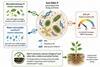
NewsScientists uncover hidden phosphorus reservoir vital for future food production
Researchers have developed a simpler and more cost-effective method to measure a biologically important form of phosphorus in soils, providing new insights into nutrient cycling that could help improve sustainable agricultural management.
-
 News
NewsNanozeolite-coupled biochar fertilizer may help bamboo forest soils hold on to carbon
A new study finds that a biochar-based phosphate fertilizer can reduce soil carbon loss and lower the temperature sensitivity of carbon decomposition in Moso bamboo forests.
-
 News
NewsHow biochar helps soil carbon last longer: microbes turn dissolved organic matter into more stable forms
A long-term field study reveals that biochar does more than add carbon to soil. Over time, it can reshape microbial activity and help transform dissolved organic matter into more humified, stable carbon pools. Source: Tianchu Liu, Shihao Huang, Jing Mu & Xiaomin Zhu Microbial processing drives humification of ...
-
 Opinion
Biopiracy in microbiology: Who owns nature’s resources?
A growing global debate over “biopiracy” is raising urgent questions for microbiologists, researchers, industry and policymakers alike — and Applied Microbiology International is calling on members to help shape the conversation. Biopiracy refers to the unauthorised or unethical use of biological materials — including seeds, plants, ...
-
 News
NewsJust 10 viral particles can cause H5N1 avian flu infection in cows
Just 10 viral particles of the H5N1 bird flu that caused hundreds of influenza outbreaks in U.S. dairy cattle can cause infection in cows, a new study shows. The research also hints at why the outbreaks have confounded scientists, farmers and livestock handlers hoping to contain and prevent the disease.
-
 News
NewsPlant viruses open new routes for gene editing
A new study has developed potyvirus-derived vectors for delivering CRISPR RNA (crRNA) guides in Lachnospiraceae bacterium ND2006 Cas12a (LbCas12a)-expressing plants, expanding virus-induced gene editing from tobacco rattle virus (TRV) to tobacco etch virus (TEV), turnip mosaic virus (TuMV), and lettuce mosaic virus (LMV).
-
 News
NewsBiochar may help stop antibiotics from escaping through hidden soil highways
A new study reveals that biochar can do more than simply trap pollutants. It may actively redirect antibiotic movement in structured soils, helping reduce the risk of contamination in nearby water systems.
-
 News
NewsBiochar’s hidden electron power could unlock cleaner pollution control and energy recovery
A new review highlights how biochar’s natural redox properties may help overcome key barriers to large-scale environmental applications.