
All Cancer Microbiology articles – Page 2
-
 News
NewsCommon probiotic ingredient turns immune cells into tumor killers
A probiotic bacterium secretes mannose—that significantly suppresses melanoma growth in mice by activating the body’s own immune defenses. Mannose enters CD8⁺ T cells through glucose transporters and inhibits a key protein called YAP1, which normally restrains T-cell killing power.
-
![Low-Res_[1] KRICT Research Team](https://d3rmrttq0bsnxi.cloudfront.net/Pictures/100x67/3/0/4/21304_lowres_1krictresearchteam_295027.jpg) News
NewsKRICT discovers novel SRV2 envelope protein for efficient car immune cell production
Researchers identify a novel SRV2 envelope protein that serves as a key to unlock immune cells, enabling more efficient delivery of anticancer genes and improving the production and therapeutic performance of CAR immune cells.
-
 News
NewsGut microbiome: The hidden architect of liver cancer immunotherapy response
A comprehensive review synthesizes current advances linking gut bacteria to immunotherapy outcomes in hepatocellular carcinoma (HCC), the most common type of primary liver cancer.
-
 News
NewsReview unmasks hidden role of gut microbes in colorectal cancer
A new review systematically dissects how the gut microbiota and host cells talk to each other across four molecular layers – genome, transcriptome, epigenome, and metabolome – and highlights the computational innovations that make such multi‑omics integration possible.
-
 News
NewsEnvironmental fungi found to alter vaginal mycobiome and cervical disease progression during dysbiosis
Scientists have demonstrated for the first time that environmental fungi actively interact with the vaginal bacteriome and mycobiome with likely implications for cervical disease progression.
-
 News
NewsMicrobes rewrite the rules of cancer immunotherapy by triggering immunogenic cell death
A new study reveals that microbiota and their metabolites can effectively reprogram immunogenic cell death (ICD), a unique form of cell death that activates the body‘s immune system against tumors, transforming immunologically “cold” therapy-resistant tumors into “hot” responsive ones.
-
 News
NewsRight versus left: Colorectal cancer’s two microbial worlds
New research reveals that the mucosal microbiome varies dramatically depending on whether a tumor arises on the right or left side of the colorectum, suggesting that the microbial environment surrounding tumors may be as geographically distinct as the tumors themselves.
-
 News
NewsLarge-scale microbiome study identifies robust colorectal cancer signature
Researchers have identified a robust microbial signature associated with colorectal cancer. The study also analysed 906 intestinal tissue samples to compare stool-based microbiome signals with microbes found directly in tumour tissue.
-
 News
NewsAlgae microbots take aim at bladder cancer
Tiny algae-based robots guided by magnets could improve bladder cancer treatment by boosting delivery of chemotherapy drugs into tumours. Tracked using real-time imaging, the miniature robots help drugs penetrate deep into tumour tissue while limiting damage to healthy cells.
-
 News
NewsNew study shows near-complete reduction of cervical cancer deaths among HPV-vaccinated adolescents in England
A new study suggests the Human Papilloma Virus (HPV) vaccine may be responsible for a near-complete protective effect against death from cervical cancer among women under 30 in England who received the vaccine between 12-18 years old.
-
 News
NewsTherapeutic vaccine shows mixed efficacy in preventing head and neck cancer recurrence
Researchers explore the effectivity of new therapeutic cancer vaccine in preventing the recurence of human papillomavirus triggered cancers.
-
 News
NewsPlants could be used to grow medicines in space, study shows
Astronauts on long space missions may one day use plants to produce fresh stocks of medicines on demand. Researchers developed a simple method to grow and repeatedly harvest plant virus-based pharmaceuticals from plants under space-like conditions, without destroying the plants or generating large amounts of waste.
-
 News
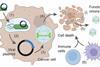
NewsResearchers combine bacteria and viruses to demonstrate a new way to fight cancer
Researchers have designed non-toxic Salmonella bacteria to deliver viruses that are safe to humans but potent against liver and pancreatic cancer tumors. Animal models treated with this combination of bacteria and viruses saw almost all their tumors eliminated and lived significantly longer.
-
 News
NewsResearcher studying probiotics to fight acid reflux and esophageal cancer
Patients with acid reflux, which occurs when stomach acid pushes up into the esophagus, know the symptoms all too well: heartburn, belching, chest pain and trouble swallowing. Acid reflux also increases the risk of esophageal cancer, but researchers are investigating how a simple probiotic could treat and prevent both conditions.
-
 News
NewsStudy identifies serious infection risks linked to targeted cancer therapies
A major real-world study has found serious blood-related side effects associated with antibody-drug conjugates, an increasingly important class of targeted cancer therapies. Some ADCs were associated with substantial rates of severe neutropenia – dangerously low levels of infection-fighting white blood cells – and related complications.
-
 Careers
A week in the life of a Parvovirus researcher
Alejandro Fernández Llorente works as a predoctoral researcher at Centro de Biología Molecular Severo Ochoa (CBM-CSIC), a prestigious biomedical research centre located in Madrid, Spain.
-
 News
NewsColorectal cancer risk linked to gut microbiome alterations
A study finds that more than a decade after removal of an adenoma from the colon, the gut microbiome still partly resembles that observed in colorectal cancer (CRC).
-
 News
NewsNew study links gut bacteria to immunotherapy success in melanoma patients
Researchers have identified specific gut bacteria linked to better responses to cancer immunotherapy in patients with advanced melanoma. Patients who responded well to treatment were more likely to have a specific type of gut bacteria called Faecalibacterium.
-
 News
NewsTrial tests virus-immunotherapy combination for neuroendocrine tumors
A phase I clinical trial is testing whether a tumor-targeting virus can help immunotherapy work more effectively against aggressive neuroendocrine tumors that often resist treatment. The ongoing study has completed its first three dose levels with no severe treatment-related side effects reported to date.
-
 News
NewsMicrobiome insights may help predict immunotherapy benefit in kidney cancer
City of Hope researchers report that gut microbiome composition may influence how patients respond to immunotherapy combinations in metastatic renal cell carcinoma, pointing to a potential biomarker that could help guide treatment selection in the future. The microbiome is a rising focus at City of Hope, highlighted ...