
A new hypothesis article has been published in Oncotarget (Volume 17) on January 3, 2026, titled “Hypothesis: HPV E6 and COVID spike proteins cooperate in targeting tumor suppression by p53.”
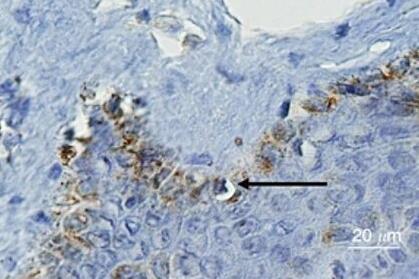
Written by Wafik S. El-Deiry, Oncotarget Editor-in-Chief, from The Warren Alpert Medical School of Brown University and from Lifespan Health System and Brown University, the paper proposes that two viral proteins, HPV E6 and SARS-CoV-2 spike, could jointly reduce the activity of p53, a protein that helps protect cells from becoming cancerous. HPV is already known to drive several cancers, and the hypothesis suggests that additional pressure on p53 could matter for cancer risk or recurrence in some settings.
HPV can promote cancer development in part by using its E6 protein, together with a human partner protein called E6-AP, to drive the downregulation of p53. When p53 is weakened, damaged cells may be more likely to survive and continue growing. The new hypothesis asks whether SARS-CoV-2 viral influence could further reduce p53 function in people already affected by HPV.
The article highlights studies suggesting that the SARS-CoV-2 spike protein may suppress p53 activity and discusses observations that have raised questions about cancer outcomes after COVID-19 infection or vaccination in certain contexts. It also notes that a search of the literature did not identify clear evidence of direct molecular cooperation between HPV and COVID-19 in suppressing p53, which underscores the need for further studies.
Next steps
“I listened to an interview (https://www.youtube.com/watch?v=tnVMjp9mCA0&t=2s) of Dr. Patrick Soon-Shiong by Chris Cuomo where I learned about a patient named Jim Johnson with a history of HPV-related head and neck cancer who by 2022 had survived his HPV-related cancer for 7 years and then he took the COVID vaccine.”
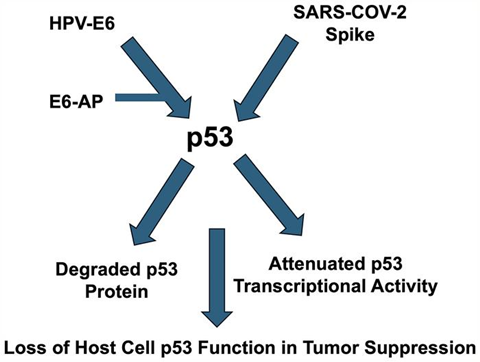
To investigate the presented hypothesis, Dr. El-Deiry proposes epidemiological studies that analyze cancer incidence and recurrence in HPV-positive groups with prior SARS-CoV-2 infection or COVID mRNA vaccination. It also proposes laboratory studies to assess whether HPV E6 and SARS-CoV-2 spike combined reduce p53 function more than either factor alone.
Overall, the hypothesis was formulated to focus attention on an HPV and SARS-CoV-2 shared biological target, p53, and to encourage careful studies that separate coincidence from causation. By outlining specific approaches, it aims to help researchers evaluate whether combined viral pressures on tumor-suppressor pathways could contribute to cancer progression.




_1618_E6_staining_in_normal_and_ductal_carcinoma_in_situ_(DCIS)_breast_cancer_specimens.jpg)
No comments yet