
Inflammatory bowel disease (IBD) is a term used to describe a group of conditions characterized by chronic inflammation of the gastrointestinal tract, with Crohn’s disease and ulcerative colitis being the two major forms. According to the CDC, approximately 4.1 million U.S. adults, or 1.6% of the adult population, reported having been diagnosed with IBD in 2023–2024.
Crohn’s disease causes long-term inflammation that can occur anywhere along the digestive tract, from the mouth to the anus, although the end of the small intestine, known as the terminal ileum, and the colon are commonly affected. Ulcerative colitis, on the other hand, is limited to the large intestine, causing continuous inflammation that begins in the rectum and can extend through part or all of the colon.
There is no single test used to diagnose IBD, as doctors typically combine blood tests to look for anemia and signs of inflammation, stool tests to assess intestinal inflammation and rule out infections, and endoscopic procedures such as colonoscopy. During a colonoscopy, physicians can directly examine the intestinal lining and collect tissue biopsies to help distinguish IBD from other gastrointestinal conditions. Imaging, including CT or MR enterography, can also be particularly useful in Crohn’s disease because inflammation may involve portions of the small intestine that cannot be fully examined by colonoscopy.
Treatment depends on the type and severity of IBD, but the primary goal is to control intestinal inflammation and maintain remission. Corticosteroids can rapidly suppress inflammation during a flare but are generally used only for short periods because of their long-term side effects. Aminosalicylates are commonly used for mild to moderate ulcerative colitis, while immunomodulators, biologic drugs, and newer small-molecule therapies can suppress or block specific components of the immune response in patients with more persistent or severe disease. Nutritional support may also be used to address deficiencies or, particularly in Crohn’s disease, as part of treatment itself. Surgery may become necessary when medications fail or complications develop. Removing the colon and rectum can effectively eliminate ulcerative colitis from the gastrointestinal tract, whereas surgery for Crohn’s disease can remove severely damaged sections of intestine or treat complications such as strictures, fistulas, or abscesses, but does not cure the underlying disease.
Beneficial gut bacteria
Researchers at Rutgers University recently identified a molecule produced by beneficial gut bacteria that may help repair the intestinal lining. In a 2026 study published in Science Advances, researchers found that (amide-)N-methylnicotinamide, or N-MNA, can act as a precursor for nicotinamide adenine dinucleotide (NAD+), a coenzyme involved in cellular metabolism whose levels tend to decline with age.
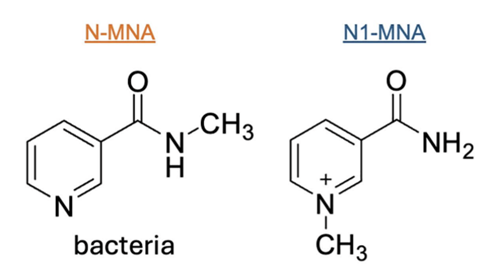
Using stable-isotope tracing, the researchers found that N-MNA was rapidly taken up by human intestinal cells and contributed about 22% of their NAD pool within 24 hours. N-MNA was also converted into NAD in human neurons, liver cells, and kidney cells, as well as in the bodies and heads of fruit flies given the compound.
Additionally, in mice with inflamed and damaged colons, control animals lost about 20% of their body weight, while mice treated with N-MNA lost roughly 5% before recovering. Treatment also promoted intestinal stem-cell regeneration and repair of the epithelial lining. In fruit flies with chemically damaged intestines, N-MNA increased seven-day survival from about 43% to 78%.
The researchers also looked for N-MNA in people. In stool samples from 54 patients with inflammatory bowel disease and 20 healthy volunteers, lower concentrations of N-MNA were associated with greater intestinal inflammation. Patients with lower N-MNA had significantly higher levels of fecal calprotectin, a marker commonly used to measure intestinal inflammation in IBD. Considering that some commensal bacteria, including certain Lactobacillus strains, can produce N-MNA, these findings raise the possibility that increasing populations of N-MNA-producing bacteria could eventually become one way of supporting intestinal repair in people with IBD.
Still a hypothesis
However, that possibility remains a hypothesis. The researchers did not give N-MNA to the patients with IBD, so the human data cannot show that increasing N-MNA would reduce inflammation or improve disease symptoms. They also did not test whether consuming probiotic strains that produce N-MNA, including strains of Lactobacillus already found in some yogurts and supplements, actually increases N-MNA or NAD levels in people.
MICROBIOLOGY NEWS: Register with The Microbiologist for more free articles
There are also still basic questions about how N-MNA works in human cells. The team has received a five-year, $3.6 million grant from the National Institutes of Health to identify the human enzymes responsible for processing N-MNA. They are also investigating whether the molecule can support brain-cell health and longevity and mapping the bacterial genes responsible for producing it. The work may eventually have therapeutic implications, and Rutgers has filed a provisional patent application covering uses of N-MNA, with several members of the team named as inventors. That does not change the experimental findings, but it is relevant context as the molecule moves from a basic biological discovery toward possible therapeutic development.
For now, the study provides evidence that a bacterial metabolite can be converted into NAD and promote intestinal repair in experimental models. Whether increasing N-MNA directly, or increasing the bacteria that produce it, can meaningfully improve inflammation or intestinal healing in people with IBD will require clinical testing.
Yasin Ali Muhammad is a cell biologist, graduate researcher, and science writer. He earned his Bachelor of Science in Biology with a concentration in Molecular Genetics and Cell Biology and is currently pursuing an M.S. in Biology with a focus on Immunometabolism. To learn more, visit yasinamuhammad.com.
Topics
- (amide-)N-methylnicotinamide
- Applied Microbiology International
- Bacteria
- co-enzymes
- Community
- Crohn’s disease
- Disease Treatment & Prevention
- Gut Microbiome
- inflammatory bowel disease
- intestinal repair
- Lactobacillus
- Metabolomics
- nicotinamide adenine dinucleotide
- One Health
- Research News
- Rutgers University
- USA & Canada





No comments yet