
Scientists from the Department of Microbiology of the University of Malaga, also members of the Institute of Subtropical and Mediterranean Horticulture ‘La Mayora’ (IHSM), have discovered a hitherto unknown mechanism that allows the bacterium Bacillus cereus, which is responsible for food poisoning and human infections, to protect itself against antibiotics and adverse conditions.
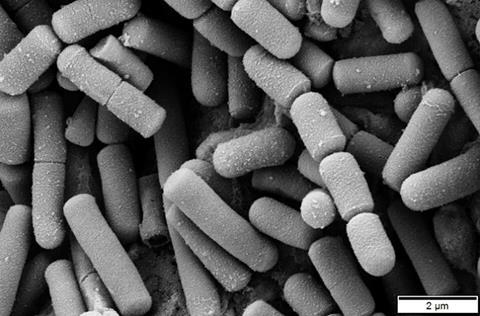
This study, published in Science Advances, reveals how these bacteria form ‘biofilms’, that is, highly organized communities that act as a true protective ‘shield’.
Biofilms
The bacteria aggregate into biofilms and generate a matrix that isolates them from the environment, making them difficult to eliminate both in hospital settings and in the food industry. “This type of structure is behind many persistent infections and food contamination problems that are difficult to eliminate,” says Professor Diego Romero, one of the authors of this paper.
According to Romero, this discovery is critical not only because it expands knowledge of bacterial organization, but also because it opens up new opportunities to weaken them and improve their control in medicine and the food industry.
The research identifies, for the first time, the molecular system that enables the assembly of such protective ‘scaffold’. Specifically, the scientists have described a mechanism based on three key proteins —TasA, CalY and CapP— that coordinate the formation of filamentous structures on the exterior of the bacteria. This system, as they point out, works in a highly controlled way, making sure the bacterial community is built in an organized and efficient manner.
One of the most important pieces of evidence is the role of the CapP protein, which acts as an “orchestra conductor”, controlling when and how these structures are assembled. “Without this control, the bacteria would not be able to form biofilms properly, which demonstrates their essential role in the survival of the microorganism,” they say.
Adaptability
In addition, the study reveals that Bacillus cereus has a remarkable capacity for adaptation. If this system fails, the bacterium activates alternative mechanisms —such as extracellular DNA production or changes in mobility— to maintain their protection. This “plasticity” helps explain why biofilms are so difficult to eradicate.
Topics
- Ana Álvarez-Mena
- Antibiotics
- Antimicrobials
- Bacillus cereus
- Bacteria
- Biofilms
- Disease Pathology
- Disease Treatment & Prevention
- Food Microbiology
- food poisoning
- Food Security
- Food Security & Safety
- Infection Prevention & Control
- Infectious Disease
- Institute of Subtropical and Mediterranean Horticulture
- Medical Microbiology
- Microbial Characterisation
- One Health
- Research News
- UK & Rest of Europe





No comments yet