
A new policy review argues that cervical cancer in sub-Saharan Africa persists because several weaknesses feed on one another, so fixing one part of the system at a time is unlikely to be enough. The authors map how vaccination gaps, limited screening, weak laboratories, HIV and other infections, social barriers, and fragmented governance reinforce each other. They propose an integrated framework to help countries move toward the World Health Organization’s 2030 elimination targets.
The review article, “Cervical Cancer in Sub-Saharan Africa: A Narrative Public Health Policy Synthesis and Integrated Framework to Support WHO Elimination Targets,” was carried out by Samuel Ayobami Fasogbon, Kevin Odega, Akinpelu Moronkeji, Oluwadamilola Janet Olatunde, Ima Obot Jimmy, Afamefuna Cyril Egbo, Olumide Faith Ajani, Bob-Manuel Chinonso Osuji, Precious Oluwamosope Okunola, Peter O. Obami, Rofiah Busayo Olayinka, Comfort E. Williams, Chimnaza C. Nkwam-Uwaoma, Sagir Sani, Iniobong Anselem Udo, and Ikhuoria Goodluck Onokevbagbe in The Open Public Health Journal.
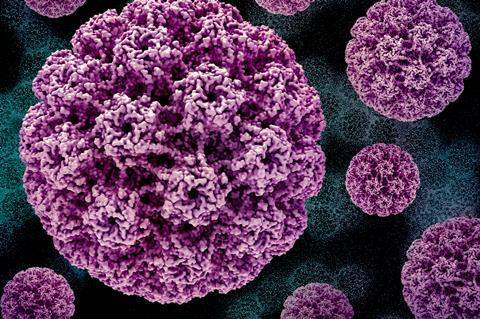
Cervical cancer is largely preventable, because nearly all cases are caused by lasting infection with high-risk strains of the human papillomavirus (HPV). Even so, an estimated 604,000 women developed it and 342,000 died of it worldwide in 2020, and low- and middle-income countries account for about 90 percent of the deaths. The WHO’s elimination strategy sets three goals for 2030, known as 90-70-90: 90 percent of girls fully vaccinated by age 15, 70 percent of women screened by 35 and again by 45, and 90 percent of women with pre-cancer or cancer treated.
Progress in Africa is slow. By 2022 only 28 of the 47 countries in the WHO African Region had introduced HPV vaccination, with average coverage of 33 percent among eligible girls, and estimates put it at about 40 percent in 2023. In most African countries, fewer than 10 percent of women have ever been screened, compared with over 60 percent in many high-income settings, and screening often relies on a low-sensitivity visual method and is concentrated in cities.
How the problems feed each other
The authors carried out a structured narrative synthesis of peer-reviewed studies, WHO and African Union policy documents, and regional reports published between 2020 and 2025. Of 72 records identified, 30 were included.
They read this evidence through two lenses, One Health, which links human, animal, and environmental health, and systems thinking, which looks at feedback loops. Their causal map describes loops that keep the burden high. Low screening leads to late diagnosis, advanced disease, poor survival, and lower public trust, which further reduces screening. Weak laboratories lead to delayed or wrong diagnoses, deaths, reduced political priority, and continued underinvestment. Poor vaccine delivery sustains HPV spread and adds pressure to fragile health systems.
Other risk factors add to this. Women with HIV are up to six times more likely to develop cervical cancer, and parasitic infections such as schistosomiasis may raise susceptibility to HPV. Poverty, distance, cost, stigma, and low health literacy limit access to care. The authors say the biological pathways for environmental exposures such as poor sanitation and indoor air pollution are not fully understood.
A framework and its limits
The paper recommends action on four fronts. The first is expanding single-dose HPV vaccination, which trials suggest gives durable protection, through schools and community outreach to reach girls who are not in school. The second is moving from visual inspection to HPV DNA testing and strengthening laboratory quality systems, including by linking them with existing One Health laboratory networks. The third is combining cervical cancer services with HIV and reproductive health programmes and tackling stigma. The fourth is building cross-sector governance and raising domestic funding to reduce dependence on donors.
MICROBIOLOGY NEWS: Register with The Microbiologist for more free articles
The authors acknowledge that this is a conceptual synthesis and not new empirical research, and that the framework has not yet been tested in any specific country. They note practical hurdles as well, including differences in rules and handling requirements if vaccine cold chains are shared with veterinary services, and the cost, power, and staffing needs of digital pathology. They call for implementation studies, cost-effectiveness work on point-of-care HPV testing and AI-assisted diagnostics, and country-level evaluations.
The review was led by corresponding author Dr. Samuel Ayobami Fasogbon of the Department of Education, Medical Laboratory Science Council of Nigeria (MLSCN), Abuja, Nigeria. His 15 co-authors come from institutions in Nigeria, the United Kingdom, and the United States, including Osun State University, Lead City University, Kaduna State University, Olabisi Onabanjo University, Teesside University, several NHS pathology departments, and New York Medical College.




No comments yet