
An international research team led by investigators in the Department of Microbiology at the Icahn School of Medicine at Mount Sinai has developed the first fully human monoclonal antibody cocktail shown to provide complete protection against lethal Nipah and Hendra virus infection. The protection was seen even when treatment was given after infection had begun.
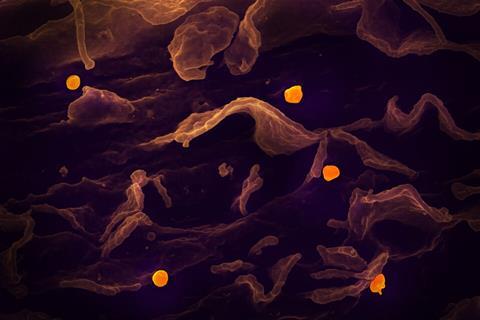
Published in Science Translational Medicine, the study identifies two fully human antibodies that target different stages of the Nipah virus infection process. When used together, the antibodies provided complete protection in hamster models exposed to otherwise lethal doses of the virus. The findings represent an important step toward developing the first antibody-based therapy for Nipah virus and establish a promising strategy for combating emerging infectious diseases.
Henipaviruses
Nipah virus and the closely related Hendra virus belong to a family of pathogens known as henipaviruses, which can spread from animals to humans and cause severe respiratory and neurological disease. Outbreaks are rare but often devastating, with mortality rates ranging from 40 to upwards of 75 percent. There are no approved human vaccines or therapeutics for people infected with these viruses.
“One of the biggest challenges in developing treatments for henipaviruses is that human survivor samples are extremely rare,” said Axel Guzman-Solis, a graduate student in the Department of Microbiology at the Icahn School of Medicine and lead author of the study. “We wanted to determine whether we could create fully human antibodies that target the virus in multiple ways at once, making it much more difficult for the virus to evolve resistance.”
To overcome the scarcity of human samples, the researchers used transgenic humanized mice—genetically engineered mice capable of producing fully human antibodies. This approach enabled the team to identify potent antibodies without requiring the additional engineering steps traditionally needed to adapt animal antibodies for human use.
Henipaviruses use two viral proteins to enter cells—a receptor-binding protein and a fusion protein. Previous therapeutic approaches focused on blocking one or the other in isolation, which gave the virus the opportunity to evolve escape mutations that provide resistance to the treatment.
Antibodies
The investigators discovered two particularly powerful antibodies. One blocks the viral protein responsible for attaching to human cells. The other targets a separate viral protein required for the virus to fuse with and enter those cells. Because the antibodies work through independent mechanisms, they create multiple barriers to infection and make it more difficult for the virus to evade treatment.
The first antibody, known as 8G3, targets a critical region of the virus that appears highly resistant to mutation. Researchers found the virus would likely need to acquire multiple simultaneous genetic changes to evade the antibody, an unlikely event.
The second antibody, known as 2A1, revealed an unexpected mechanism of action. Using high-resolution structural imaging, the researchers discovered that the antibody neutralizes the virus by stabilizing a sugar-containing structure on the viral fusion protein rather than displacing it, as scientists had anticipated. This previously unrecognized strategy may help explain the antibody’s potency and resilience against viral escape.
Virus structure
“We were surprised to find that the antibody essentially embraces a structure on the virus that many antibodies try to move out of the way,” said Benhur Lee, MD, Ward-Coleman Chair in Microbiology at the Icahn School of Medicine and senior author of the study. “The finding suggests that stabilizing a viral protein can sometimes be just as effective—or even more effective—than disrupting it.”
When administered together, the antibody cocktail completely protected hamsters from lethal Nipah virus infection. The treatment remained effective even after infection was established, an encouraging result for a disease that progresses rapidly and carries a high fatality rate.
Pandemic preparedness
Beyond their immediate therapeutic potential, the findings may have broader implications for pandemic preparedness. Because many viruses rely on multiple proteins to infect cells, the researchers believe this dual-targeting strategy could be adapted for other high-priority pathogens.
“This work provides a blueprint for developing antibody therapies that are more resistant to viral evolution,” said Dr. Lee. “Rather than relying on a single target, we can attack a virus at multiple vulnerable points simultaneously.”
Next steps
While the results are promising, the therapy remains in preclinical development. The current findings are based on laboratory and animal studies, and additional testing will be required before human clinical trials can begin. Planned next steps include studies in nonhuman primates, evaluation of long-term safety, and efforts to optimize the antibodies for clinical use.
The team is also exploring next-generation antibody formats, including single molecules capable of targeting multiple viral proteins simultaneously, as well as approaches that could broaden protection against additional members of the henipavirus family.
“As zoonotic outbreaks continue to emerge around the world, there is an urgent need for therapies that can be deployed quickly against high-consequence pathogens,” said Dr. Lee. “Our long-term goal is to translate these discoveries into practical tools that help protect people during future outbreaks.”
Topics
- animal studies
- antibody therapeutics
- Axel Guzman-Solis
- Benhur Lee
- Disease Treatment & Prevention
- Hendra virus
- henipaviruses
- Icahn School of Medicine at Mount Sinai
- Infection Prevention & Control
- Infectious Disease
- Medical Microbiology
- Middle East & Africa
- monoclonal antibodies
- Nipah virus
- Nipah Virus
- One Health
- Pharmaceutical Microbiology
- Research News
- Veterinary Medicine & Zoonoses
- Virology
- Viruses





.jpg)
No comments yet