
Researchers have identified a broad range of biological properties in pomegranate with potential for use in medical applications, including antimicrobial, antiparasitic, antioxidant, immunomodulatory, antidiabetic, anti-inflammatory, liver-supporting, and wound-healing effects.

According to a new comprehensive review published in Veterinary Sciences, these properties are well-supported by the body of science for particular relevance in veterinary medicine, where antimicrobial and anthelmintic resistance, oxidative stress, metabolic disorders, and the growing demand for sustainable alternatives to synthetic products represent major challenges.
The review, provides an extensive synthesis of the current scientific evidence concerning the use of pomegranate and its derivatives. The authors examined evidence from poultry, ruminants, swine, fish, companion animals, and laboratory models, with particular attention to the pharmacological properties of pomegranate peel, peel extracts, seed oil, juice, and other plant-derived preparations. The literature search covered studies published between 1990 and June 2026 and incorporated evidence from PubMed, Scopus, and Google Scholar.
Pomegranate antiparasitic capabilities
Pomegranate has attracted considerable scientific interest because of its exceptionally rich phytochemical composition, which includes punicalagins, ellagic acid, anthocyanins, flavonoids, alkaloids, and punicic acid.
Pomegranate peel products show promising evidence in poultry, demonstrating improvements in production performance, antioxidant status, humoral immunity, and anticoccidial activity when incorporated into the diet.
In ruminants, pomegranate preparations have demonstrated promising antiparasitic effects against gastrointestinal nematodes, while evidence also indicates potential benefits in preserving semen quality during cryopreservation.
In aquaculture, pomegranate-derived preparations have shown antiparasitic activity against gill monogeneans, together with antimicrobial and antioxidant properties. Emerging evidence in companion animals further suggests potential applications in conditions such as leishmaniasis, inflammatory diseases, and wound management.
Combination approaches and aquaculture
An important aspect of the review is its focus not only on the biological activities of pomegranate but also on its potential contribution to sustainable veterinary medicine. The review identifies innovative formulation strategies, including micro- and nano-encapsulation, as a promising avenue for improving the bioavailability and targeted delivery of pomegranate-derived compounds. Combination approaches involving pomegranate preparations and conventional pharmaceuticals or other phytobiotics may also warrant further investigation.
Aquaculture is highlighted as a particularly interesting area for future research because of the demonstrated antiparasitic, antibacterial, and antioxidant properties of pomegranate-derived products and the need for environmentally compatible approaches to aquatic animal health.
Overall, Bava et al. conclude that Punica granatum represents one of the most pharmacologically versatile and scientifically promising phytobiotics currently investigated for veterinary applications. Its diverse biological activities may address several important challenges in contemporary animal health, including antimicrobial resistance, antiparasitic resistance, oxidative stress, and the search for sustainable alternatives to synthetic compounds.
Applications in veterinary medicine
Nevertheless, the authors emphasise that the current evidence base remains heterogeneous and predominantly preclinical, making further rigorous investigation essential before pomegranate-derived products can be confidently recommended for routine veterinary use.
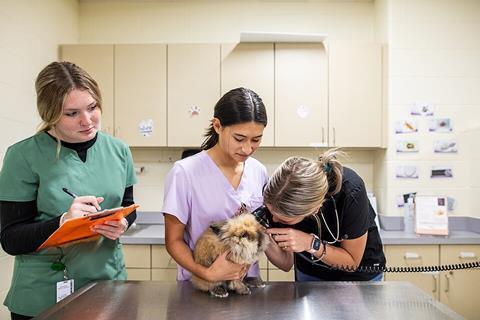
The study therefore proposes a veterinary translational pathway in which pomegranate-derived compounds progress from experimental discovery through standardisation, pharmacokinetic and toxicological evaluation, formulation optimisation, and ultimately controlled clinical validation. Such an approach could help transform an ancient medicinal plant into a scientifically characterised and evidence-based resource for modern veterinary medicine.
“The investigation of pomegranate-derived phytobiotics also creates an opportunity to connect animal health with sustainability and the circular economy,” continues Giordano. “The emergence of pomegranate as an effective, and sustainable supplement contributes to the use of agricultural by-products into a potentially valuable resources. Within a One Health perspective, research of this type can help integrate animal health, sustainable food production, environmental considerations, and biomedical innovation.”
Knowledge gaps still remain
Despite the encouraging evidence, the authors stress that significant gaps currently limit the immediate translation of pomegranate-based preparations into routine veterinary practice. One of the principal challenges is the substantial variability in the phytochemical composition of commercially available preparations, which may depend on cultivar, agricultural practices, post-harvest processing, extraction methodology, and storage conditions. The development of standardised veterinary-grade pomegranate preparations, with defined concentrations of key compounds such as punicalagin and ellagic acid, is therefore identified as an essential priority.
MICROBIOLOGY NEWS: Register with The Microbiologist for more free articles
Another critical issue concerns the pharmacokinetics and bioavailability of pomegranate-derived compounds. Ellagitannins such as punicalagin undergo gastrointestinal transformation and are metabolised by the intestinal microbiota into urolithins. Because gastrointestinal microbiota differ substantially among animal species, these processes may result in considerable interspecies differences in bioavailability and biological response. The review therefore calls for dedicated pharmacokinetic studies in ruminants, monogastric animals, and carnivores to establish appropriate species-specific dosing strategies.
The authors also emphasise the urgent need for well-designed controlled clinical trials in target animal species. Much of the existing evidence derives from in vitro experiments, laboratory models, or preclinical studies, whereas adequately powered studies in naturally infected or production-challenged animals remain limited. Clinical research will be essential to establish efficacy, minimum effective doses, safety margins, and practical treatment protocols.






No comments yet