
All Pharmaceutical Microbiology articles – Page 40
-
 News
Scientists develop new solid-state storage method for biological materials
Scientists have developed a novel method for storing biological materials such as RNA and proteins in a solid-state, physically resembling a pill or a tablet, which dissolves in water for on-demand use.
-
 News
Researchers uncover novel bacterial communication system to combat AMR
Using a sophisticated mass spectrometry technology developed at SMART and MIT, researchers have discovered that the enzyme RlmN is a stress sensor for reactive oxygen species (ROS) – highly reactive molecules which can cause damage to bacteria. Source: SMART AMR (L to R) SMART researchers Dr Cui Liang, ...
-
 News
Bioengineered yeast devouring agricultural waste could close carbon circle
Researchers report making modified yeast that can feed on a wider range of materials, many of which can be derived from agricultural by-products that we don’t use known as waste biomass.
-
 News
Picolinic acid reveals its broad-spectrum antiviral abilities
Picolinic acid, a natural compound produced by mammalian cells, can block several disease-causing viruses such as SARS-CoV-2 and influenza A viruses, according to a new study.
-
 News
Future medicines could feature ingredients targeting bacterial motility and chemotaxis
Future medicines will probably be made up of a cocktail of compounds that inhibit different bacterial targets, including some that act against their motility and chemotaxis mechanisms, a new review suggests.
-
 News
Cyanotriazole compounds can rapidly cure trypanosome infections in mice
Scientists have identified a class of cyanotriazoles (CTs), which exhibit potent trypanocidal activity and lead to rapid clearance of parasites both in vitro and in mouse models of Chagas disease and human African trypanosomiasis.
-
 News
AI model can accelerate development of new antivirals
Researchers have shown that IBM’s AI Model, MoLFormer, can generate antiviral molecules for multiple target virus proteins, including SARS-CoV-2, that can accelerate the drug discovery process.
-
 News
Researchers can use ultrasound to control orientation of small particles, including bacteria
Using ultrasound technology and a nozzle, scientists have separated, controlled and ejected different particles based on their shape and various properties, with implications for drug delivery and bioprinting.
-
 News
Heart drug peruvoside could prevent spread of up to 12 viruses
Peruvoside, a plant-based compound that is commonly used to treat heart failure, has been discovered to be able to prevent up to 12 medically important viruses, all originating from different virus families.
-
 News
Single hepatitis E mutation renders sofosbuvir therapy ineffective
A single mutation of the hepatitis E virus has been shown to cause treatment with the hepatitis C drug sofosbuvir to become much less effective, according to a study that provides new insights for future drug development.
-
 News
Unravelling Coenzyme Q10 pathway could pave way to industrial production
Scientists have unravelled part of the Coenzyme Q10 biosynthetic pathway in Agrobacterium tumefaciens, paving the way to enhancing the bacterium so that it can produce the probiotic on an industrial scale.
-
 News
Biological clocks of people and malaria parasites tick in tune
Research could pave the way to new anti-malarials that work by ’jet-lagging’ the parasites that cause the disease.
-
 News
Drugs pipeline rife with strategies to combat MRSA
A host of new antimicrobial strategies are in the development pipeline that could provide hope for healthcare sectors battling multi-drug resistant Staphylococcus aureus infections.
-
 News
Two new Antarctic bacteria species yield valuable cold-adapted enzymes
Scientists are experimenting with two new bacteria discovered in the Antarctic ten years ago, in order to verify the possibility of applications in healthcare, food processing and environmental rehabilitation.
-
 News
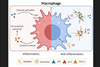
Anti-microbial nanonets ease inflammation during sepsis
Pharmaceutical scientists have developed multi-functional synthetic peptide nanonets for relieving inflammation caused by bacterial infection. This is achieved by concurrent trapping of bacterial endotoxins and pro-inflammatory cytokines.
-
 News
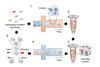
High-throughput method screens protein-secreting microbial strains
A unique method to screen large-scale libraries for industrially useful bacterial strains was recently developed, combining biosensors and microfluidics to quickly identify mutant strains that secrete large amounts of industrially useful proteins.
-
 News
‘Antibiotic culture’ permeates US hospital ICUs, study finds
A new study reveals that there continues to be an ’antibiotic culture’ in US hospitals, meaning that the preference for antibiotics is related to their perceived role as ’magic bullets’.
-
 News
European-funded €2.3m project will revolutionize bioprinting of living materials
The PRISM-LT project has received a €2.3 million grant for a five-year program that aims to create an adaptable platform for 3D bioprinting of living tissue with dynamic functionalities and predictable shapes.
-
 News
Scientists unlock indole in soil bacteria to create prodrugs
Researchers from Bochum and Leipzig have successfully used a soil bacterium to specifically produce prodrugs. The key to this step was a detailed understanding of the metabolisation of indole, a natural compound which first must be activated in microorganisms. To do this, they needed a monooxygenase, the molecular structure of ...
-
 News
Scientists synthesize precursors of powerful anti-cancer drug in yeast cells
Researchers have identified a novel method for the biological synthesis of catharanthine and vindoline - the two pharmacologic precursors of anti-cancer drug vinblastine - using yeast cells.