
T-cells are the immune system’s frontline defenders with a crucial role in controlling HIV. In a milestone clinical trial published in the Journal of Clinical Investigation, researchers with the UNC Institute for Global Health and Infectious Diseases (IGHID) at the UNC School of Medicine have demonstrated that new vaccines can significantly boost T cells targeting the most vulnerable, conserved regions of HIV—areas considered key to effective immune control. This pivotal finding not only advances our understanding of HIV immunology but also offers hope that these vaccines could contribute to novel, curative approaches against HIV.
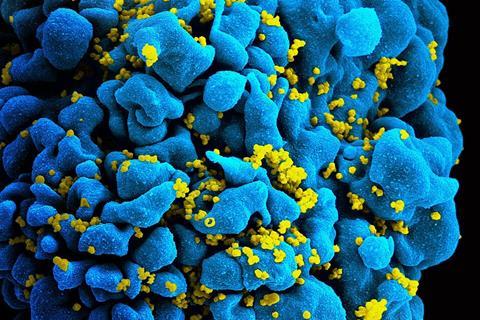
Led by principal investigator Nilu Goonetilleke, PhD, and a team of IGHID researchers in collaboration with the University of Oxford, University of Pittsburgh, Accelovir Diagnostics and the National Institutes of Health, the study is the first to test HIV vaccines developed at the University of Oxford in people living with HIV who are receiving antiretroviral therapy (ART).
“Our findings highlight the critical importance of considering age when developing and deploying HIV immunotherapies,” explained Goonetilleke, associate professor of infectious diseases.
T-cells and HIV
Dr. Goonetilleke’s lab focuses on two types of T cells–CD4 T cells which HIV infects, and CD8 T cells which act as the immune system’s professional killers. She says aging naturally diminishes the immune response to vaccines, a phenomenon observed regardless of HIV status.
“As people age, their bodies produce fewer and less diverse T cells, making it harder to mount broad immune responses. HIV infection further complicates this by causing immune dysregulation, which can persist even after years of effective antiretroviral therapy (ART).”
The vaccine, designed by colleagues at Los Alamos National Laboratory and the University of Oxford, target conserved regions of HIV—those less prone to mutation—making it effective across diverse populations and viral strains of HIV.
Clinical trial
The team led a double-blind, randomized, placebo-controlled Phase I clinical to determine the effectiveness of the vaccine to boost CD8 T cells, to help the body destroy HIV-infected cells.
The trial demonstrated that vaccination with MVA-vectored HIVconsvX vaccines were safe and well tolerated, with most adverse events being mild or moderate, and resolving quickly.
Immunologically, the vaccines significantly increased both the frequency and breadth of T-cell responses, redirecting T cells to target the most conserved and vulnerable regions of HIV-1.
Nearly 85% of participants showed robust T cell responses, and these responses were maintained for up to 10 weeks post-vaccination. Notably, the ability of the vaccines to boost T cell immunity declined with increased age—a critical finding as more than half of people living with HIV in the US and globally are now over 50 years old.
The findings suggest that both age and the degree of immune restoration after HIV infection play roles in how well vaccines work, and that extended ART may help overcome some of the immune challenges. Researchers are exploring strategies to further improve vaccine efficacy in older adults, such as booster doses or alternative vaccine formulations.
Topics
- antiretroviral therapy
- Cindy L. Gay
- clinical trials
- Disease Pathology
- Disease Treatment & Prevention
- HIV
- Immunology
- Infection Prevention & Control
- Infectious Disease
- Nilu Goonetilleke
- Pharmaceutical Microbiology
- Research News
- T-cell immune response
- T-cells
- UNC Institute for Global Health and Infectious Diseases
- UNC School of Medicine
- USA & Canada
- vaccination
- Vaccinology
- virology
- Viruses

.jpg)
No comments yet