
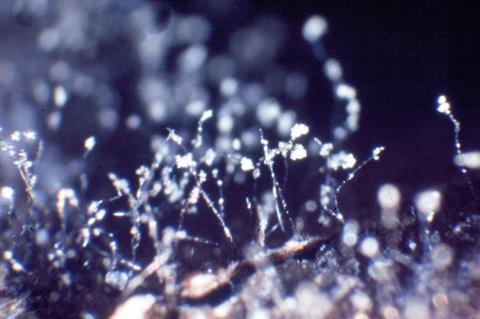
Botrytis cinerea is a broad-host-range necrotrophic fungus that causes gray mold in more than 1,000 plant species. In blueberry, it can damage flowers in the field and later emerge as fruit rot after harvest, reducing shelf life, shipment quality and market value. The disease is especially challenging because latent infections may remain hidden until storage, and symptoms can develop even under cold-chain conditions.
Fungicides remain useful, but resistance to active ingredients and regulatory limits are increasing pressure for genetic solutions. Based on these challenges, there is a need to deepen research into the genetic architecture and molecular defense mechanisms underlying blueberry resistance to Botrytis cinerea fruit rot.
Researchers from the Blueberry Breeding and Genomics Lab, Horticultural Sciences Department, and the Plant Pathology Department at the University of Florida reported the work in Horticulture Research. Published (DOI: 10.1093/hr/uhag092) on March 13, 2026, the study examined southern highbush blueberry responses to Botrytis cinerea infection by integrating fruit disease phenotyping, targeted-sequencing-based genome-wide association study (GWAS), and time-course ribonucleic acid sequencing (RNA-seq). The work links measurable disease traits with genomic regions and infection-stage gene expression patterns, offering a clearer view of how blueberry fruit resists gray mold and how that knowledge may enter breeding practice.
Selection can improve resistance
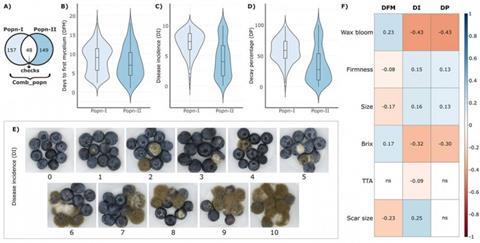
The team screened 354 southern highbush blueberry genotypes using a rapid fruit inoculation assay and measured days to first mycelium (DFM), disease incidence (DI), and decay percentage (DP). The population showed wide variation in response, and the disease traits had moderate narrow-sense heritability estimates of 0.46–0.61, suggesting that selection can improve resistance.
GWAS identified seven significant single-nucleotide polymorphism (SNP) associations for DI and four for DP, with no major-effect quantitative trait locus (QTL), supporting a model of quantitative resistance.
The researchers then compared resistant and susceptible fruit at 0, 12, 24, 48 and 96 hours post-inoculation (hpi). Symptoms appeared in susceptible fruit at 24 hpi, while resistant fruit remained asymptomatic. Integrating GWAS intervals and differentially expressed genes (DEGs) yielded eight candidates, including the gene VaccDscaff11-snap-gene-330.64, which encodes Importin-13B-like protein, and genes encoding deoxyribonucleic acid (DNA) ligase 1, triacylglycerol lipase 2 (TGL2), L-type lectin-domain receptor kinase (LecRK), protein phosphatase 2C (PP2C), and a uridine diphosphate (UDP)-galactose/UDP-glucose transporter. Resistant fruit activated wax and cutin biosynthesis, mitogen-activated protein kinase (MAPK) signaling, and ethylene and jasmonate responses earlier, while higher wax bloom correlated with lower disease.
Layered defenses
The authors said the findings shift attention from a single resistance gene to the timing and coordination of layered defenses. They said blueberry fruit appears to resist Botrytis cinerea by strengthening its surface barrier early, recognizing infection quickly, and limiting host processes that the pathogen may exploit during colonization. They also said the candidate genes provide a focused list for future validation, including functional assays and gene editing, while the screening system gives breeders a practical way to identify susceptible material earlier in the breeding pipeline.
For application, the study offers both markers and a strategy. Because resistance appears to be shaped by many small-effect loci, genomic selection may be more useful than relying on one or two markers alone. The rapid inoculation assay could help breeding programs screen large populations, remove highly susceptible selections, and prioritize parents with stronger fruit defenses. Wax-related traits and the eight candidate genes also provide starting points for marker development and functional testing.
MICROBIOLOGY NEWS: Register with The Microbiologist for more free articles
In the longer term, integrating disease assays, genomic prediction and postharvest evaluation could support blueberry cultivars that travel better, lose less fruit to gray mold, and require fewer chemical interventions, helping growers protect quality as exports expand and storage demands rise across production regions and marketing channels.




No comments yet