
Scientists at the Department of Energy’s (DOE) Oak Ridge National Laboratory (ORNL) showed that more than 93% of possible E. coli CRISPR-Cas9 guide RNAs (molecules that direct the gene-editing CRISPR tool to the right spot in DNA) work as intended, far higher than researchers expected.
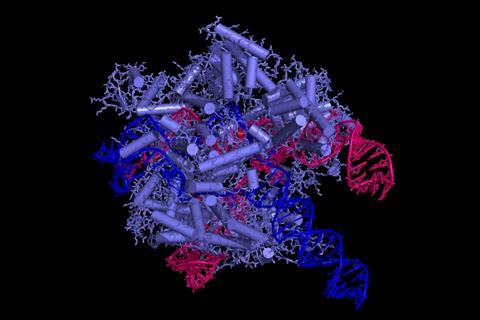
The study was published in Nucleic Acids Research. They also discovered why a small number of guides fail and developed a simple way to repair them.
CRISPR technology
CRISPR is a powerful biotechnology tool that allows scientists to make precise changes to DNA, essentially editing the genetic instructions that tell cells how to function. By making CRISPR function more efficiently in industrially relevant microbes, the resulting tool makes it easier and faster to engineer microorganisms for the manufacturing of valuable chemicals, materials and medicines, strengthening U.S. scientific innovation and global competitiveness in biotechnology.
MICROBIOLOGY NEWS: Register with The Microbiologist for more free articles
“We evaluated nearly 500,000 guide RNAs for E. coli, creating one of the largest experimentally tested CRISPR datasets, and giving synthetic biologists a high-confidence toolkit that aids experimental design,” said Bill Alexander, associate R&D staff scientist in the Biosciences Division at ORNL
The tool is available through a free gRNA Atlas, an interactive application that lets users visualize and explore potential Cas9 target sites across the bacteria’s genome.


No comments yet