

An ancient infection remains a modern test of microbiology, public health and human dignity. For me, that reality is also personal. My grandmother had leprosy. I grew up with her in a three-generation household in West Bengal, helped care for her and saw what the disease could do.
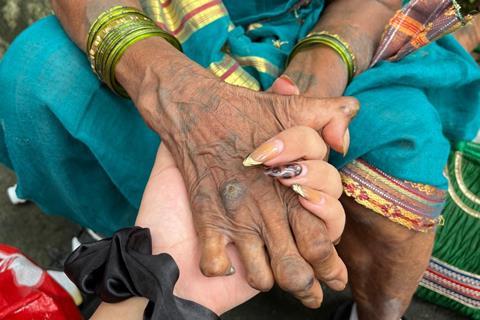
I also saw how a diagnosis could spread fear through a family. As a child, I experienced the whispers, social distance and discrimination that followed her illness. Years later, the paradox is clear: leprosy is curable, but stigma can endure. If children are still diagnosed, people are still arriving with visible disability, and families still face exclusion, what does it mean to say that leprosy has been “eliminated”?
Elimination and its limits
Multidrug therapy (MDT), using rifampicin, dapsone and clofazimine, made leprosy curable. More than two decades ago, the World Health Organization (WHO) announced that the world had reached “elimination as a public-health problem”: fewer than one registered case per 10,000 people.
This was a major public-health achievement. It did not mean that transmission had stopped or that leprosy had disappeared. [1, 2] WHO’s latest global update recorded 167,356 new cases in 2025, including 8,344 children. It also recorded 9,428 new cases with visible grade-2 disability, a sign that diagnosis had come late. India reported 91,783 cases, but its figure covers April 2025 to March 2026, not the calendar year used for most countries.
These numbers should not be treated as a directly comparable share of the global total. [1] Recently, WHO’s 2026 mid-term evaluation, using 2024 leprosy data, found that only 55 of 194 countries reported zero new locally acquired cases, against a target of 120 by 2030. [3]

For more than a decade, I served in an honorary capacity as a UK consultant to the Indian Leprosy Foundation, now the Indian Development Foundation, and saw its work against leprosy and its wider societal effects, especially on orphans. In Mumbai, the Foundation for Leprosy Research has studied nerve damage, deformity, relapse and drug resistance. Its research questioned whether a low prevalence figure could conceal continuing transmission and unmet needs. [4,5] The lesson is straightforward: reducing registered prevalence is not the same as stopping infection.
The burden of stigma
Leprosy is caused mainly by Mycobacterium leprae, but its consequences extend well beyond the body. WHO reported that laws allowing discrimination on the basis of leprosy remained in 11 countries in 2025. People affected can face exclusion from education, work, housing and community life, even after treatment. [1, 2]
I recognise that fear. My grandmother’s diagnosis did not remain hers alone; its stigma reached those of us who lived with and cared for her. This is also a public-health concern. Fear of rejection may delay help-seeking; late diagnosis can mean preventable nerve damage and more time for transmission. Stigma is not only a consequence of leprosy. It can help keep the disease hidden.
Resistance requires surveillance
Antimicrobial resistance (AMR) is another reason for vigilance. WHO received leprosy resistance-surveillance data from 25 countries. Among 2,025 new and retreatment cases tested, 28 were reported resistant to both rifampicin and dapsone.
These are detected cases, not an estimate of global drug-resistance prevalence; WHO’s 2026 review also identifies gaps in surveillance. [3]
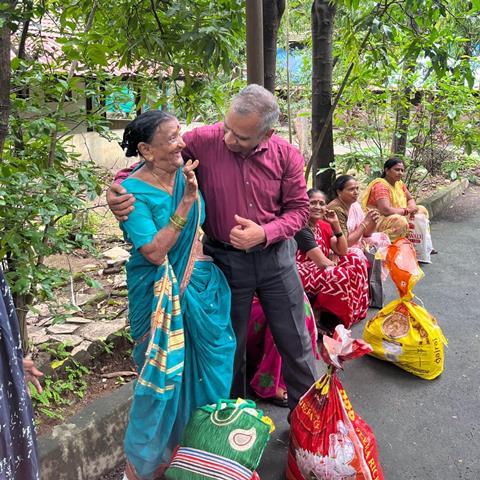
Rifampicin is central to MDT and is also used in single-dose post-exposure prophylaxis for eligible contacts. Protecting its effectiveness requires better, sustained surveillance and antimicrobial stewardship. [1, 6]
A wider definition of success
The answer is not to abandon elimination, but to be clearer about what success requires. WHO’s 2026 review warns that case detection and MDT alone have proved insufficient to interrupt transmission. [3] It recommends screening household, neighbourhood and social contacts, with single-dose rifampicin post-exposure prophylaxis where appropriate. The report estimates that this can reduce leprosy risk among contacts by around 60%. [3]
The Leprosy Mission has set an ambitious goal of ending transmission by 2035. [2, 7]
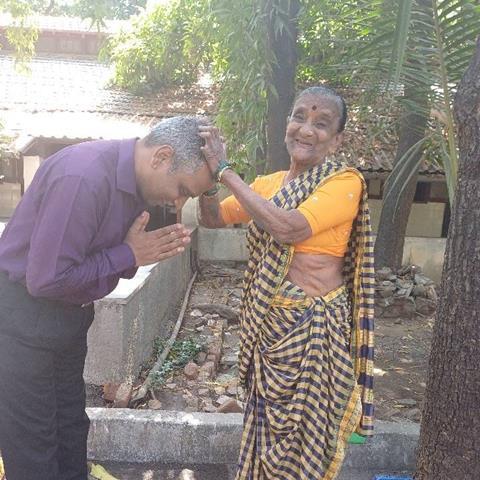
There is scientific hope, too. LepVax, a leprosy-specific vaccine candidate developed by American Leprosy Missions (now Hope Rises International) and partners, has progressed to Phase 1b/2a clinical investigation in Brazil. It remains experimental; its safety and benefit must be established through trials. [8,9]. But new tools cannot remove prejudice on their own.
Accelerating progress
Accelerating progress towards leprosy elimination will require a coordinated strategy that links earlier diagnosis and prompt multidrug therapy with systematic contact tracing, active case finding, and strengthened surveillance for antimicrobial resistance. Wider access to sensitive, field-deployable diagnostics, together with effective chemotherapeutic and chemoprophylactic interventions, including evidence-based post-exposure prophylaxis, will be essential to interrupt transmission and prevent disease progression. For now, diagnosis remains primarily clinical, and newer tests are not yet recommended for routine use. [3]
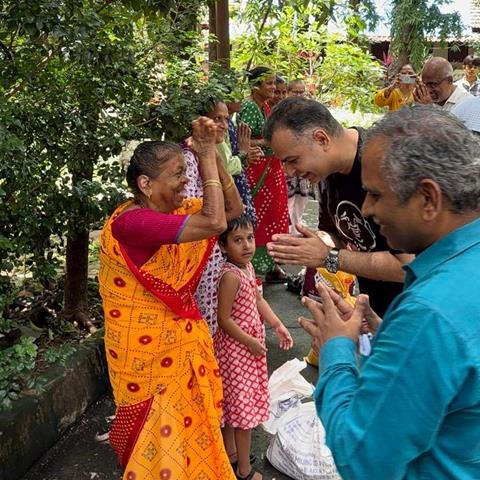
These biomedical measures must be matched by long-term rehabilitation, disability prevention, care for leprosy reactions, and psychosocial support for people living with leprosy-associated nerve damage. [3] Elimination efforts will remain incomplete, however, without the repeal of discriminatory laws and policies and the meaningful participation of people affected by leprosy and their families in shaping research priorities, clinical services, public-health programmes, and policy.
I first knew leprosy through my grandmother’s suffering; later, I came to understand it through microbiology. Both perspectives lead to the same conclusion: falling below a statistical threshold is not the same as defeating a disease. Success means preventing new infections and avoidable disability, preserving effective treatment, and ensuring that no family is made to feel untouchable. Leprosy may be forgotten by many. It is not yet gone.
This article is dedicated to the loving memory of my grandmother, the late Biroja Bala Bhakta, who was born in what is now Bangladesh, moved to West Bengal during the Partition of 1947, and lived there until she died in 1993. Her courage and dignity have stayed with me throughout my life and scientific career. This article is for her, and for all those suffering from leprosy.
Acknowledgement: The author gratefully acknowledges Akshaya Shakti Welfare Association and the Acworth Leprosy Hospital Society for Research, Rehabilitation and Education in Leprosy (ALH-RRE Society) for their valuable work supporting people affected by leprosy and their families, promoting dignity and inclusion, and raising awareness. We also thank Dr Narayan Iyer of the Indian Development Foundation for supplying the images.
Sanjib Bhakta PhD (Kolkata), DPhil (Oxford); Professor of Molecular Microbiology and Biochemistry; Birkbeck, University of London and University College London; Visiting Professor of Infection Biology, University of Oxford; Principal Scientific Adviser – ICURe Innovate UK/ Consultant Medical Bacteriologist (London School of Hygiene and Tropical Medicine); Global Ambassador for the UK, Applied Microbiology International
References:
[1] World Health Organisation. Global leprosy (Hansen disease) update, 2025. Weekly Epidemiological Record. who.int
[2] World Health Organization. Leprosy fact sheet. who.int
[3] World Health Organization. Global report on neglected tropical diseases 2026: mid-term evaluation of the road map implementation. Geneva: World Health Organization; 2026. pp. 142–148. ISBN 978-92-4-012622-0. https://www.who.int/publications/i/item/9789240126220
[4] Indian Development Foundation. About us. https://www.idf.org.in/about-us
[5] Foundation for Medical Research, Mumbai. Leprosy research. https://www.fmrindia.org/leprosy.html
[6] World Health Organization. A guide for surveillance of antimicrobial resistance in leprosy. https://www.who.int/publications-detail-redirect/9789290225492
[7] The Leprosy Mission International. A world without leprosy. https://www.leprosymission.org/about-us/a-world-without-leprosy/
[8] Hope Rises International. Research and vaccines. https://www.hoperises.org/research-and-vaccines
[9] Leprosy Research Initiative. LepVax phase 1b/2a trial. https://leprosyresearch.org/projects/transmission/lepvax

Topics
- Antimicrobial Resistance
- Applied Microbiology International
- Asia & Oceania
- Bacteria
- Community
- dapsone
- Disease Treatment & Prevention
- elimination status
- Emerging Threats & Epidemiology
- Foundation for Leprosy Research
- Frontline Microbiology
- Hope Rises International
- Indian Development Foundation
- Infection Prevention & Control
- Infectious Disease
- leprosy
- LepVax
- multidrug therapy
- Mycobacterium leprae
- One Health
- Rifampicin
- UK & Rest of Europe
- World Health Organization


No comments yet