
Be inspired by some of the world’s leading microbiologists, discover the work of laboratories around the world, get advice on key topics and find out about exciting career opportunities in the world of microbiology.
Be Inspired
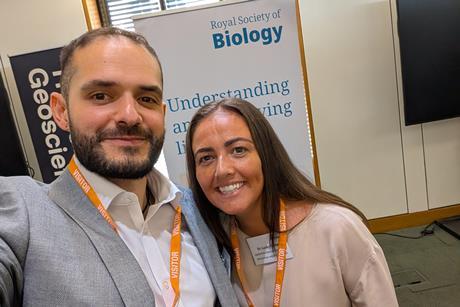
Trusting in science: Vito Latorre reports back on Parliamentary Links Day
University of East Anglia PhD student Vito Latorre shares his experiences of representing Applied Microbiology International at the Parliamentary Links Day in Westminster earlier this summer.
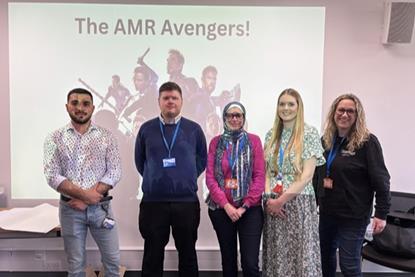
From local waterways to future therapies: Inspiring the next generation of scientists through phage discovery
Coventry University welcomed students from schools across the West Midlands for an immersive outreach experience focused on bacteria, viruses, AMR, and the potential of bacteriophages as a future tool in combating antibiotic-resistant infections.
Member Q&A: Thomas Thompson on the central role AMI has played in his research journey
Pharmacist and microbiologist Dr Thomas Thompson reveals how AMI membership has played a central role in reaching the point where he is about to start building his own research programme in the School of Pharmacy at Queen’s University Belfast.
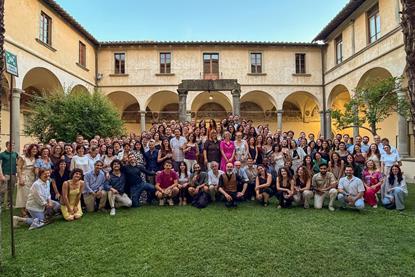
Cortona Prokaryotes: fostering researcher identity for young scientists since 1984
This summer, Letters in Applied Microbiology sponsored the Cortona Prokaryotes congress in Italy, organised by the Italian Society of General Microbiology and Microbial Biotechnology (SIMGBM). Loredana Baccigalupi, Professor of Microbiology at the University of Naples, reports back.
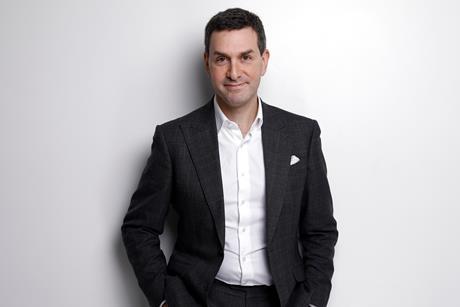
From microbiome research to personalized cosmetics: The genesis of BYOME LABS
BYOME LABS was founded through the initiative of David Suissa, an entrepreneur trained at École Polytechnique and the Corps des Mines. After leading companies in the fields of perfumery and applied microbiology, he chose to structure a new approach centered on the biological evaluation of cosmetic products.

The Space Microbiology Group
The Space Microbiology Group studies how microorganisms behave in space conditions, using tools such as microbiology, molecular biology, system biology and geomicrobiology to learn how new biotechnologies could be applied to space.

The Rahlff lab
The Aero-Aquatic Virus Research Group led by Dr. Janina Rahlff conducts basic research on microbial viruses from the surface microlayer, which is the 1-mm thick ‘skin’ of a water body’s surface, and in atmospheric ecosystems.
The Microbial EcoGenomics and Biotechnology Lab (MEGBLab)
At MEGBLab, our mission is to advance the understanding of microorganisms and their crucial role in environmental sustainability.

Laboratorio Calidad de Aguas
The Water Quality Laboratory of the National University of Salta, founded by Dr Mónica Salusso and Dr. Liliana Moraña, is going from strength to strength - but faces challenges posed by major budget cuts to science and research in Argentina.
Super-resolution imaging reveals details inside living cells
A new fluorescence microscopy technique that generates super-resolution images from a single camera exposure could help researchers study rapid movements within cells that are difficult to capture with existing methods.
Read story
International Society of Microbiota, Nature Awards and Yakult join forces to connect global funding with Japanese microbiome research
A new collaboration at ISM–RIKEN Targeting Microbiota 2026 will bring the Global Grants for Gut Health programme to Tokyo, alongside a dedicated funding discussion and three Best Abstract Prizes.
Probiotic and postbiotic treatments revive heat-stressed corals
Researchers have established that both live probiotic and inactivated postbiotic treatments improve coral health—while the animals are under thermal stress during a natural marine heatwave.
Bacterial nanoplatform targets spleen to reprogram immune cells and prevent cancer recurrence
Researchers have announced the development of an engineered nanoplatform named t-SMC, which precisely targets the spleen to reverse splenic myelopoiesis toward an antitumoral immune phenotype.
Advice
Next-gen microbiologists: from innovators to business leaders
Today, we need microbiologists to be not only academics or researchers but also budding innovators, entrepreneurs, and business leaders. Career possibilities in this domain are vast, as people can build their own ventures, become policy makers, and employers.
Navigating mid-career challenges in biotech, pharma, and life sciences amid sector-wide layoffs
The current economic climate has cast a shadow over biotech, pharmaceutical, and life sciences industries, with widespread layoffs and restructuring efforts creating an atmosphere of uncertainty.
My autistic academic maze - and my advice to neurodiverse PhD students
In Neurodiversity Celebration Week, PhD student Joshua Yates reveals the challenges of pursuing a career in microbiology with autism and dyslexia - and his advice to others.
The true cost of science
Discover valuable insights from three companies in the microbiology field, and their experience of balancing innovation, investment, and sustainability to drive their success.
Nine to five
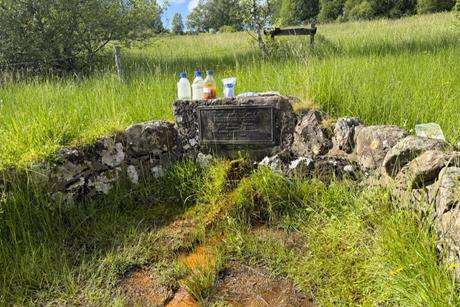
A day in the life: Discovering the hidden microbes of Britain’s historic waters
PhD student Wewerly Fernandes outlines her investigations into the microorganisms living in Britain’s historic wells and natural springs - once believed to hold healing properties and linked to legends of Merlin and renowned figures like Robert Burns.
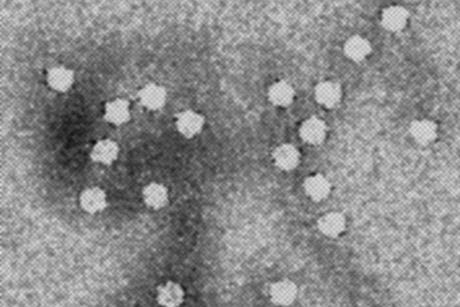
A week in the life of a Parvovirus researcher
Alejandro Fernández Llorente works as a predoctoral researcher at Centro de Biología Molecular Severo Ochoa (CBM-CSIC), a prestigious biomedical research centre located in Madrid, Spain.
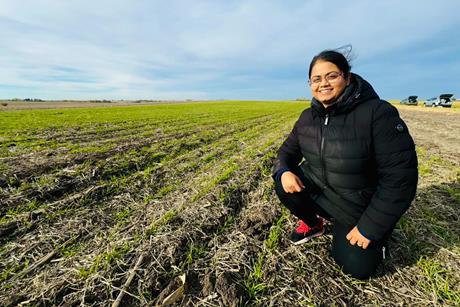
A day in the life of a soil microbial ecologist
Dr. Taniya RoyChowdhury, a soil microbial ecologist and biogeochemist at the Woodwell Climate Research Center, describes a typical day.
A day in the life of Associate Practitioner in Microbiology
Discover the role, the challenges, and key opportunities for the future.
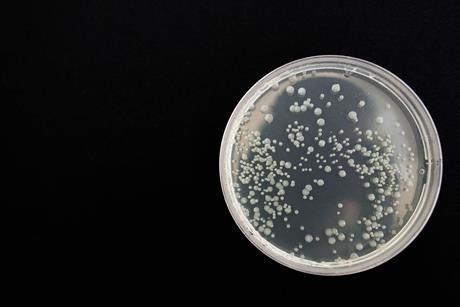
The role of clinical microbiologists in HAIs, AMR and beyond
A clinical microbiologist describes the key roles and technological challenges encountered in a typical day.