

Animal health is often overlooked, with global expenditure reaching just a fraction (around 0.4 percent) of total human health spending, yet it is a crucial component of the World Health Organization’s (WHO) One Health approach. The One Health initiative highlights the commonalities between human, animal and environmental health and aims to address each aspect of disease control, from prevention to detection and treatment, to improve global health security.
A recent report from the UK Public Accounts Committee (PAC) suggests that the UK’s animal outbreak management strategies require improvement, stating that the Department for Environment, Food and Rural Affairs (DEFRA) and the Animal and Plant Health Agency (APHA) are not adequately prepared for serious disease outbreaks and 27% of local resilience forums lack robust outbreak capabilities. It also explains that the availability of effective animal vaccines globally has become more acute since 2024, exacerbating the challenges of outbreak prevention. In the Netherlands, animal outbreak management presents a similar challenge. For example, almost 100 Dutch farms experienced outbreaks of avian influenza between 2021 and 2023, resulting in the enforcement of strict containment strategies, including mandatory livestock vaccination for poultry.
As animal disease outbreaks not only affect animal welfare but also threaten global food security and human health, it is critical that strategies are implemented to prevent and contain outbreaks efficiently in line with the One Health approach. A novel bacterial strain typing method based on Fourier-transform infrared (FT-IR) spectroscopy enables veterinary scientists to differentiate specific strains while also supporting serogrouping and serotyping. This cost-effective technology has supported fast and accurate outbreak management and drives significant advances in vaccine development, contributing to the protection of both animal and human health.
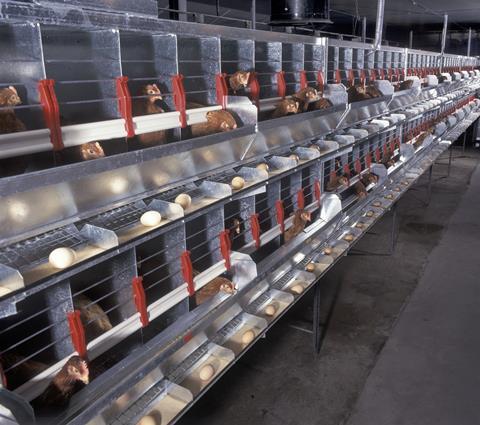
Limitations of existing methods
Veterinary laboratories may rely on labor-intensive and often cumbersome techniques such as Pulsed-Field Gel Electrophoresis (PFGE), Multi-Locus Sequence Typing (MLST), or random amplified polymorphic deoxyribonucleic acid-PCR (RAPD-PCR) methods for microorganism differentiation. These methods can sometimes lack the speed and, for certain species, the discriminatory power needed to respond effectively to time-sensitive outbreak situations. Veterinary scientists may face delays of several days for results, and in some cases, species-specific conditions or materials are required to achieve reliable strain differentiation. While these techniques can distinguish between strains, their performance may vary depending on the organism and methodology.
Effective animal disease outbreak management increasingly requires bacterial strain differentiation to confirm epidemiological links and differentiate strains based on their serotype, virulence properties, or resistance to specific therapeutic agents. This allows scientists to rapidly determine the source of outbreaks more precisely and implement effective containment and treatment plans. In addition, it can facilitate the development and testing of farm-specific autologous vaccines, which can protect against future infections.
Introducing FT-IR spectroscopy
As an emerging technique in veterinary microbiology, FT-IR spectroscopy demonstrates a clear value in animal disease outbreak management. Increasingly adopted by veterinary laboratories worldwide, it enables precise strain-level differentiation alongside serogroup and serotype classification, supporting faster outbreak response and vaccine development.
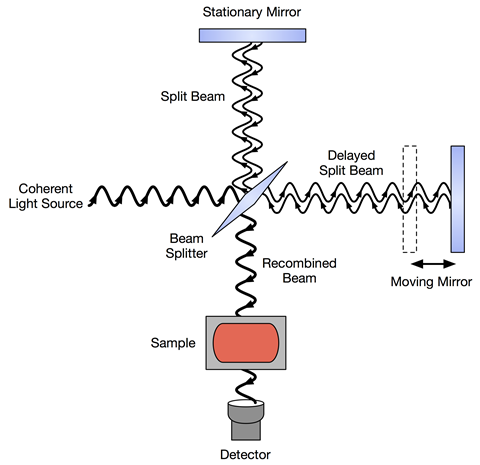
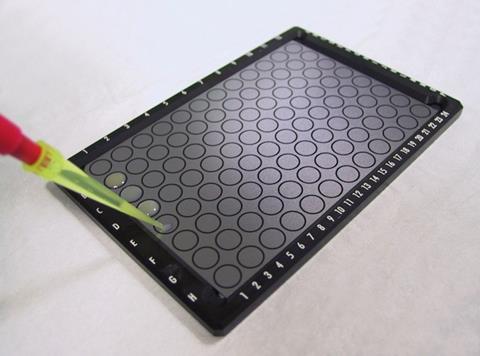
Veterinary scientists have introduced a quick and simple five-step workflow for bacterial strain differentiation based on FT-IR spectroscopy (IR Biotyper®, Bruker). Isolates are harvested and prepared before being transferred to a sample plate that is then dried. FT-IR spectroscopy is used to analyze the sample plate, generating IR-spectra of varying strains belonging to the same bacterial species. With the help of integrated FT-IR spectroscopy software, generated spectra are differentiated by cluster analysis techniques or classified with machine learning algorithms and help identify whether infections are caused by related strains or different strains each time.
The new workflow has improved the efficiency of outbreak investigations. Offering rapid and reliable results, it enables microbiologists to monitor, confirm, and respond to outbreaks faster using a more cost-effective alternative to conventional methods. With the versatility to perform strain typing for a wide range of bacterial species, the workflow is also playing a crucial role in the development of autologous vaccines for various infections, including avian Escherichia coli, which can cause colibacillosis in avian species.
Bovine mastitis outbreak management
Bovine mastitis is a major challenge for the UK and global dairy industries, with the Agriculture and Horticulture Development Board (AHDB) reporting an average of 26 clinical mastitis cases per 100 cows on UK dairy farms. Treatment results for mastitis infections using antibiotics can be ineffective, and vaccination does not always guarantee protection. Posing a threat to both herd welfare and milk production, it is vital that mastitis outbreaks are efficiently identified, contained, and treated from both an economic and animal health perspective.
Traditional methods used to identify mastitis outbreak infections, including PFGE and RAPD-PCR, have significant limitations. It can take up to a week to obtain results using PFGE, which delays the implementation of treatment and containment strategies considerably, while RAPD-PCR testing requires species-specific primers and is therefore costly in terms of consumable reagents.
A recent bovine Klebsiella pneumoniae mastitis outbreak on a dairy farm required urgent intervention. To facilitate a timely response, veterinary scientists at Royal GD used an FT-IR spectroscopy workflow to compare the K. pneumoniae isolates taken from the cows with other samples collected at the farm and accurately traced the source of the outbreak. With FT-IR spectroscopy, it was possible to determine whether the outbreak was caused by identical isolates, indicating that the milking apparatus was the source, or different isolates, meaning that environmental conditions were to blame. The investigation confirmed that multiple K. pneumoniae strains were circulating in the farm, which suggested that environmental sources were responsible for the outbreak. As a result, veterinarians were able to work with the farmer to quickly implement an effective treatment and hygiene management plan, which prevented any further cases and contained the outbreak.
The threat of avian E. coli
Most strains of avian E. coli bacteria are harmless; however, some cause serious disease in poultry, which can lead to reduced egg production and increased mortality. For example, an outbreak of avian E. coli at a UK farm was predominantly caused by the ST-101 strain, accounting for almost 60% of cases. The economic impact of such outbreaks can be significant. In the Netherlands alone, E. coli peritonitis syndrome, a form of colibacillosis caused by primarily virulent E. coli strains, cost the Dutch poultry farming industry an estimated €3.7 million. It is therefore essential that the correct strains are rapidly identified so that outbreaks can be contained, preventing financial losses and protecting animal welfare.
A research group, comprising Royal GD, the Faculty of Veterinary Medicine at Utrecht University and a large poultry veterinary practice, has used FT-IR spectroscopy to conduct a study into the transmission of E. coli infections in poultry for improved disease management. The goal of the project was to identify whether the infections were transmitted vertically, from parent stock flocks to their offspring, or horizontally, introduced by the environment. As a case load of around 3,500 isolates was required to provide statistically viable results, efficient testing was essential.
Although Whole Genome Sequencing (WGS) provides detailed information on strain characteristics, the scope of the project necessitated a faster and less cost-intensive alternative. To assess the suitability of FT-IR spectroscopy, the first 200 isolates were analyzed using both methods. The results were consistent, and so the group was able to use FT-IR spectroscopy for testing the majority of isolates collected within the project, with supplementary WGS only required to characterize one or two isolates from each identified cluster in more detail. As a result, the group has achieved significant cost and time savings.
Currently available commercial vaccination strategies for avian E. coli only target specific strains and may not protect against emerging threats. FT-IR spectroscopy is playing a key role in the development of autogenous vaccines by enabling veterinary scientists to confidently determine which isolates are closely related, so that they can select and combine different isolates to make farm-specific vaccines. Approaches applied for E. coli can be used as models for the development of autogenous vaccines to protect against other bacterial infections, such as Enterococcus.
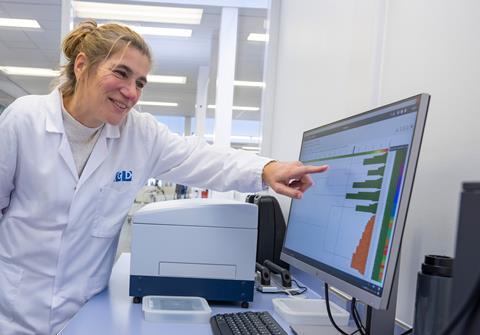
FT-IR spectroscopy: preventing and containing animal disease outbreaks
Bacterial strain typing with FT-IR spectroscopy is advancing animal disease outbreak management at every stage. Farm-specific vaccination strategies developed using FT-IR spectroscopy can help prevent outbreaks of serious bacterial infections, while the technology also enables veterinary scientists to respond efficiently to any outbreaks that do occur, by helping to identify transmission routes and the source of the outbreak. With an increasing global focus on a holistic One Health approach, effective animal disease management is vital to support broader environmental and human health.
Looking ahead, new artificial intelligence (AI) methods are poised to unlock FT-IR spectroscopy serotyping capabilities. Serotyping is typically performed using agglutination and PCR methods, but new AI models incorporating FT-IR spectroscopy can classify isolates by serotype based on differences in infrared spectra. An AI model for serotyping of Streptococcus suis isolates in the routine laboratory has already been developed, with models for other bacterial species expected in the coming months.




No comments yet