
All Immunology articles – Page 12
-
 News
NewsPublic housing mold intervention program reduces asthma-related ED visits
The New York City Housing Authority developed a mold-removal program in response to a 2013 class-action lawsuit filed by residents suffering from asthma due to mold in their apartments. Without Mold Busters, residents would have experienced 25 per cent more asthma-related emergency department (ED) visits.
-
 News
NewsFriendly skin bacteria offer hope to beat eczema
Friendly skin bacteria could hold the key to stopping eczema in its tracks, according to researchers. A new study reveals harmless microbes living on our skin release powerful molecules that can shut down the inflammatory chaos triggered by Staphylococcus aureus, the bug long known to wreak havoc in eczema.
-
 News
NewsThe liver’s immune cells might be the key to curing hepatitis B
Researchers investigated why some people with chronic hepatitis B infections went off their medications, only for the virus to start to come back — and then some of the patients were cured. It appears a certain type of T cell, some of which coordinate immune responses, spots the infection in the liver and mobilizes an attack.
-
 News
NewsAging immune systems show reduced ability to clear tuberculosis during treatment
Immunosenescence increases susceptibility to infectious diseases like tuberculosis (TB) in older adults and hinder effective containment of Mycobacterium tuberculosis during therapeutic intervention.
-
 News
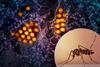
NewsCommentary: Dengue viral infection and associated liver disease
A new commentary highlights the time course of serological and liver enzyme elevations in mild versus severe dengue, emphasizes early recognition of progression to acute liver failure, and reviews current vaccination and prevention strategies.
-
 News
NewsFDA approves early warning system for sepsis
An early warning system for sepsis, one of the deadliest infections for hospital patients, has been approved for use by the FDA, one of the first AI-based medical tools to get clearance. The tool detects sepsis hours faster than doctors and has reduced deaths by nearly 20%.
-
 News
NewsScientists discover ‘hidden switch’ in immune cells that helps the body kill deadly fungus
Scientists have discovered a “control switch” inside our immune cells that helps the body destroy dangerous fungal infections. A protein called RAB5c helps white blood cells kill Aspergillus fumigatus – an airborne fungus that can cause life‑threatening lung infections in people with weakened immune systems.
-
 News
NewsWhat the Andes hantavirus outbreak reveals about pandemic risk
The outbreak of Andes hantavirus aboard the international MV Hondius cruise ship underscores how little scientists still know about the viruses circulating silently in wild rodent populations before they spill into humans.
-
 News
NewsIntestinal stem cells can fight back against salmonella scientists discover
Researchers have shown that intestinal stem cells can directly sense intracellular Salmonella enterica bacteria and activate an inflammasome-dependent response. Following infection, the stem cells differentiate into antimicrobial Paneth cells, which secrete molecules that help limit bacterial persistence in the intestinal crypt.
-
 News
NewsStudy reveals common mutation linked to autoimmune diseases may protect people from viral infections
New research shows a “risk gene” linked to higher odds of developing autoimmune diseases such as diabetes or lupus may also provide a survival advantage fighting viral infections like coronavirus. The gene PTPN22 carries a mutation, 1858C>T (R620W), found in roughly one in 10 people in North America.
-
 News
NewsData hidden in tuberculosis screening tests sheds light on patients’ overall mortality
Researchers have uncovered a tool to study immune function of larger populations of patients, using a lab test that physicians already use regularly: tuberculosis screening tests called interferon gamma release assays (IGRAs). It could indicate how well an immune system can mount a response to an array of threats.
-
 News
NewsScientists take crucial step in developing world’s first measles treatment
Scientists have characterized human antibodies capable of neutralizing measles virus. These antibodies bind to key sites on measles virus and prevent the virus from entering host cells.
-
 News
NewsScientists discover how gut bacteria toxin invades colon cells to trigger cancer
A common gut bacterium, Bacteroides fragilis, drives colon tumor formation, potentially leading to colorectal cancer, by secreting a toxin that damages the lining of the colon. Researchers have now shown that the B. fragilis toxin BFT must first bind host receptor claudin-4 before it can cause damage.
-
 News
NewsNeedle-free flu vaccine aims to boost children’s immunity
A new study will explore the effects of a nasal spray flu vaccine on children’s immune systems, aiming to boost future protection and lower vaccine hesitancy rates.
-
 News
NewsSeasonal COVID-19 vaccination in 2025/26 reduced risk of illness by half in Canada
An interim analysis estimates that the COVID-19 vaccine for the 2025/26 season reduced the risk of illness in Canada by about half at about 9 weeks after vaccination, offering protection beyond the vaccine’s target strain.
-
 News
NewsTuberculosis risk: promising approaches for screening and prediction
It is currently difficult to detect TB in its early stages, or predict who will go on to have TB, and therefore preventive treatment is not widely used. Researchers assessed whether a blood-based 3-gene host-response test can detect active tuberculosis and help predict future disease.
-
 News
NewsHead impacts associated with altered gut microbiome in football players
Non-concussive head impacts—hits to the head that don’t cause clinically detectable symptoms—are correlated with subsequent changes to the gut microbiome in a small sample of US collegiate football players, according to a new study.
-
 News
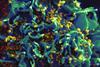
NewsScientists discover how HIV hijacks a cellular ‘gateway’ to infect resting immune cells
New research reveals that when HIV spreads directly between T-cells it triggers a molecular signalling chain that temporarily ‘unlocks’ the nuclear pore complex, allowing the HIV virus and capsid to enter and integrate into the host’s DNA.
-
 News
NewsWhy feeling sick may be important for surviving infection
In a new perspective, scientists propose a different way of thinking about sickness symptoms: what if these behaviors are part of an integrated immune strategy that operates across scales — from individual cells to tissues and organs, to the whole organism — and helps promote survival?
-
 News
NewsGut microbes actively support immunity in people living with HIV
A new study shows that gut microbes help bolster immunity in people living with HIV – and that, one day, these microbes may be harnessed to protect this population from infections driven by immune deficiency.