
Dr Ni Luh Putu Harta Wedari, a medical doctor and Clinical Microbiology Specialist from Bali, Indonesia reveals how engaging with AMI has expanded her international network and unveiled new opportunities.
Dr Ni Luh Putu Harta Wedari is a medical doctor and Clinical Microbiology Specialist from Bali, Indonesia. She completed her Medical Doctor (MD) degree and specialist training in Medical Microbiology at Universitas Udayana in Bali, Indonesia and holds a Master of Medicine in Infection and Immunity from the University of Sydney.
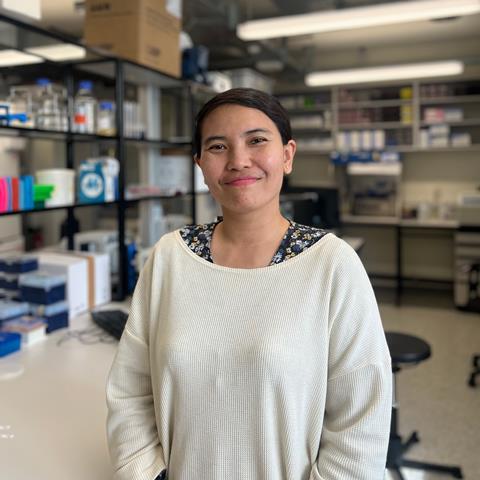
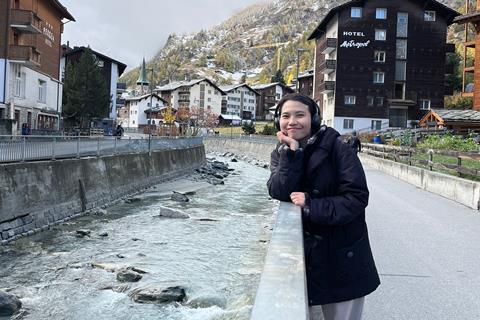
After working as a medical microbiologist in Indonesia, she moved to Switzerland in September 2025 to pursue a PhD in Medical Microbiology at the University of Zurich, where her research focuses on antimicrobial resistance and the dynamics of anaerobic bacteria in the gut of immunocompromised patients.
Alongside her academic journey, she has also been serving as a Global Ambassador for Indonesia for Applied Microbiology International, a role that allows her to connect with and represent microbiologists from her home country within the wider international scientific community.
What real-world problem would you eventually love to solve with microbiology?
One real-world problem I would eventually love to help address through microbiology is antimicrobial resistance in the human gut, particularly the often-overlooked role of anaerobic bacteria. These bacteria are an important part of the gut ecosystem and contribute to colonization resistance, but antibiotic treatment can disrupt these communities, select for resistant bacteria, and alter interactions between microbes and the intestinal lining. This is particularly important in immunocompromised patients, such as those undergoing allogeneic stem cell transplantation, who are highly vulnerable to infections and complications such as graft-versus-host disease.

Through my research, I aim to better understand how antibiotic exposure shapes antimicrobial resistance, bacterial community dynamics, virulence, and host–microbe interactions. Ultimately, I hope this work will contribute to better-informed antimicrobial strategies that can treat infections effectively while reducing disruption to the beneficial microbial communities that are essential for human health.
Tell me about your ‘journey’ with AMI.
My journey with Applied Microbiology International (AMI) began shortly after I completed my specialist residency in medical microbiology in Bali, Indonesia. I was first introduced to AMI by Prof. Stephen Todryk (Steve), and we subsequently worked together on an article in The Microbiologist about infection, immunity and the One Health response in Indonesia, which I wrote as first author with Steve as the corresponding author. This was my first opportunity to engage with AMI and its international scientific community.
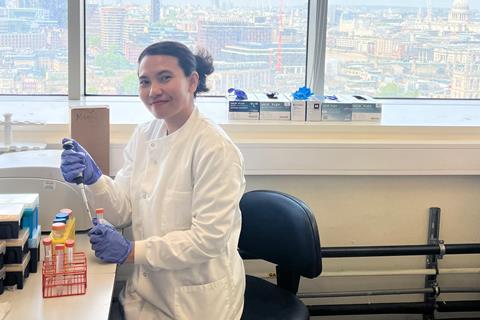
Shortly afterwards, I learned that AMI was looking for a Global Ambassador for Indonesia, and I applied through the formal application process. Since August 2024, I have been serving as AMI’s Global Ambassador for Indonesia.
I am also sincerely grateful for the support AMI has given me throughout my career. When I applied for the Swiss Government Excellence Scholarship in 2024, the AMI President, Prof. Jack Gilbert supported my application by providing a recommendation letter.

Another particularly meaningful moment was representing AMI at the International Congress of Antimicrobial Chemotherapy 2024 in Istanbul, where I first met my current PhD supervisor, Prof. Adrian Egli in person upon Zoom meeting interview in advance. AMI “brought” me to Istanbul, a transcontinental meeting point where Asia (me) met Europe (Adrian). That encounter ultimately became an important turning point in my scientific journey.
MICROBIOLOGY NEWS: Register with The Microbiologist for more free articles
Through AMI, I have expanded my international network, discovered new opportunities, and connected with scientists and communities far beyond my original professional environment in Indonesia. At the same time, I have tried to give back by promoting AMI through my scientific presentations, professional networks and collaborations, both in Indonesia and now in Switzerland. For me, AMI has become more than a professional membership organization; it has been a bridge between my scientific journey in Indonesia and the wider international microbiology community.
How has access to AMI’s Funding & Career Support membership benefits helped you develop, discover, publish or share knowledge?
AMI’s Funding & Career Support has had a direct impact on both my scientific development and my ability to share knowledge internationally. One particularly valuable opportunity was representing AMI at the 33rd International Congress of Antimicrobial Chemotherapy in Istanbul in 2024, where I presented my research on Clostridioides difficile and engaged with researchers working in antimicrobial resistance. It was also at this congress that I first met Prof. Adrian Egli, who is now my PhD supervisor at the University of Zurich.
More recently, AMI’s Professional Development Support Grant enabled me to undertake a research exchange at the Organoid Research Interests Group at King’s College London in May 2026, where I gained exposure to organoid systems, host–microbe interactions and advanced approaches to antimicrobial resistance research. During the visit, I also presented the future direction of my doctoral research to the Organoid Research Interest Group and received valuable feedback that helped refine my research approach.
AMI has also provided platforms through The Microbiologist to share my scientific journey and research more broadly, including my work on intestinal organoids and antimicrobial resistance. These experiences have helped me develop new technical skills, communicate my research to wider scientific audiences, and build international collaborations. Most importantly, the support has translated into tangible opportunities that have shaped the direction of my research and my development as an early-career scientist and a clinical microbiologist.
FInd out more about how AMI membership could benefit you.
Topics
- Adrian Egli
- Antibiotics
- Antimicrobial Resistance
- Applied Microbiology International
- Asia & Oceania
- Bacteria
- Clostridioides difficile
- Community
- Gut Microbiome
- Immunology
- Infection Prevention & Control
- Jack Gilbert
- King’s College London
- Medical Microbiology
- Ni Luh Putu Harta Wedari
- One Health
- Organoid Research Interests Group
- People News
- Stephen Todryk
- UK & Rest of Europe
- Universitas Udayana
- University of Sydney
- University of Zurich




No comments yet