
All Clinical & Diagnostics articles – Page 6
-
 News
NewsFirst-in-human clinical trial shows promising results for new Lassa fever vaccine
Researchers have reported encouraging results from an early clinical trial that tested a new dual vaccine against Lassa fever and rabies. The study found that the vaccine was safe and induced immune responses against both viruses. There are currently no vaccines against Lassa fever on the market.
-
 News
NewsAll-new lab in Kenya fills critical gap in wildlife health
Conservation stakeholders gathered to celebrate the official opening of the Laboratory in Northern Kenya (LiNK), an all-new veterinary diagnostic lab designed to fill a critical need for accessible diagnostic infrastructure in the remote region.
-
 News
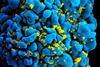
NewsMost cases of HIV persistence in blood following treatment explained by defective copies of the virus
A study based on blood samples strongly suggests that most persistent cases of viral detection, despite ideal HIV drug therapy, are not due to virus transmission or a rebound of active disease.
-
 News
NewsInfections are major ‘health hazard’ for people with diabetes
Infections should be considered a “health hazard” in people living with diabetes, with experts warning that current clinical guidelines fail to reflect a substantial but under-recognised burden of illness, hospitalisation and death. People living with type 1 diabetes, type 2 diabetes and prediabetes face higher risks of infection compared to those without diabetes.
-
 News
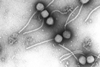
NewsThe future of phage therapy will be decided by more than science alone
As antimicrobial resistance accelerates worldwide, leading experts gather in Valencia to address the scientific, regulatory, manufacturing and clinical challenges that will determine whether phage therapy becomes a routine healthcare solution.
-
 News
NewsNew study identifies key warning signs for infection after ankle fracture surgery in older patients
A new study of which patients are most at risk of a fracture-related infection post ankle surgery finds that low protein levels in the blood is the single strongest patient-related risk factor, making infection nearly 18 times more likely. Chronic alcohol abuse and failure to follow post-operative instructions each raise the risk more than fivefold.
-
 News
NewsReal-time brain monitor detects infections earlier
A research team has created a new monitoring system to save lives and significantly reduce health-care costs in brain-injury cases through the early detection of infections in intensive care units. NeuroSense connects to drainage lines to detect biomarkers of infection.
-
 News
NewsNew fluorescent nanosensor enables first-of-its-kind detection of key gut health biomarker
Researchers have developed a novel fluorescent nanosensor capable of rapidly detecting indole-3-propionic acid (IPA), an emerging biomarker linked to gut health and disease. The sensor produces a rapid optical readout within minutes, offering a significantly faster and more accessible alternative to conventional analytical techniques.
-
 News
NewsBehind the diagnosis: How laboratory testing guided a complex histoplasmosis case
A diagnosis of histoplasmosis forced a teenager with juvenile arthritis onto an uncertain path, one defined by months of treatment, recovery, and a long-term course of antifungal therapy expected to last up to three years. Histoplasma capsulatum, a dimorphic fungus that causes histoplasmosis, found its way into her lungs.
-
 News
NewsPost-discharge antibiotics may offer limited benefit after pediatric appendicitis
Acute appendicitis is one of the most common surgical emergencies among children, and complicated acute appendicitis (CAA), including perforated or gangrenous disease, carries a higher risk of infection and longer hospitalization. While intravenous antibiotics during hospitalization are standard practice, the role of oral home antibiotics (OHA) after discharge remains controversial. ...
-
 News
NewsPrecigen presents new long-term durability data for PAPZIMEOS, recently granted seven-year market exclusivity
Precigen, Inc. has announced updated long-term follow-up data from the pivotal study of PAPZIMEOS™ (zopapogene imadenovec-drba) for the treatment of adults with recurrent respiratory papillomatosis (RRP).
-
 News
NewsSkin-to-skin care may save newborn lives
Kangaroo mother care, first introduced as an alternative to insufficient incubator care, combines skin-to-skin contact, exclusive breastfeeding, early discharge, and follow-up support. A new review case makes the case for treating iKMC not as an optional add-on, but as a core part of neonatal care for eligible preterm and low-birth-weight infants.
-
 News
NewsResearchers aim to improve access to high-quality research and biomanufacturing tools in resource-limited settings
Researchers have demonstrated the effectiveness of a suite of low-cost, portable biotechnology tools designed to improve access to laboratory research and diagnostics in resource-limited settings.
-
 News
NewsStudies point to new way to fight potentially deadly Valley Fever
To better understand why Valley Fever spreads in some individuals, researchers found that patients with severe illness had an abnormal immune response. In some cases, the immune system was overactive; in other cases it was underactive.
-
 News
NewsGut microbiome clusters may help predict inflammatory bowel disease severity and progression
A new study reports that the gut microbiome of IBD patients can be grouped into distinct compositional “cluster types” associated with disease severity and progression risk. These reflect higher-order microbial community organization rather than variation in individual bacterial species.
-
 News
NewsNew urine test for microbial metabolites offers simple way to screen for autism in children
Scientists have developed a new screening tool to test urine for 17 microbial metabolites in children ages 2 to 11 years. By measuring these compounds in urine, they discovered that they could distinguish children with autism from typically developing children in their study groups with high accuracy.
-
 News
NewsNP14 aptamer: A novel biosensing recognition element for mutation-resilient SARS-CoV-2 detection
New research investigated a novel DNA aptamer, NP14, and developed an innovative dual-mode biosensing platform to achieve highly sensitive, mutation-resilient viral detection.
-
 News
NewsAutomated EHR alert improved hepatitis B monitoring rates at a primary care clinic
In May 2024, an urban safety-net primary care clinic noted the appearance of a new “care gap” alert in their Epic electronic health record (EHR) system that flagged patients with hepatitis B who were overdue for one blood test, the hepatitis B DNA test.
-
 News
NewsICU pneumonia has mortality rates of 37% to nearly 60% in middle-income countries. In high-income countries, rates are16% to 26%
A scientific review evaluated outcomes of adults with community-acquired pneumonia (CAP) admitted to intensive care units (ICUs) in middle-income countries. In contrast to high-income countries, where mortality ranges from 16% to 26%, the study found significantly higher rates in the countries analyzed.
-
 News
NewsNASCAR star’s death shows how sepsis can kill anyone if not caught
Kyle Busch won more races than any driver in NASCAR history. But his own race ended far too soon, cut short by sepsis at the age of 41 after a case of pneumonia.